



RIYADH: Saudi Arabia is strengthening its logistics infrastructure by developing 18 new logistics zones, with total investments exceeding SR10 billion ($2.66 billion), according to senior officials.
This move is part of the country’s broader strategy to attract local and global investments. During the opening ceremony of the sixth edition of the Supply Chain Conference in Riyadh, Saleh Al-Jasser, minister of transport and logistics, announced that the Kingdom plans to increase the number of logistics zones from 22 to 59 by 2030.
“The Kingdom has successfully strengthened its logistical capabilities to support the national economy. This progress has attracted leading global companies to invest in the logistics sector,” Al-Jasser said.
He further stated: “Both local and international private sectors have committed to establishing several logistics zones, with contracts signed for the creation of 18 logistics zones in ports, totaling investments exceeding SR10 billion.”
Al-Jasser also highlighted the Kingdom’s rising position in the global container handling rankings. According to the UNCTAD report for 2024, Saudi Arabia gained an additional 231 points in the Liner Shipping Connectivity Index and added 30 new maritime shipping lines, underscoring the Kingdom’s key role in global trade.
“Saudi Arabia has played an active role in enhancing the efficiency of global supply chains and establishing the foundations necessary to ensure the smooth flow of goods and commodities across the region,” Al-Jasser said.
He added: “This has been achieved by leveraging the Kingdom’s strong and growing logistical capabilities, which include an advanced network of regional and international airports, a robust series of highly efficient ports, and modern railway and road networks. These assets accelerate shipping, handling, and export activities, linking the Kingdom to global markets.”
Al-Jasser emphasized the ongoing efforts to enhance the Kingdom’s position as a global logistics hub. He highlighted that the integration of various transport modes—such as ports, airports, and railways—into a unified and efficient system will boost competitiveness and facilitate seamless trade flows.
“The Kingdom will continue to enhance its logistical capabilities to facilitate exports, support supply chains, and improve its performance in global logistics indicators,” Al-Jasser said. He further emphasized: “The focus will remain on bolstering maritime shipping routes, expanding air freight operations, increasing rail freight capacities, and activating logistics centers to support sustainable development, further cementing the Kingdom's role as a global logistics hub and a vital link in international supply chains.”
Al-Jasser also underlined the importance of supply chains in Saudi Arabia’s broader economic strategy, noting their fundamental role in achieving the sustainability and integration goals set out in the National Transport and Logistics Strategy and Vision 2030.
“We consider them a fundamental pillar for achieving the sustainability and integration we aspire to, in line with the National Transport and Logistics Strategy and the Kingdom’s Vision 2030,” he said.
After his speech, Al-Jasser told Arab News that the growing interest from global multinational companies in Saudi Arabia’s logistics sector is a testament to the Kingdom’s strategic location and commitment to becoming a global logistics hub.
“This will not only create jobs for Saudis and make it more efficient for Saudi companies to operate, but will also enable various sectors across Saudi Arabia,” Al-Jasser said.
He added: “This comes as part of the implementation of the National Transport and Logistics Strategy, which stems from Vision 2030 that is inspired and steered by his royal highness the crown prince.”
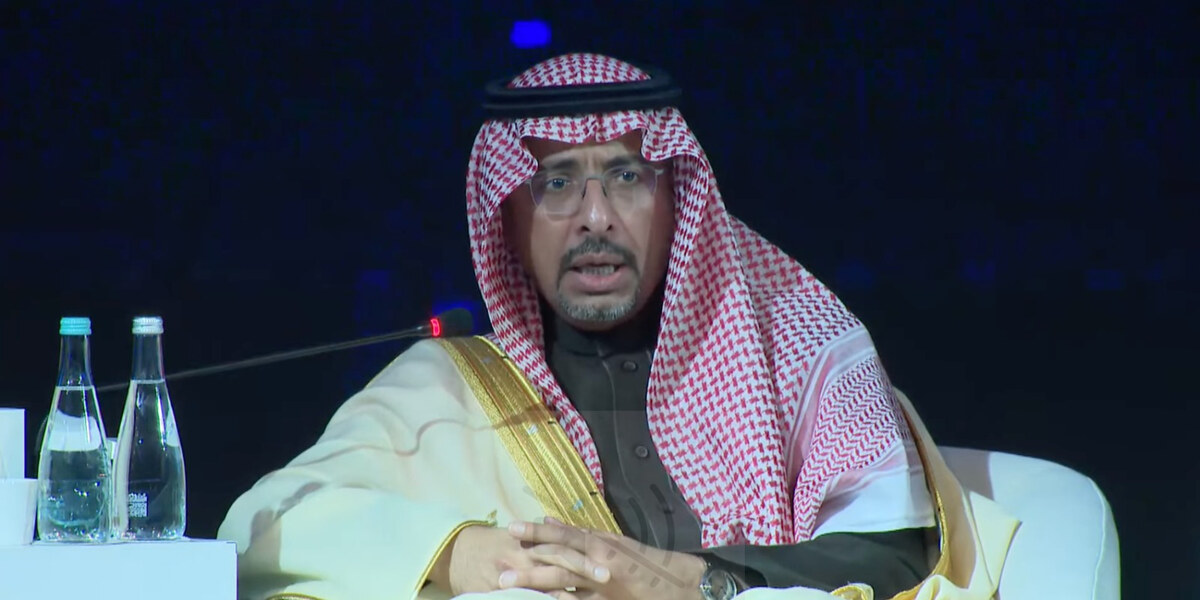
Saudi Minister of Industry and Mineral Resources Bandar Alkhorayef
Meanwhile, Minister of Industry and Mineral Resources Bander Alkhorayef emphasized the Kingdom’s natural resources and abundant energy supply as crucial advantages for its industrial sector.
“The diverse resources of the Kingdom, including its natural wealth and abundant energy supply, are all positive factors that make Saudi Arabia an important partner in the industrial sector,” he said.
Alkhorayef also highlighted the vital role logistics plays in enabling Saudi industries to compete globally, particularly given the limitations of the domestic market.
“The presence of robust supply chains and logistics services is of utmost importance in reducing costs for manufacturers and investors, while enhancing the Kingdom's overall competitiveness,” he stated.
He continued: “First, the natural resources available in the Kingdom are very large and are among the foundations of the main national strategies, especially the Industrial Strategy and the Mining Strategy. Maximizing the benefit from these resources is a priority, particularly in oil, gas, petrochemicals, and minerals.”
Alkhorayef further noted, “Secondly, the geographical location of the Kingdom qualifies it to connect different regions of the world. In addition, the excellent infrastructure and the availability of energy at globally competitive prices make the Kingdom a natural choice for many manufacturing industries, whether intermediate products to become final in other regions or vice versa.”
The minister also stressed Saudi Arabia’s strong domestic market, which is further bolstered by the Gulf region’s high purchasing power, making it an attractive market for various products, especially those in critical sectors such as food security, healthcare, pharmaceuticals, and water-related industries.
“Essentially, the Kingdom’s robust local demand and the Gulf’s economic strength create significant opportunities for businesses and investors in these essential sectors,” Alkhorayef added.
Reflecting on global challenges, including the COVID-19 pandemic, geopolitical conflicts, and disruptions in global supply chains, Alkhorayef acknowledged that these issues underscore the Kingdom’s potential to attract investments and use its resources and advanced technologies to address supply chain challenges.
He also highlighted Saudi Arabia’s success in re-exports, stating, “In 2024, re-exports reached SR61 billion, representing a 23 percent growth compared to the previous year.”
“This remarkable achievement was made possible through outstanding capabilities, robust infrastructure, and the seamless coordination among various entities,” he added.
Alkhorayef emphasized that Saudi Arabia’s strategic location and infrastructure are key enablers of its growing industrial sector. “The excellent infrastructure and the availability of energy at globally competitive prices make the Kingdom a natural choice for many manufacturing industries,” he said.
A new prospect in rail projects
Al-Jasser also discussed the Northern Train Line, which he described as the Kingdom’s largest rail project and a cornerstone for the mining sector. The line, connecting mining areas with key ports, plays a vital role in supporting industrial and economic growth.
“The Northern Train Line is likely the largest rail project in the Kingdom. It has been established as a foundation to enable the mining sector. Therefore, all infrastructure development plans are interconnected with the inputs from various sectors,” he said during the panel session.
Al-Jasser noted that the Saudi Railway Co. is currently expanding and duplicating the Northern Train Line with investments exceeding SR5 billion. This expansion is part of the Kingdom's broader plans to enhance the mining sector and ensure efficient connectivity between the railway and eastern ports, supporting both export and trade growth.
Through these efforts, Saudi Arabia is continuing to align its industrial and logistics sectors with the ambitious goals of Vision 2030, fostering a sustainable and globally competitive economy.
It is worth noting that the conference brings together an exclusive group of international experts and specialists, focused on sharing best practices and the latest methods to enhance supply chain performance and efficiency.
The program features a series of engaging dialogue sessions, as well as workshops and an entrepreneurship corner.
Additionally, a platform has been created to empower Saudi women in the supply chain sector, offering training and development opportunities to boost their contributions to the Saudi economy and open new career paths in key industries.


