
Behind the glitz of the recent Indian Premier League auction and Jay Shah’s conspicuous presence at a recent meeting of the 2032 Brisbane Organizing Olympic Committee, lies cricket’s darker side. One aspect of that side is corruption in the form of match-fixing. Recent examples have shown that it is an on-going threat.
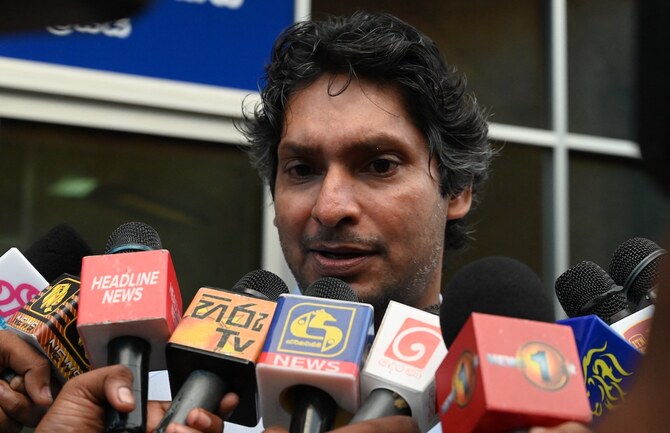
Earlier this month, Kumar Sangakkara, one of cricket’s most respected figures, highlighted the threat during a conference in Colombo. The former Sri Lankan captain warned that the proliferation of franchise leagues increases the opportunities for match- and spot-fixing. The conference was chaired by Sumathi Dharmawardena, who is also the independent chair of the International Cricket Council’s Anti-Corruption Unit.
The unit’s outgoing chair, Alex Marshall, has previously identified poorly managed minor leagues as a breeding ground for corruption. It is not clear if this description extends to the Abu Dhabi T10 league, which concluded its eighth edition on Dec. 2. Over its lifetime, it has had its share of controversy. Last year, eight individuals were charged with breaching the game’s Anti-Corruption Code following an investigation into the 2021 edition.
One of the accused, Sunny Dhillon, an assistant coach, has been banned for six years, backdated to Sept. 13, 2023, when Dhillon was provisionally suspended. Dhillon was convicted of trying to change or affect the outcome of, or parts of, matches. And failure or refusal to provide full information regarding any approaches or invitations received that relate to corrupt conduct. He was also accused of failure to cooperate with the corruption investigation without providing a valid reason. This is a long charge sheet.
Amongst the others who were charged, former first-class cricketer Ashar Zaidi was banned for five years having admitted to facilitating corruption. Parag Sanghvi and Krishan Kumar Choudhary, co-owners of the Pune Devils, for whom Zaidi played, were each banned for one year. Sanghvi admitted to placing bets on matches and Choudhary failed to cooperate with the investigation. Both bans were backdated to Sept. 19, 2023. This seems rather lenient.
Another player, Nasir Hossain, a former Bangladesh international, was banned from all cricket in early 2024 for two years, with six months of those suspended. Less fortunate was UK-based club cricketer Rizwan Javed, who received a ban of 17 years and six months. This was based on a failure to respond to charges, which included an attempt to fix, contrive or influence improperly, matches or aspects of matches on three separate occasions.
Scrutiny of the league has returned this year, precipitated by a series of unusual front-foot no-balls. On Nov. 22, UAE bowler, Hazrat Bilal, playing for the Morrisville Samp Army, overstepped the popping crease by a large margin. This necessitated adjustments to the camera frame before replays could be shown. Several of his teammates were observed laughing at the replay.
Four days later in a match between the Delhi Bulls and the Bangla Tigers, former Sri Lanka skipper, Dasun Shanaka, conceded 30 runs off his first three deliveries, including four no-balls, of the penultimate over of the Delhi Bulls’ innings. Such a performance is guaranteed to raise eyebrows. The website, Cricket Addictor, has suggested that Shanaka is facing match-fixing allegations.
Sri Lankan cricket has had its own issues of corruption, as have other sports in the country. In 2019, Sri Lanka's parliament introduced a series of activities deemed to be corruption-related, along with a list of penalties. These followed an investigation by the ICC anti-corruption unit into Sri Lankan cricket. The country is believed to be the first and only Asian nation to criminalize corruption in sports.
Hopes were raised that the removal of a discredited government by a decisive public mandate in September 2024 would lead to further meaningful transformation. Sunil Gamage is the new sports minister and he has acknowledged the rampant corruption, abuse, nepotism and dishonesty in the country’s sporting landscape. Further measures to reform this have yet to emerge.
The problems have certainly not gone away. In Sri Lanka’s own T10 Super League, for which the final was on Dec. 19, the Indian owner of the Galle Marvels franchise was arrested in Colombo on Dec. 12 over match-fixing allegations. During his court hearing, Prem Thakur testified that he was prepared to provide a confidential statement to the magistrate regarding the accusations, under Article 127 of the Code of Criminal Procedure. Allegedly, the arrest was based on a complaint by a player in his franchise who refused to accede to Thakur’s match-fixing request.
This is the first edition of Lanka T10. It is run by Sri Lankan Cricket in partnership with T Ten Sports Management group, which organizes the Abu Dhabi T10 and the Zim-Afro T10 events. It was due to commence in 2023 but was postponed owing to financial issues. Almost half of the round robin matches were rained off, which may have reduced the potential for illegal activity.
The appointment of Marshall in September 2017 at the ICC coincided with the rise of franchise cricket and the concomitant potential increase in corruption activity. However, it is not limited to the franchise world. In his book, “Playing to Fix,” Paul Radley has provided a fine-grained analysis of the illegal activities into which members of the UAE team were drawn when the team was on the brink of qualifying for the 2019 World Cup.
One part of the unfolding story is the role of the ICC anti-corruption unit and the processes and procedures which Marshall and his team had to follow in order to obtain proof of illegal activity and, ultimately, convictions. The story also reveals how the illegal activity of teammates wore down morale and performance amongst those who were not involved.
Every accusation and conviction strikes at the heart of cricket’s integrity. The need for vigilance has never been greater. Sangakkara emphasized the need for proactive measures, such as player education programs and confidential reporting mechanisms, designed to prevent illegal activity.
The ICC has these in place but, as the central governing body, it lacks overall control of franchise leagues, which are subject to local board control. This is not always robust. Cricket’s administrators and leaders have a huge responsibility to ensure that the game’s sanctity is protected and preserved. It is not evident that adequate mechanisms are in place.