

NEOM, Rajasthan Royals celebrate cricket program’s second season

1 / 3
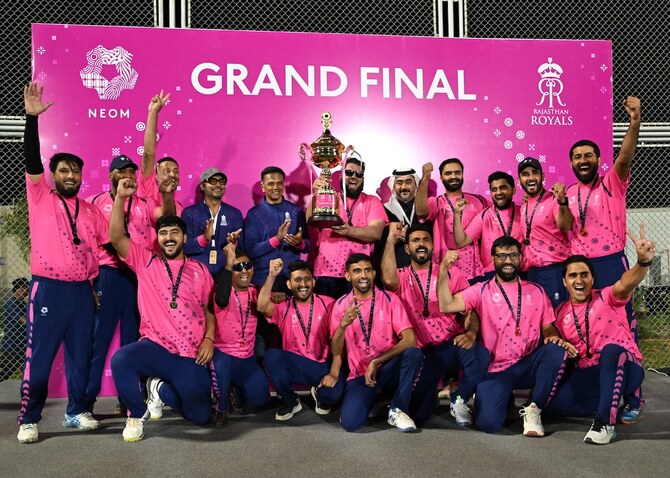
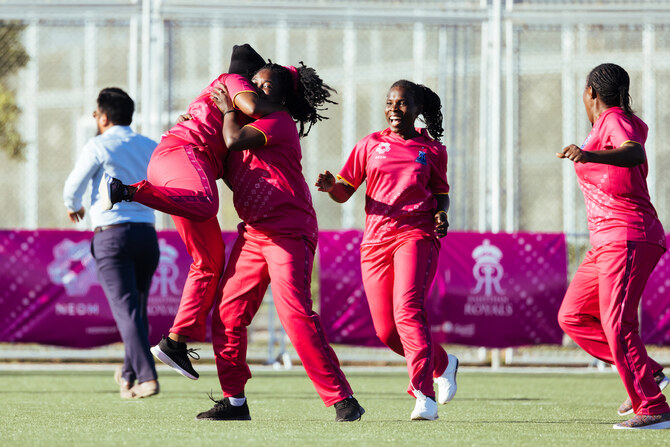
NEOM and Rajasthan Royals celebrate successful second edition of cricket program. (Supplied)
2 / 3
NEOM and Rajasthan Royals celebrate successful second edition of cricket program. (Supplied)
3 / 3
NEOM and Rajasthan Royals celebrate successful second edition of cricket program. (Supplied)
Short Url
Updated 16 December 2024
Follow

NEOM, Rajasthan Royals celebrate cricket program’s second season

  • Program records 85 percent increase in participation and closes with a thrilling final

NEOM: The second season of the NEOM and Rajasthan Royals’ cricket program for NEOM employees and contractors drew to a successful close over the weekend (Dec. 13) with a thrilling men’s final.

The spectacular finish, hosted by Alfanar Global Development at the cricket ground in NEOM, capped a great season, with an 85 percent increase in participation compared with the first season, said a press release issued on Monday.

The cricket program is part of NEOM’s multiyear partnership with Rajasthan Royals, a popular Indian Premier League team.

Building on the 2023 pilot program, the Season  T10-style tournament contest featured 146 matches and 84 teams from more than 150 companies, with some exceptional talent on show and the tournament taking another step forward in NEOM’s commitment to nurturing a physically active society.

In an exciting final played in front of 2,000 spectators and cricketing legends Rahul Dravid and Kumar Sangakkara, Tabuk Tigers emerged victorious against NESMA Fighters in the final game of the six month competition.

The curtain-raiser to the decider featured an exhibition match between two women’s teams in recognition of NEOM’s inaugural women’s cricket initiative, which was introduced this season.

Prince Saud bin Mishal Al Saud, chairman of the Saudi Arabian Cricket Federation, said: “We are delighted to support NEOM’s cricket partnership with the Rajasthan Royals, which aligns with Saudi Arabia’s broader goals of developing and growing the sport at every level.

“By developing a vibrant cricket community, we aim to inspire widespread participation and to further establish cricket as a key contributor to the Kingdom’s sports ambitions.”

Jan Paterson, managing director of NEOM Sport, said: “NEOM's partnership with Rajasthan Royals is reflective of our commitment to fostering an inclusive community and driving lasting social impact through sport. Building on the success of last year’s pilot program, we are thrilled to continue developing cricket as a platform for growth, inclusion and opportunity across NEOM.

“Together with the SACF and the Rajasthan Royals, we are creating pathways for men, women, boys and girls to actively engage in cricket while strengthening community ties and contributing to the growth of the sport across the Kingdom,” Paterson added.

Manoj Badale, lead owner of Rajasthan Royals, said: “Transforming society through cricket is central to everything the Royals do, and our partnership with NEOM aligns perfectly with this purpose. Beyond the boundaries of the game, this collaboration is about fostering participation, inclusivity, and active lifestyles.

“Over the past couple of years, cricket has shown its ability to connect and inspire communities, and we are thrilled to be a part of this mega initiative that has brought the NEOM communities closer.”

Capturing the spirit of community and competition, NEOM and Rajasthan Royal’s cricket program supports NEOM’s vision in the development of cricket and redefining livability by placing sport and physical wellness at the center of lifestyles, in alignment with the Kingdom’s national sports strategy.

NEOM’s partnership with Rajasthan Royals highlights its drive to become a global destination for sports through collaborations with renowned organizations, championing livability for its residents and contributing to NEOM’s dynamic economy.


Threat to Kingdom’s security is ‘red line’ that will be ‘addressed and neutralized,’ Saudi envoy says

Updated 14 January 2026
Follow

Threat to Kingdom’s security is ‘red line’ that will be ‘addressed and neutralized,’ Saudi envoy says

  • Abdulaziz Alwasil tells UN Security Council the situation in southern Yemen is ‘a just cause with social and historic dimensions’ that can only be resolved through dialogue
  • Recent military activity in the south was unilateral, resulting in an escalation that harms the interests of Yemeni people and undermines efforts to address issues in the south, he said

NEW YORK CITY: Any attempt to threaten Saudi Arabia’s national security is a “red line” and will be met with decisive action, the Kingdom’s ambassador to the UN told the Security Council on Wednesday.

Speaking during a meeting of the council to discuss Yemen, Abdulaziz Alwasil said the situation in the south of the country is “a just cause with social and historic dimensions” that can only be resolved through dialogue.

“We stress that any attempt to threaten our national security is a red line, and we will not hesitate to take the necessary actions and steps to address it and neutralize it,” he added.

Alwasil reaffirmed Saudi Arabia’s support for Yemeni President Rashad Al-Alimi, the Presidential Leadership Council, and the Yemeni government in their efforts to achieve security, stability, development and peace while preserving national unity.

He said military activity by Southern Transitional Council forces in Hadramout and Al-Mahra on Dec. 2, 2025, was unilateral, did not have the approval of the Presidential Leadership Council, and was not carried out in coordination with the Coalition to Restore Legitimacy in Yemen.

It had resulted in an unjustified escalation that harmed the interests of the Yemeni people, undermined efforts to address the issues in the south, and ran counter to the coalition’s objectives, Alwasil added.

The Kingdom, working with its coalition partners, the Presidential Leadership Council and the Yemeni government, had moved to contain the situation by dispatching a military force to coordinate arrangements with the Southern Transitional Council in Aden, he said.

The aim was to ensure the return of the southern council’s forces to their previous positions outside of Hadramout and Al-Mahra, and the handover of camps to legitimate government forces and local authorities in line with agreed procedures, Alwasil added.

He expressed regret over the military operations that took place in Hadramout and Al-Mahra, close to Saudi Arabia’s southern border, which he said posed a direct threat to the Kingdom’s national security, as well as the security of Yemen and regional stability. Such steps were extremely dangerous, he added, and contradicted the principles on which the Coalition to Restore Legitimacy in Yemen had been founded.

Alwasil welcomed a prisoner and detainee exchange agreement signed in Muscat on Dec. 23, which he described as an important humanitarian measure to alleviate suffering and build confidence.

He praised Oman for hosting and sponsoring the consultations and supporting negotiations, and commended the efforts of UN’s special envoy for Yemen, Hans Grundberg, the International Committee of the Red Cross and all others that has played a part.

Regarding the political efforts to resolve the crisis, Alwasil said Saudi Arabia welcomed President Al-Alimi’s call for an inclusive conference in Riyadh to bring together all stakeholders to discuss just solutions to the situation in southern Yemen.

Preparations for the conference have begun, he added, in cooperation with the Yemeni government and southern representatives, reflecting the close ties between the two countries and their shared interests in stabilizing Yemen.

He urged all southern stakeholders to participate actively and constructively in the talks, to help find comprehensive and just solutions that meet the legitimate aspirations of the people of southern Yemen.

Alwasil called on all Yemeni forces and stakeholders to cooperate and intensify their efforts to reach a lasting political settlement that would ensure security and stability.

He described the southern issue as “a just cause with social and historic dimensions,” adding that “the only way to address it is through dialogue that leads to a comprehensive political solution” based on nationally and internationally agreed terms of reference.