

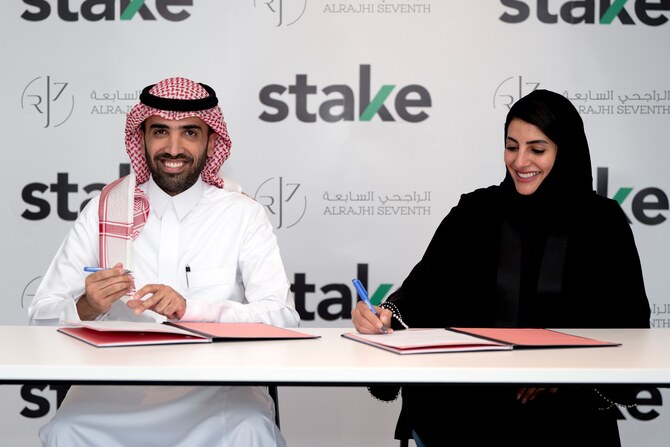
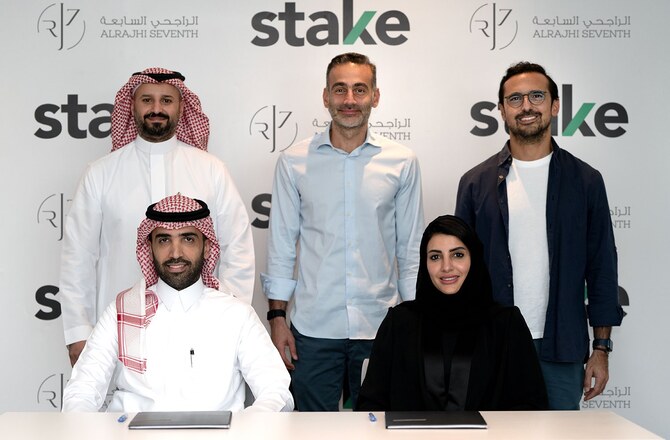

RIYADH: UAE real estate investment platform Stake is considering relocating its regional headquarters to Saudi Arabia, but no immediate plans have been finalized, according to a top official.
In an interview with Arab News, Hanouf Bin Saeed, general manager of Stake Saudi Arabia, said the move would align with the company’s strategy to expand its footprint in the Kingdom, capitalizing on the rapidly growing real estate market driven by Saudi Vision 2030 initiatives.
“In our next step, we aim to move the regional headquarters to Saudi Arabia,” she told Arab News. “Today, with the initiatives happening, it could be very soon. We don’t have a timeline, but our focus today is to grow our footprint in Saudi, build our team, (and) ensure that we have robust, stable growth in Saudi Arabia to be able to capitalize on opportunities and an unparalleled market that is happening in the real estate market today.”
Bin Saeed said the relocation is merely a possibility and the company’s immediate plans focus on expansion and building a solid foundation in the Kingdom.
After a successful closure of a $14 million funding round in June, Stake officially launched its operations in Saudi Arabia on Dec. 9, debuting with its first real estate investment opportunity, which was already 60 percent funded as of mid-December.
The platform, originally established in the UAE four years ago, allows individual investors to invest in real estate projects.
While property investing typically involves large amounts of upfront capital and an antiquated buying process, investors globally can access real estate through Stake from as little as SR500 ($136), the company said.
According to Bin Saeed, Stake has over 800,000 users from 170 countries and has facilitated real estate transactions exceeding $130 million in gross merchandise value in the UAE market. The platform has also distributed more than $5 million in dividends to investors from rental income.
Highlighting the strategic importance of Saudi Arabia for Stake’s expansion, she underscored the transformative economic initiatives under Vision 2030, including a goal to achieve 70 percent homeownership among Saudi nationals by 2030.
“The country is injecting real estate units into the Saudi market — above 500,000 units — just to be able to reach that percentage by 2030,” she said.
The Kingdom’s booming real estate sector, driven by residential, commercial, and hospitality demand, provides fertile ground for Stake’s mission of democratizing real estate investments, she added.
“For us in Stake, our mission is fully aligned with Vision 2030 when it comes to democratizing real estate investments,” Bin Saeed said.
“This is why Stake decided to come to Saudi Arabia, bringing the solution that has been built and successful in the UAE market to Saudi Arabia and to the Saudi market to be able to capitalize on the opportunities that are coming today,” she added.
Stake is one of the few platforms regulated by the Kingdom’s Capital Market Authority to cater to non-resident foreign investors, a key competitive advantage as the Saudi government works to position the country as a global investment hub, Bin Saeed added.
The platform obtained its CMA license in July and has since established an office and local team in Saudi Arabia, while also preparing to expand its fund offerings in the Kingdom significantly.
“For Stake, as we mentioned, we just launched with a fund which is around SR200 million, and our expectation for the coming six months is to launch funds with SR1 billion amount and move forward from there,” Bin Saeed said.
Stake is also eyeing opportunities in commercial real estate and office spaces as international businesses increasingly enter the Saudi market.
The Kingdom’s plans to host the FIFA World Cup in 2034 and the associated growth in the hospitality sector are expected to further boost rental income by 30 percent to 40 percent, according to Bin Saeed.
With the Kingdom’s rapidly evolving real estate landscape, Stake sees Saudi Arabia as a cornerstone of its regional growth strategy.
Bin Saeed stressed the company’s long-term commitment, saying: “We are tapping into different options when it comes to the real estate itself and to be able to localize the market and create these opportunities.”


