Punjab says will work with Huawei to transform Lahore into Pakistan’s first smart city

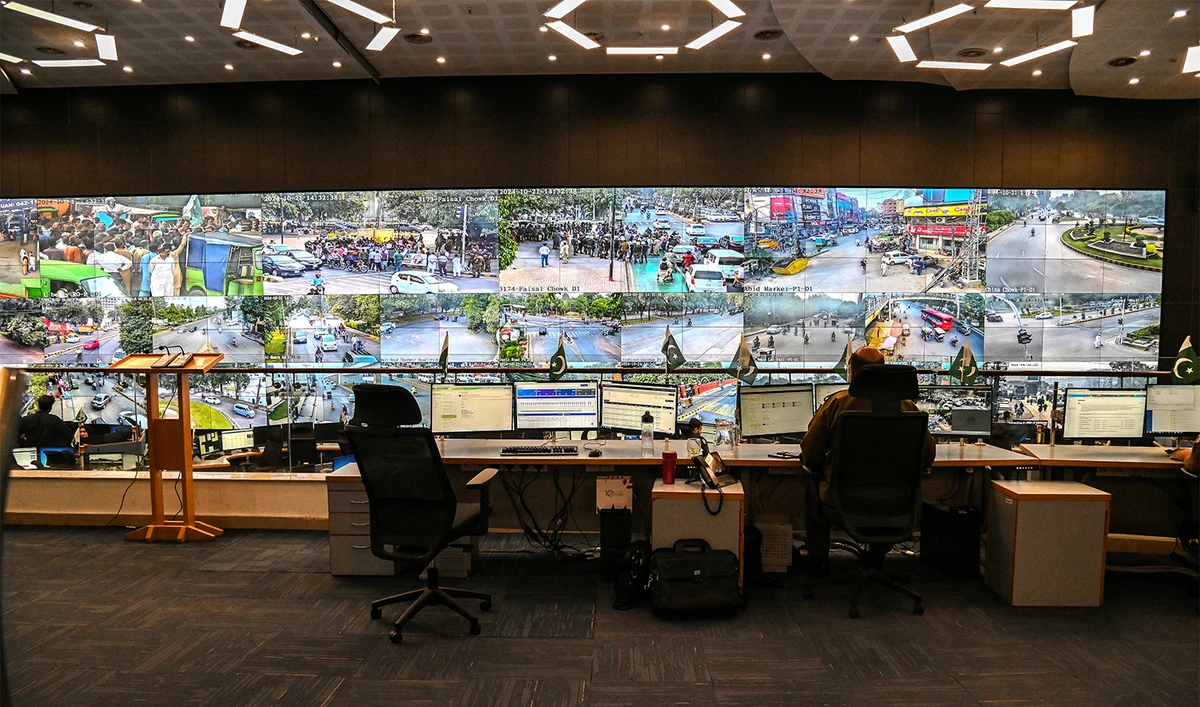
In this photograph taken on October 21, 2024, staff members of Pakistan's Punjab Safe Cities Authority, a government body that aims to improve public safety and security, monitor different locations of the city through CCTV cameras, in Lahore. (AFP/File)
Short Url
Updated 13 December 2024
Follow

Punjab says will work with Huawei to transform Lahore into Pakistan’s first smart city

  • Punjab Chief Minister Maryam Nawaz Sharif is on a week-long visit to China from Dec. 8-15
  • Smart city is an urban area where technology and data collection are used to improve quality of life

ISLAMABAD: Punjab Chief Minister Maryam Nawaz Sharif has discussed various proposals with officials at Chinese information technology giant Huawei to turn the provincial capital into Pakistan’s first smart city, Radio Pakistan reported on Friday.

Sharif is on a week-long visit to China from Dec. 8-15 and on Thursday visited Huawei Technologies in the Longgang district of Shanghai. Longtime ally China has invested heavily in Pakistan through the $65 billion China-Pakistan Economic Corridor (CPEC) that encompasses infrastructure, energy and other projects and is part of Chinese President Xi Jinping’s Belt and Road Initiative.

“During the visit, it was decided, in collaboration with Huawei, to transform Lahore into Pakistan’s first state-of-the-art smart city,” Radio Pakistan reported on Sharif’s visit to the headquarters of the Chinese company.

“Chief Minister discussed various proposals and recommendations with Huawei’s President of Government Affairs Mr. Wang Chengdong, or turning Lahore into a modern digital city, including e-commerce, ecosystem production, and the digitization of the health and education sectors.”
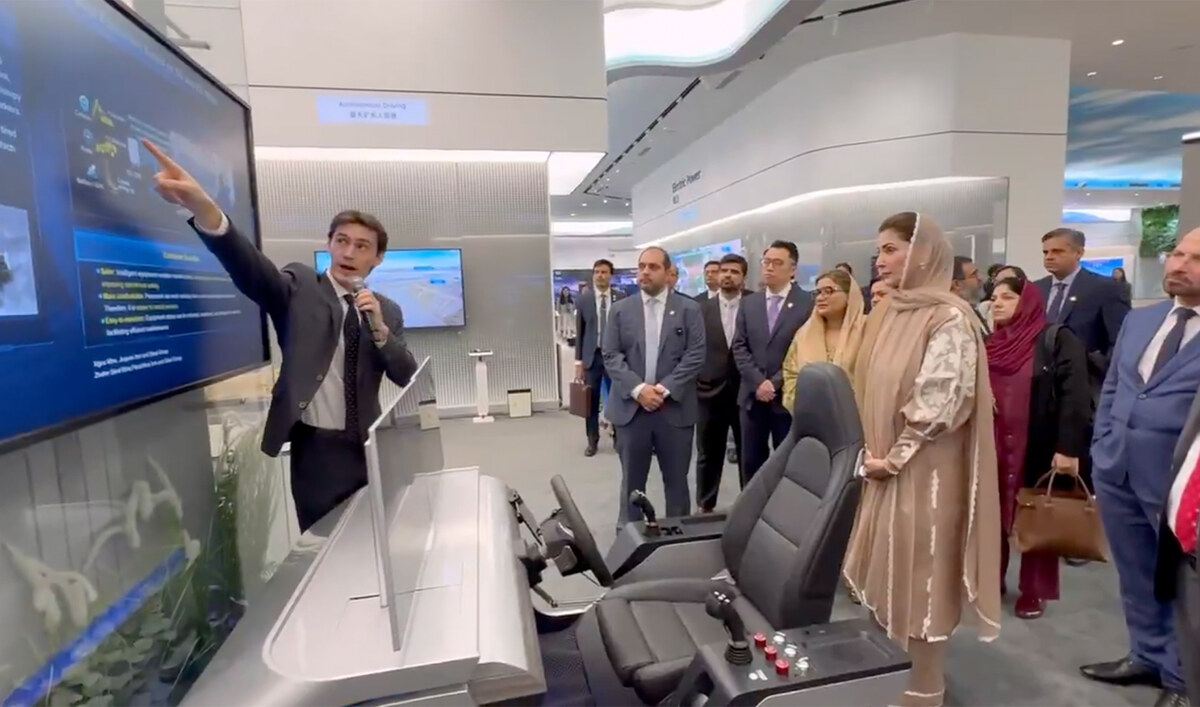


Punjab Chief Minister Maryam Nawaz Sharif (right) attends a briefing at Huawei Technologies in the Longgang district of Shanghai, China, on December 13, 2024. (PML-N)

According to the report, Huawei officials also assured full cooperation in setting up an assembly and manufacturing plant in Punjab.

A smart city is an urban area where technology and data collection help improve quality of life as well as the sustainability and efficiency of city operations. Smart city technologies used by local governments include information and communication technologies (ICT) and the Internet of Things (IoT).

Areas of city operations where ICT, IoT and other smart technologies increasingly play an important role include transportation, energy and infrastructure.

Technologies to collect data, including real-time data, are central to smart city initiatives and the benefits they promise. Data-driven insights help local governments improve urban planning and the deployment of city services, ranging from waste management to public transportation, leading to better quality of life for residents.

More efficient city services can also help cut carbon emissions, contributing to global efforts to address climate change while also improving local air quality. In addition, smart city solutions can be an engine for economic growth, as better infrastructure and technological innovation can encourage job creation and business opportunities.
Pakistan approves $713 million to ease power sector’s cash flow constraints

Updated 5 sec ago
Follow

Pakistan approves $713 million to ease power sector’s cash flow constraints

  • Finance minister chairs Economic Coordination Committee meeting to approve grants, review economic situation
  • Pakistan is grappling with a ballooning “circular debt,” or unpaid bills and subsidies, that has choked its power sector

KARACHI: Pakistan’s top economic body this week approved a grant of $713 million to ease the power sector’s cash flow constraints, the Finance Division said in a statement, as Islamabad looks to reform its priority sectors. 

The development took place as Finance Minister Muhammad Aurangzeb chaired a meeting of the Economic Coordination Committee (ECC) to approve grants for various projects and review the overall economic situation of the country. 

“[ECC approved] another Technical Supplementary Grant amounting to Rs200 billion ($713 million) under the head of Government of Pakistan investment in DISCOs’ equity to address cash flow constraints in the power sector,” the Finance Division said on Thursday. 

DISCOs, which handle billing, recoveries and grid maintenance, have long suffered from corruption and political interference. 

Pakistan has attempted to privatize its loss-making state-owned enterprises to raise funds and reform them as envisaged under a $7 billion International Monetary Fund (IMF) program secured last year. 

Prime Minister Shehbaz Sharif’s government plans to privatize three DISCOs, the Islamabad Electric Supply Company (IESCO), Faisalabad Electric Supply Company (FESCO) and Gujranwala Electric Power Company (GEPCO) in the months ahead. 

The Pakistani government, which owns or controls much of the power infrastructure, is grappling with a ballooning “circular debt,” or unpaid bills and subsidies, that has choked the power sector and weighed on the economy.

The liquidity crunch has disrupted supply, discouraged investment and added to fiscal pressure, making it a key focus under Pakistan’s IMF program.

The ECC also approved, on the interior ministry’s proposal, a provision of Rs 4.775 billion [$17.19 million] as payment to 945 families of “missing persons” as identified by the Commission of Inquiry on Enforced Disappearances. 

“The disbursement will be made under the supervision of the Commission in accordance with approved procedures,” it added. 

Taking stock of the economic situation, the ECC noted that cumulative inflation for the period July–November averaged 5 percent, which it said was “significantly lower” than the 7.9 percent figure recorded during the corresponding period of the previous year. 

It attributed this improvement to prudent fiscal management, effective price stabilization measures and close market monitoring by the government.