Saudi Arabia celebrates Arabic language’s legacy at UN

1 / 4
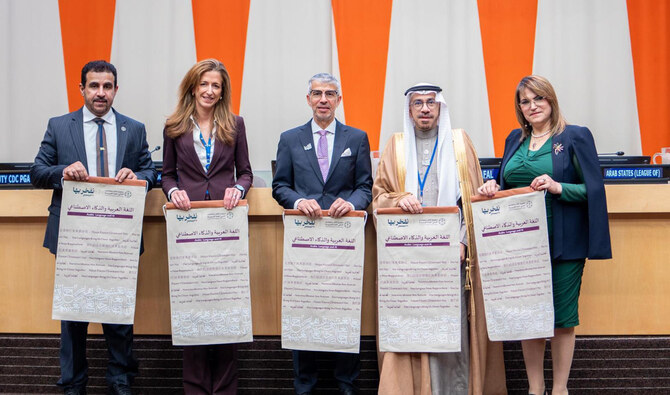
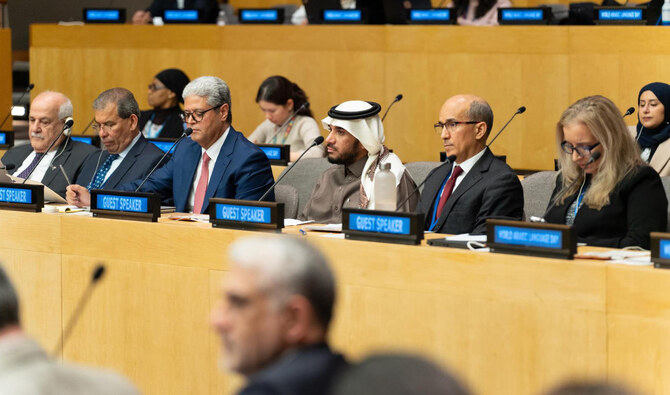
King Salman Global Academy for the Arabic Language hosted the World Arabic Language Day celebration program and its accompanying exhibition at the UN headquarters in New York. (SPA)
2 / 4
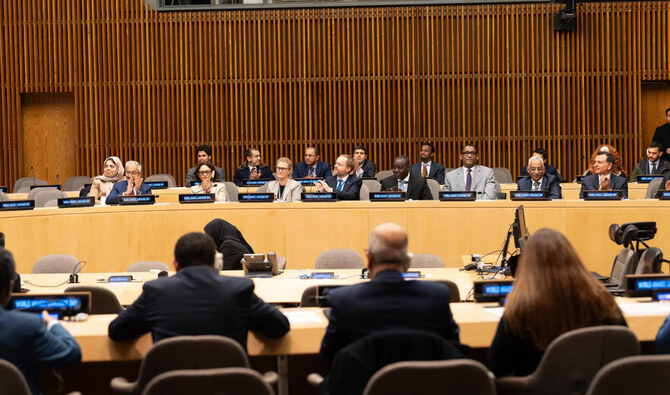
King Salman Global Academy for the Arabic Language hosted the World Arabic Language Day celebration program and its accompanying exhibition at the UN headquarters in New York. (SPA)
3 / 4
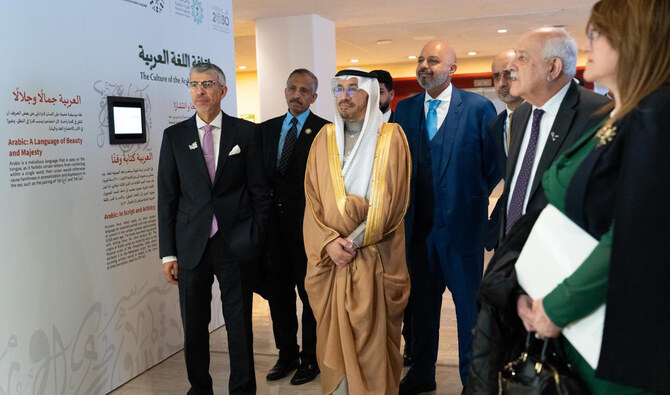
King Salman Global Academy for the Arabic Language hosted the World Arabic Language Day celebration program and its accompanying exhibition at the UN headquarters in New York. (SPA)
4 / 4
King Salman Global Academy for the Arabic Language hosted the World Arabic Language Day celebration program and its accompanying exhibition at the UN headquarters in New York. (SPA)
Short Url
Updated 11 December 2024
Follow

Saudi Arabia celebrates Arabic language’s legacy at UN

  • Event highlighted Arabic’s role in AI, innovation while preserving cultural heritage

RIYADH: The King Salman Global Academy for the Arabic Language hosted the World Arabic Language Day celebration program and its accompanying exhibition at the UN headquarters in New York.

Organized in collaboration with the Kingdom’s permanent mission to the UN, the event was held under the theme, “Arabic Language and Artificial Intelligence: Enhancing Innovation While Preserving Cultural Heritage,” from Dec. 9 to Dec. 11.

The academy’s secretary-general, Abdullah Al-Washmi, emphasized the Kingdom’s pivotal role in supporting the Arabic language globally, rooted in Saudi Vision 2030, as the birthplace of the Arabic language and the Holy Qur’an, and in preserving and promoting Arabic as an integral part of cultural identity.

He added that this year’s theme reflected a growing global awareness of the importance of the Arabic language, the Saudi Press Agency reported.

Al-Washmi said that the academy’s role was as a leading institution working to enhance the status of the Arabic language and developing tools for its teaching and dissemination locally and internationally, adding that the institution operated in more than 60 countries, demonstrating its global impact.

He also underscored the historical significance of the Arabic language at the UN, where it was recognized as one of its six official languages through a landmark resolution by the General Assembly in 1973.

Held under the patronage of Saudi Minister of Culture Prince Badr bin Abdullah bin Farhan, the event was attended by high-ranking international and diplomatic figures.

This marks the fourth consecutive year of the celebration, showcasing the academy’s efforts to promote Arabic in global organizations and highlighting Saudi Arabia’s dedication to preserving the language’s cultural and scientific heritage.

The event included a panel discussion, “Arabic Translation at the UN,” featuring international experts and a virtual training course on “Arabic Translation Skills for Diplomatic Purposes” for UN staff.

An Arabic language exhibition featured artistic works and digital displays focused on the language’s beauty, history and impact on other civilizations. It reflected Saudi culture’s authenticity while introducing the academy’s activities and publications.


Saudi watchdog warns of possible health risk from Nestle baby formula

Updated 06 January 2026
Follow

Saudi watchdog warns of possible health risk from Nestle baby formula

  • Company voluntarily recalls its Nan, Alfamino, S-26 Gold and S-26 Ultima products over concerns they might be contaminated with cereulide, a toxin produced by bacteria
  • Saudi Food and Drug Authority says recall is precautionary and no related illnesses have been reported, but advises consumers to dispose of recalled products immediately

RIYADH: The Saudi Food and Drug Authority on Tuesday warned the public not to consume certain Nestle infant formula products, after the company issued a voluntary recall over concerns about possible contamination.

The advisory covers products marketed under the Nan, Alfamino, S-26 Gold and S-26 Ultima brands. They might be contaminated with cereulide, a toxin produced by the Bacillus cereus bacteria, which can pose a risk to infant health, the Saudi Press Agency reported.

The Saudi authority said the recall was a precautionary measure and no related illnesses have been reported. Possible symptoms of exposure can include nausea, repeated vomiting and abdominal pain.

It advised consumers to dispose of the recalled products immediately, and said it was coordinating with Nestle to ensure they are removed from stores and is monitoring the process.

Full details of the affected products, including batch numbers, are available at the Saudi Food and Drug Authority website. The organization said consumers can report any food safety concerns by calling 19999.