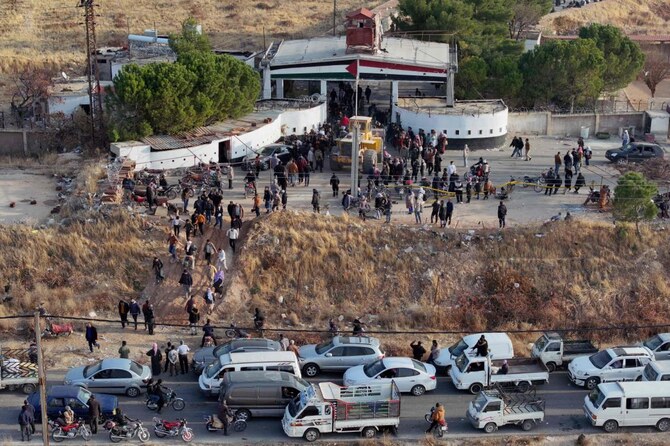
DAMASCUS: They came from all over Syria, tens of thousands. The first place they rushed to after the fall of their longtime tormentor, former President Bashar Assad, was here: Saydnaya Prison, a place so notorious for its horrors it was long known as “the slaughterhouse.”
For the past two days, all have been looking for signs of loved ones who disappeared years or even decades ago into the secretive, sprawling prison just outside Damascus.
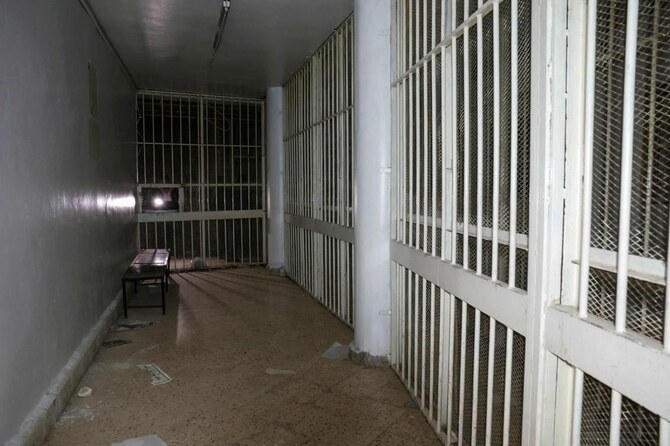
But hope gave way to despair Monday. People opened the heavy iron doors lining the hallways to find cells inside empty. With sledgehammers, shovels and drills, men pounded holes in floors and walls, looking for what they believed were secret dungeons, or chasing sounds they thought they heard from underground. They found nothing.
Insurgents freed dozens of people from the Saydnaya military prison on Sunday when Damascus fell. Since then, almost no one has been found.
“Where is everyone? Where are everyone’s children? Where are they?” said Ghada Assad, breaking down in tears.
She had rushed from her Damascus home to the prison on the capital’s outskirts, hoping to find her brother. He was detained in 2011, the year that protests first erupted against the former president’s rule – before they turned into a long, grueling civil war. She didn’t know why he was arrested.
“My heart has been burned over my brother. For 13 years, I kept looking for him,” she said. When insurgents last week seized Aleppo — her original hometown — at the start of their swiftly victorious offensive, “I prayed that they would reach Damascus just so they can open up this prison,” she said.
Civil defense officials helping in the search were as confused as the families over why no further inmates were being found. It appeared fewer were held here in recent weeks, they said.
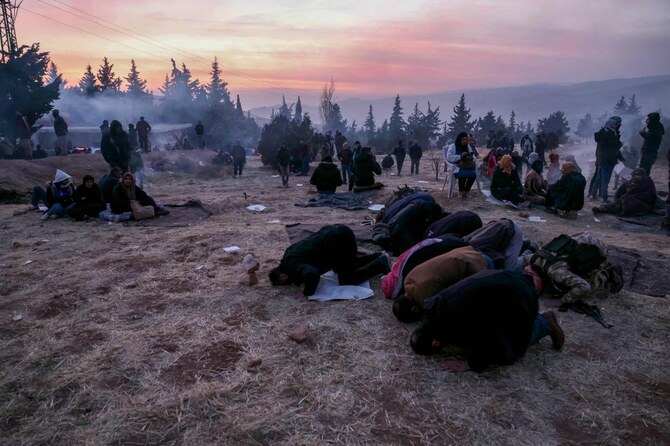
But few were giving up, a sign of how powerfully Saydnaya looms in the minds of Syrians as the heart of Assad’s brutal police state. The sense of loss over the missing — and the sudden hope they might be found — brought a kind of dark unity among Syrians from across the country.
During Assad’s rule and particularly after the 2011 protests began, any hint of dissent could land someone in Saydnaya. Few ever emerged.
In 2017, Amnesty International estimated that 10,000-20,000 people were being held there at the time “from every sector of society.” It said they were effectively slated for “extermination.”
Thousands were killed in frequent mass executions, Amnesty reported, citing testimony from freed prisoners and prison officials. Prisoners were subjected to constant torture, intense beatings and rape. Almost daily, guards did rounds of the cells to collect bodies of inmates who had died overnight from injuries, disease or starvation. Some inmates fell into psychosis and starved themselves, the human rights group said.
“There is not a home, there is not a woman in Syria who didn’t lose a brother, a child or a husband,” said Khairiya Ismail, 54. Two of her sons were detained in the early days of the protests against Assad – one of them when he came to visit her after she herself had been detained.
Ismail, accused of helping her son evade military service, spent eight months in Adra prison, northeast of Damascus. “They detained everyone.”
An estimated 150,000 people were detained or went missing in Syria since 2011 — and tens of thousands of them are believed to have gone through Saydnaya.
“People expected many more to be here ... They are clinging to the slightest sliver of hope,” said Ghayath Abu Al-Dahab, a spokesman for the White Helmets, the search and rescue group that operated in rebel-held areas throughout the war.
Five White Helmet teams, with two canine teams, came to Saydnaya to help the search. They even brought in the prison electrician, who had the floor plan, and went through every shaft, vent and sewage opening. So far, there were no answers, Abu Al-Dahab said.
He said the civil defense had documents showing more than 3,500 people were in Saydnaya until three months before the fall of Damascus. But the number may have been less by the time the prison was stormed, he said.
“There are other prisons,” he said. “The regime had turned all of Syria into a big prison.” Detainees were held in security agencies, military facilities, government offices and even universities, he added.
Around the Y-shaped main building of the prison, everyone kept trying, convinced they could find some hidden chamber with detainees, dead or alive.
Dozens of men tried to force a metal gate open until they realized it led only to more cells upstairs. Others asked the insurgents guarding the prison to use their rifle to lever open a closed door.
A handful of men were gathered, excavating what looked like a sewage opening in a basement. Others dug up electrical wiring, thinking it might lead to hidden underground chambers.
In a scene throughout the day, hundreds cheered as men with sledgehammers and shovels battered a huge column in the building’s atrium, thinking they had found a secret cell. Hundreds ran to see. But there was nothing, and tears and loud sighs replaced the celebrations.
In the wards, lines of cells were empty. Some had blankets, a few plastic pots or a few names scribbled on walls. Documents, some with names of prisoners, were left strewn in the yard, the kitchen and elsewhere. Families scoured them for their loved ones’ names.
A brief protest broke out in the prison yard, when a group of men began chanting: “Bring us the prison warden.” Calls on social media urged anyone with information of the secret cells of the prison to come forth and help.
Firas Al-Halabi, one of the prisoners freed when insurgents first broke into Saydnaya, was back on Monday visiting. Those searching flocked around him, whispering names of relatives to see if he met them.
Al-Halabi, who had been an army conscript when he was arrested, said he spent four years in a cell with 20 others.
His only food was a quarter loaf of bread and some burghul. He suffered from tuberculosis because of the cell conditions. He was tortured by electrocution, he said, and the beatings were constant.
“During our time in the yard, there was beating. When going to the bathroom, there was beating. If we sat on the floor, we got beaten. If you look at the light, you are beaten,” he said. He was once thrown into solitary for simply praying in his cell.
“Everything is considered a violation,” he said. “Your life is one big violation to them.”
He said that in his first year in the prison guards would call out hundreds of names over the course of days. One officer told him it was for executions.
When he was freed Sunday, he thought he was dreaming. “We never thought we would see this moment. We thought we would be executed, one by one.”
Noha Qweidar and her cousin sat in the yard on Monday, taking a rest from searching. Their husbands were detained in 2013 and 2015. Qweidar said she had received word from other inmates that her husband was killed in a summary execution in prison.
But she couldn’t know for sure. Prisoners reported dead in the past have turned up alive.
“I heard that (he was executed) but I still have hope he is alive.”
Just before sundown on Monday, rescue teams brought in an excavator to dig deeper.
But late at night, the White Helmets announced the end of their search, saying in a statement they had found no hidden areas in the facility.
“We share the profound disappointment of the families of the thousands who remain missing and whose fates are unknown.”


![]()
![]()
![]()
![]()

Thousands scour Syria’s most horrific prison but find no sign of their loved ones

Short Url
https://arab.news/4zadu
Thousands scour Syria’s most horrific prison but find no sign of their loved ones


Latest updates


© 2026 SAUDI RESEARCH & PUBLISHING COMPANY, All Rights Reserved And subject to Terms of Use Agreement.