ISLAMABAD: Pakistan’s embassy in Syria said on Sunday that it was working to provide shelter and evacuate Pakistani pilgrims and expatriates, with stranded Pakistanis calling to expedite repatriation efforts.
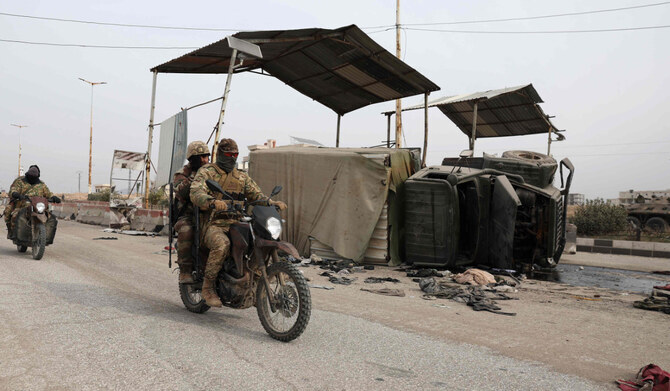
The development came hours after Pakistan’s Foreign Office activated its Crisis Management Unit (CMU) to assist Pakistanis stranded in Syria as Syrian opposition forces entered Damascus and reports emerged that President Bashar Assad had left the capital for an undisclosed destination.
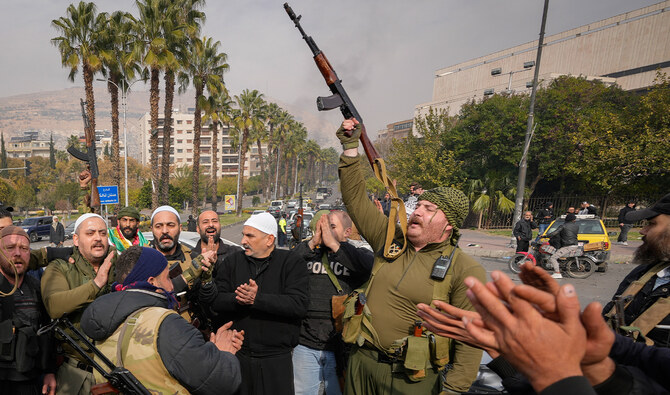
The dramatic comeback by Syrian opposition forces follows days of fierce fighting and thousands of Syrians in cars and on foot congregated at a main square in Damascus, waving and chanting “Freedom,” witnesses said.
Pakistan’s embassy in Syria said it was focusing on accommodating Pakistani nationals at a school run by it so that they could have a secure place to stay and arranging flights for their repatriation to Pakistan.
“Our ambassador is in contact with the Foreign Office and we are working to arrange chartered flights for the repatriation of Pakistanis from Syria at the earliest,” Muhammad Nafees, an official at the Pakistani embassy in Damascus, told Arab News over the phone.
“But this depends on the availability of transportation and operational airports.”
Nafees said Syria’s airports and borders with Jordan and Oman were currently closed, posing a “major challenge” to the repatriation effort.
“Around 140 pilgrims are stranded in Sayyidah Zaynab [city near Damascus] as they were supposed to return from the pilgrimage by December 10, but are unable to proceed due to the suspension of flight operations and non-functional airports,” he added.
The official said there were around 1,200 Pakistanis, including 58 students of a religious school, living in Syria.
“Of these, 250 individuals have expressed their willingness to return to Pakistan by contacting us through the form provided by the embassy,” he said, adding that some Pakistanis with Syrian citizenship did not wish to return to Pakistan.
“Currently, there is no functional traffic in the city, making it difficult for them to reach the embassy or for us to send anyone due to the traffic blockade.”
He said the mission had issued an advisory to the community through all social media platforms and mobile phones, urging them to avoid travel, stay in contact, keep sufficient food supplies, and follow updates for further instructions.
Speaking to Arab News, Pakistani pilgrims and expatriates residing in Syria expressed fears for their safety and called for urgent efforts to expedite their repatriation.
Abeel Hassan, a pilgrim from Pakistan’s Parachinar, said although the situation was calm so far, the pilgrims were worried about their safety.
“Our group consists of 14 people, including women, and we have limited finances and cannot afford an extended stay at the hotel,” he said.
Hassan, who arrived for the pilgrimage in Syria on December 5 and was scheduled to fly to Iran on December 10, hoped the situation would stabilize soon and flight operations would resume.
Ilyas Naqvi, a Pakistani expatriate from Islamabad who has been living and working in Sayyidah Zaynab along with his wife and two sons since 2000, wished for immediate repatriation.
“We request that our embassy and the Government of Pakistan act swiftly to evacuate us from Syria as soon as possible as many of us have small children,” he told Arab News, adding that there were around 200 Pakistanis, including women and children, living in Sayyidah Zaynab.
“Although the new forces have not yet threatened the people, everyone is very scared. We want to go to the embassy, as we believe it will be safer there and we will feel more secure under their protection.”


![]()
![]()

Pakistani mission in Syria says working to evacuate stranded pilgrims and expatriates
Short Url
https://arab.news/jpbjz
Pakistani mission in Syria says working to evacuate stranded pilgrims and expatriates
- Over 1,200 members of the Pakistani expat community and more than 140 pilgrims are currently stranded in Syria
- The embassy has urged Pakistani nationals to avoid travel, stay in contact, keep food supplies and follow updates
Latest updates





Recommended


© 2026 SAUDI RESEARCH & PUBLISHING COMPANY, All Rights Reserved And subject to Terms of Use Agreement.