Saudi education POS defies trend, surges 178%: SAMA data

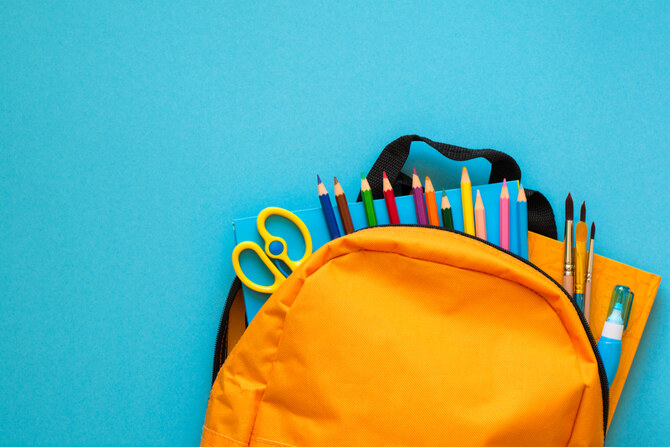
Education was the sole sector to record growth during the week of Nov. 17–23. Shutterstock
Short Url
Updated 27 November 2024
Follow

Saudi education POS defies trend, surges 178%: SAMA data

RIYADH: Education spending in Saudi Arabia soared 178.6 percent to SR249.5 million ($66.4 million) during the week of Nov. 17–23, bucking the broader decline across other sectors. 

According to the Saudi Central Bank’s weekly point-of-sale transactions bulletin, education was the sole sector to record growth. Transactions in the category climbed 62.3 percent to 164,000. 

By contrast, other consumer spending categories experienced sharp declines. Clothing and footwear posted the steepest drop, falling 25.1 percent to SR694 million. Hotel expenditures followed, dipping 23.5 percent to SR305.6 million. 

Spending in restaurants and cafes, which accounted for the second-largest share of total POS value, decreased 19.6 percent to SR1.66 billion. 

Overall, Saudi Arabia’s POS transactions shrank 13.1 percent week on week, with total expenditures declining to SR11.5 billion from SR13.2 billion in the prior week.  

The central bank’s figures showed that the electronics sector saw a 9.3 percent slide to SR179.6 million, while telecommunications expenditures dropped 11.2 percent to SR104 million. 

The food and beverages category — the largest contributor to POS transactions — saw a 9.8 percent dip to SR1.7 billion. Miscellaneous goods and services, which ranked third, fell 10.6 percent to SR1.3 billion. Together, the top three categories accounted for 41.3 percent, or SR4.7 billion, of the week’s total transaction value. 

At 3 percent, the smallest decrease occurred in spending on construction and building materials, leading total payments to SR340.5 million. Expenditures in the health sector dipped by 7.3 percent to SR710 million.  

Regional insights 

Geographically, Riyadh dominated POS transactions, representing 35.9 percent of the total, with expenses in the capital reaching SR4.1 billion — an 8.2 percent decrease from the previous week.  

Jeddah followed with a 14.2 percent dip to SR1.5 billion, and Dammam came in third at SR590.5 million, down 7.9 percent. 

Hail experienced the most significant dip in spending, decreasing 20 percent to SR177.4 million. Tabouk and Abha recorded declines by 11.4 percent and 9.8 percent reaching SR209 million and SR134.9 million, respectively. 

Makkah and Madinah saw the largest transaction decreases, falling 15.2 percent and 14.9 percent, respectively, to 7.6 million and 7.8 million transactions. 


Saudi Arabia, Japan trade rises 38% between 2016 and 2024, minister says

Updated 11 January 2026
Follow

Saudi Arabia, Japan trade rises 38% between 2016 and 2024, minister says

RIYADH: Trade between Saudi Arabia and Japan has increased by 38 percent between 2016 and 2024 to reach SR138 billion ($36 billion), the Kingdom’s investment minister revealed.

Speaking at the Saudi-Japanese Ministerial Investment Forum 2026, Khalid Al-Falih explained that this makes the Asian country the Kingdom’s third-largest trading partner, according to Asharq Bloomberg.

This falls in line with the fact that Saudi Arabia has been a very important country for Japan from the viewpoint of its energy security, having been a stable supplier of crude oil for many years.

It also aligns well with how Japan is fully committed to supporting Vision 2030 by sharing its knowledge and advanced technologies.

“This trade is dominated by the Kingdom's exports of energy products, specifically oil, gas, and their derivatives. We certainly look forward to the Saudi private sector increasing trade with Japan, particularly in high-tech Japanese products,” Al-Falih said.

He added: “As for investment, Japanese investment in the Kingdom is good and strong, but we look forward to raising the level of Japanese investments in the Kingdom. Today, the Kingdom offers promising opportunities for Japanese companies in several fields, including the traditional sector that links the two economies: energy.”

The minister went on to note that additional sectors that both countries can also collaborate in include green and blue hydrogen, investments in advanced industries, health, food security, innovation, entrepreneurship, among others.

During his speech, Al-Falih shed light on how the Kingdom’s pavilion at Expo 2025 in Osaka achieved remarkable success, with the exhibition receiving more than 3 million visitors, reflecting the Japanese public’s interest in Saudi Arabia.

“The pavilion also organized approximately 700 new business events, several each day, including 88 major investment events led by the Ministry of Investment. Today, as we prepare for the upcoming Expo 2030, we look forward to building upon Japan’s achievements,” he said.

The minister added: “During our visit to Japan, we agreed to establish a partnership to transfer the remarkable Japanese experience from Expo Osaka 2025 to Expo Riyadh 2030. I am certain that the Japanese pavilion at Expo Riyadh will rival the Saudi pavilion at Expo Osaka in terms of organization, innovation, and visitor turnout.”

Al-Falih also shed light on how Saudi-Japanese relations celebrated their 70th anniversary last year, and today marks the 71st year of these relations as well as how they have flourished over the decades, moving from one strategic level to an even higher one.