



ISLAMABAD: Hanif Masih, a veteran fireman with the Capital Development Authority (CDA), went to sleep late on Saturday after celebrating his son’s wedding. Shahroon Hanif had just returned from the eastern city of Gujrat with his bride, and the family was preparing for a post-wedding valima feast and a trip to Murree. By morning, those plans were gone.
Just after 7 a.m. on Sunday, a massive gas leakage in the house next door in Islamabad’s Sector G-7/2 triggered a thunderous explosion. The blast brought the walls of Masih’s house crumbling down on the sleeping guests who had gathered for the wedding, claiming six lives, including the newlyweds, and injuring 11 others. Two more people were killed in an adjacent house.
“If this grief were placed upon a mountain, I believe it would be shattered into pieces,” Masih said during a conversation with Arab News on Tuesday. “It is only by God’s grace that I am still standing.”
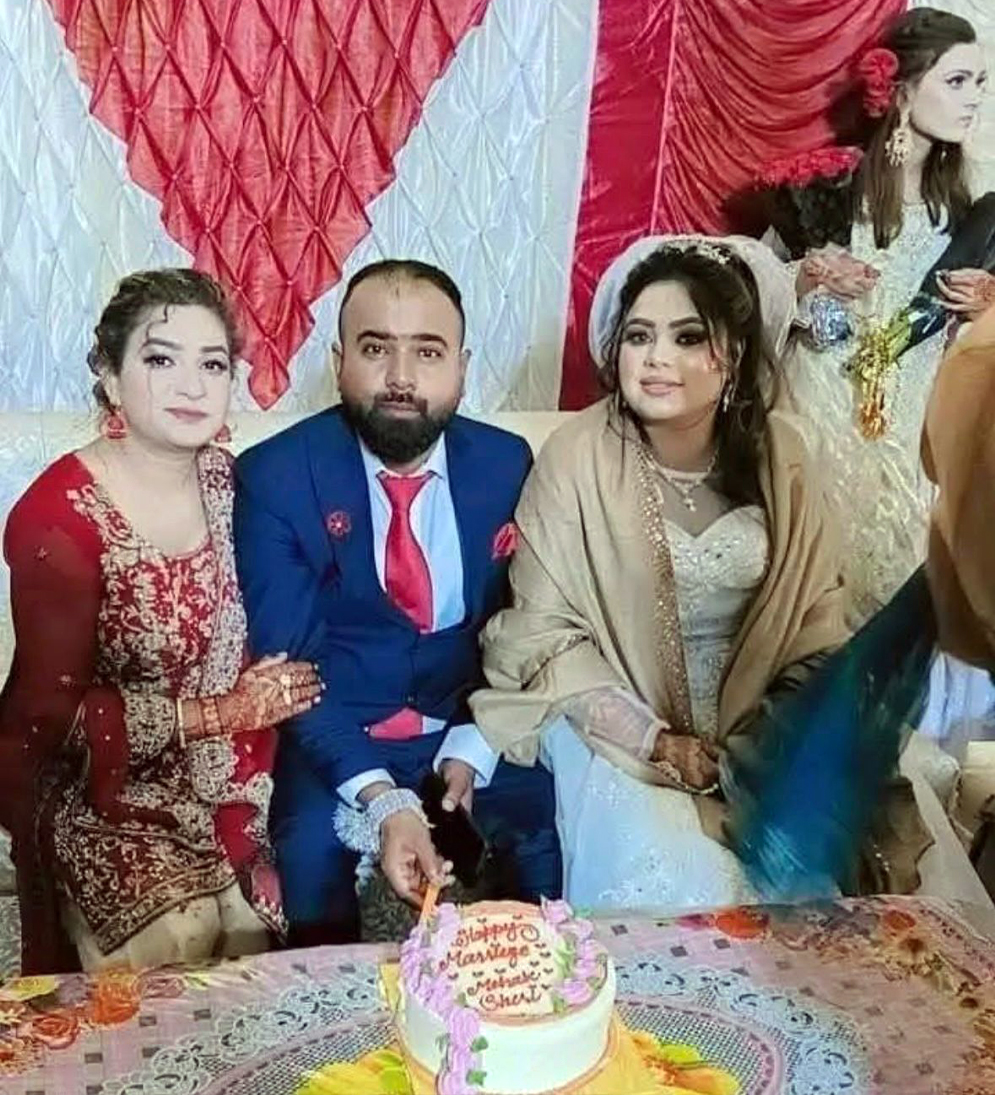
The photograph shows Shahroon Hanif (center) with his family during their wedding ceremony, who were killed in a gas leakage explosion in Islamabad, Pakistan, on January 11, 2026. (Afzal Khokhar/Social Media)
His tragedy was not without precedent.
According to media reports, the Islamabad blast pushed the death toll from gas-related incidents in Pakistan to 27 since January last year, with nearly 100 people injured during that period. Just two weeks before the incident in G-7/2, on December 29, a similar blast took place in Rawalpindi, while a massive LPG container leakage in Multan killed five people and injured 31 before that.
A 2025 retrospective study by Allama Iqbal Medical College analyzed a decade of such incidents in Pakistan (2015–2025), finding that gas cylinder explosions cause an average of 8.18 casualties per event. Over 10 years, 214 explosions resulted in 447 deaths and 1,302 injuries, with 44.4 percent occurring in residential areas and peaking in January when winter demand for heating and cooking rises.
FROM CELEBRATION TO MOURNING
But the human toll is heartbreaking. Masih’s neighbor, Afzal Khokhar, described how the celebrations turned into mourning.
“If you had come the night before the explosion, the atmosphere was so full of joy,” he told Arab News, standing atop his house against a backdrop of devastation. “But when we woke up at 7:00 AM... there was a sudden blast, and everything turned into mourning.”
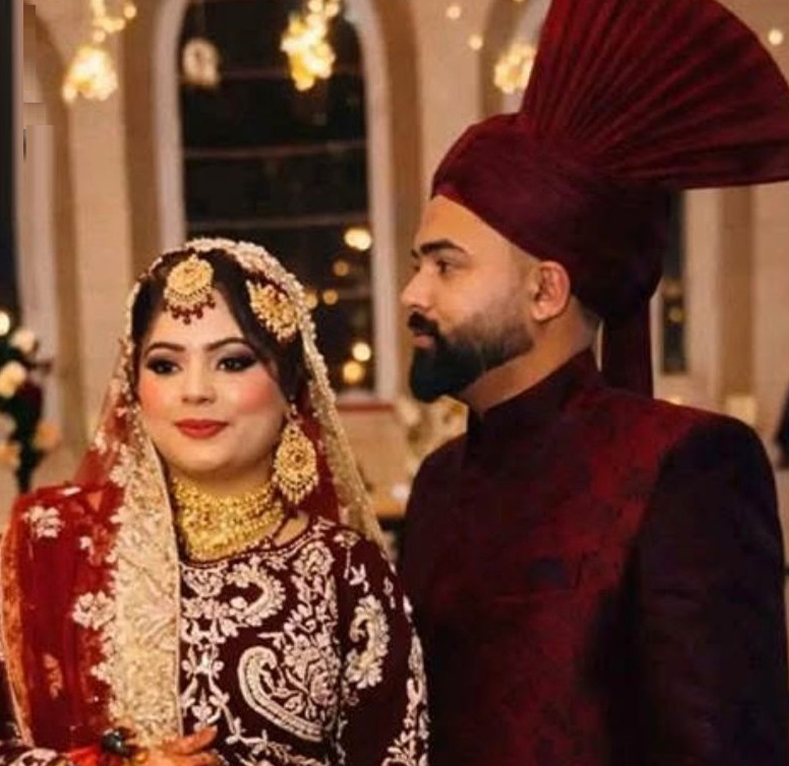
The photograph shows Shahroon Hanif (right) with his wife during their wedding ceremony, who were killed in a gas leakage explosion in Islamabad, Pakistan, on January 11, 2026. (Afzal Khokhar/Social Media)
Khokhar said he and other neighbors pulled a few bodies from the rubble before the rescue teams arrived. According to an official press release, 45 fire and medical personnel participated in the five-hour operation.
CDA Chairman and Chief Commissioner Islamabad Muhammad Ali Randhawa, who visited the site and the injured at PIMS Hospital, stated that “the explosion occurred due to a gas leakage” and noted that “such incidents often occur during winter due to the careless use of gas cylinders.”
The CDA has since initiated an inquiry and ordered a citywide survey of fire safety measures.
FATHER’S PLEA
The crisis is fueled by systemic lapses. But for Masih, the failure is now intensely personal. His family had planned a celebratory trip to Murree after the reception. Instead, he is left to warn others.
“Whether they are appliances for summer or winter, such as gas [heaters], refrigerators or room coolers, please use them with extreme caution,” he said. “As beneficial as these appliances are, they can be just as dangerous.”
He said care should be taken to ensure that “they do not become a cause of suffering or result in the loss of human life.”
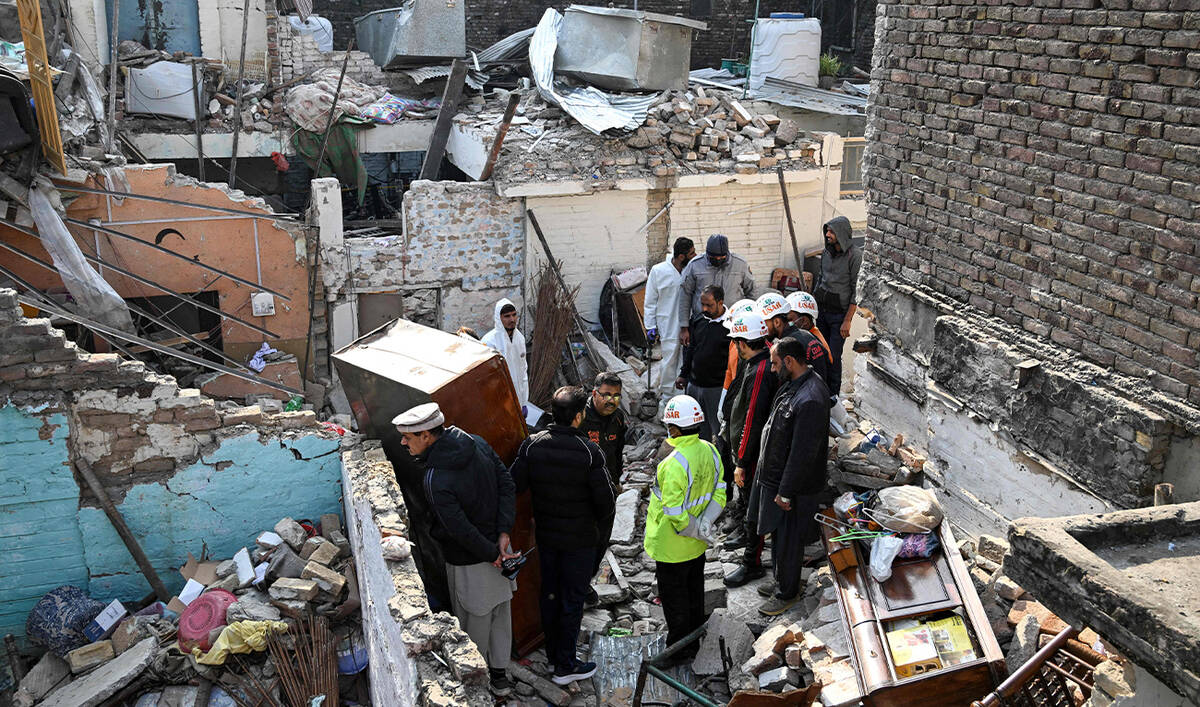
Security personnel and rescue workers search for survivors amid the debris of a damaged house after a gas cylinder explosion in a Christian colony in Islamabad on January 11, 2026. (AFP)
Masih’s wife, Bushra Bibi, also died in the explosion. He said he had been splitting his time between receiving mourners and visiting his daughter, Sholmait Hanif, who was seriously injured and remains in the Intensive Care Unit.
The loss of his family has left a void no official inquiry can fill.
He said his relationship with his son went beyond the traditional bond shared by most fathers.
“He was my friend,” he said, without losing composure.


