BEIRUT: Last week Israel launched its deadliest strikes on Iran-backed groups in Syria, killing more than 100 fighters in the latest escalation since two months of full-blown Israel-Hezbollah war spilled over.
What are the reasons for this escalation, and what exactly is Israel targeting in Lebanon’s neighbor Syria?
Israel intensified its strikes against Syria from September 26, days after launching an intense bombing campaign mainly targeting Hezbollah strongholds in Lebanon.
Since then, the Syrian Observatory for Human Rights war monitor has recorded at least 86 Israeli attacks, with 199 Iran-backed fighters, Syrian soldiers and 39 civilians killed.
On November 20, Israeli strikes on the city of Palmyra killed 106 Tehran-backed fighters, with one raid targeting a meeting of commanders.
It was the deadliest Israeli attack on Iran-backed groups since Syria’s war erupted in 2011, said the Britain-based Observatory which has a network of sources inside the country.
The casualties included 73 pro-Iran Syrian fighters, 11 of whom worked for Hezbollah which also lost four Lebanese members. The remaining 29 casualties were mostly from Iraq’s Al-Nujaba group.
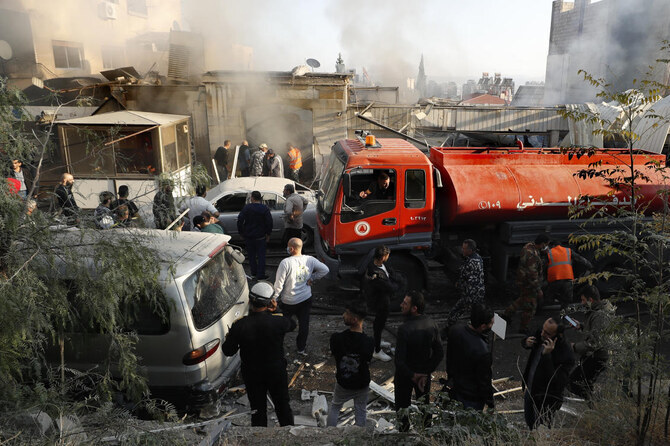
On Monday, Israel struck again, this time at a crossing on the Syria-Lebanon border, the latest in a wave of attacks targeting such routes since September.
Observatory head Rami Abdel Rahman said Israel has mainly hit border crossings, Damascus apartments, and the positions of Iran-backed groups, including Hezbollah weapons and ammunition depots.
“Syria today has become a de facto part of Israel’s battlefield,” he said.
On November 19, Syrian Foreign Minister Bassam Sabbagh visited ally Tehran and condemned “more than 130” Israeli attacks on his country since the Gaza war started in October 2023.
These included an April 1 attack on an Iranian diplomatic building in Damascus that killed seven Islamic Republic Guard Corps members including two generals, triggering Iran’s first ever attack on Israel.
Since 2011, Israel has carried out hundreds of strikes in Syria, mainly targeting the army and Iran-backed groups.
Israel rarely comments on such strikes, but has repeatedly said it will not allow Iran to expand its presence there.
Israel’s military said Monday’s strikes targeted “smuggling routes to transfer weapons to” Hezbollah, and follow other operations against “Syrian regime smuggling routes” in recent weeks.
For Century Foundation analyst Sam Heller, “the deterrent balance that had existed between Hezbollah and Israel has broken down” since the Lebanon war.
“Israel is now bombing Lebanon at will, and additionally hitting what are purportedly Hezbollah and Iran-linked targets in Syria without fear of real reprisal” by the group.
“This all seems like an attempt by Israel to sustainably weaken Hezbollah,” as it pounds its “logistical lines via Syria and pushes for a resolution to the war that will prevent Hezbollah from resupplying and rebuilding,” Heller added.
Renad Mansour of Chatham House said Israel’s Syria strikes “targeted the financial and military supply chains that fuel the axis of resistance” — Iran-backed armed groups that include Hezbollah and Palestinian, Yemeni and Iraqi militants.
On Sunday, UN special envoy for Syria Geir Pedersen said it was “extremely critical” to end the Lebanon and Gaza fighting to avoid dragging Syria into a regional war.
Escalating Israeli attacks have added to the country’s woes after 13 years of conflict and successive economic crises compounded by Western sanctions.
Damascus has not responded to Israel’s attacks and has tried to distance itself from the Gaza and Lebanon wars.
“Any counterattack against Israel would invite massive retaliation against Syria’s leadership or essential infrastructure,” Heller said.
A source close to Hezbollah said “Syria’s role is not to attack Israel, but rather to serve... as a supply line from Iran and Iraq to Hezbollah.”
Tehran and Baghdad fear that Israeli strikes, which have already hit Yemen’s Houthi militants, could hit their territory even if a ceasefire is agreed, the source said, requesting anonymity to discuss sensitive matters.
Last week, Israel called on the UN Security Council to pressure Iraq into halting attacks launched by Iran-backed groups from its soil.
Tehran-backed Iraqi factions have claimed near-daily drone attacks on Israel in solidarity with allies Hamas and Hezbollah. Most of the attacks were intercepted.
The Baghdad government, which is dominated by pro-Iran parties, has accused Israel of trying to legitimize attacking Iraq, saying it was already taking measures to prevent attacks on Israel launched from its territory.
For more than a year, “Iraq has managed to stay relatively insulated from this wider regional war,” Mansour told AFP, adding that Iran and the United States also pushed for this.
But “in this time of transition between US President (Joe) Biden and (Donald) Trump, the Iraqi government is concerned that (Israeli Prime Minister Benjamin) Netanyahu has even more of a free hand to go after all the axis of resistance,” he said.


![]()

Why has Israel increased its attacks on Syria?
Short Url
https://arab.news/82fa2
Why has Israel increased its attacks on Syria?
- The Syrian Observatory for Human Rights war monitor has recorded at least 86 Israeli attacks, with 199 Iran-backed fighters, Syrian soldiers and 39 civilians killed
- Observatory head Rami Abdel Rahman said Israel has mainly hit border crossings, Damascus apartments, and the positions of Iran-backed groups


Latest updates


© 2026 SAUDI RESEARCH & PUBLISHING COMPANY, All Rights Reserved And subject to Terms of Use Agreement.