

Marathon polo tournament draws huge crowds in Pakistan’s picturesque north

Polo players ride their horses as they compete during a polo game in Skardu, in Pakistan's northeastern Gilgit-Baltistan region on November 21, 2024. (Photo courtesy: ISPR)
Short Url
Updated 22 November 2024
Follow

Marathon polo tournament draws huge crowds in Pakistan’s picturesque north

  • Ten-day tournament played among 17 teams of Gilgit-Baltistan as part of independence day celebrations 
  • GB Independence Day celebrated on Nov. 1 every year to mark region’s independence in 1947 from Dogra Raj

KHAPLU, Gilgit-Baltistan: Large crowds have been gathering daily in the northern mountain town of Gilgit for a 10-day polo tournament being held to mark Gilgit-Baltistan’s Independence Day, the military’s media wing and government officials said on Thursday, the last day of the event. 
GB is administered by Pakistan as an administrative territory and consists of the northern portion of the larger Kashmir region, which has been the subject of a dispute between India and Pakistan since 1947. The impoverished, remote and rugged mountainous territory borders Afghanistan and China and is the gateway of the $65 billion China-Pakistan Economic Corridor (CPEC) infrastructure plan. 
The Gilgit-Baltistan Independence Day is celebrated on Nov. 1 every year to mark the region’s independence in 1947 from Dogra Raj, the erstwhile rulers of the now disputed Jammu and Kashmir region.
“The big event of Jashan Azadi Polo Tournament was held at Wahab Shaheed Polo Ground in Gilgit, a remote area of the northern region under the management of Pak Army,” the military’s media wing said in a statement, saying Force Command Northern Areas, Maj. Gen. Syed Imtiaz Hussain Gillani, was the chief guest at the closing ceremony of the event in which 17 teams participated.
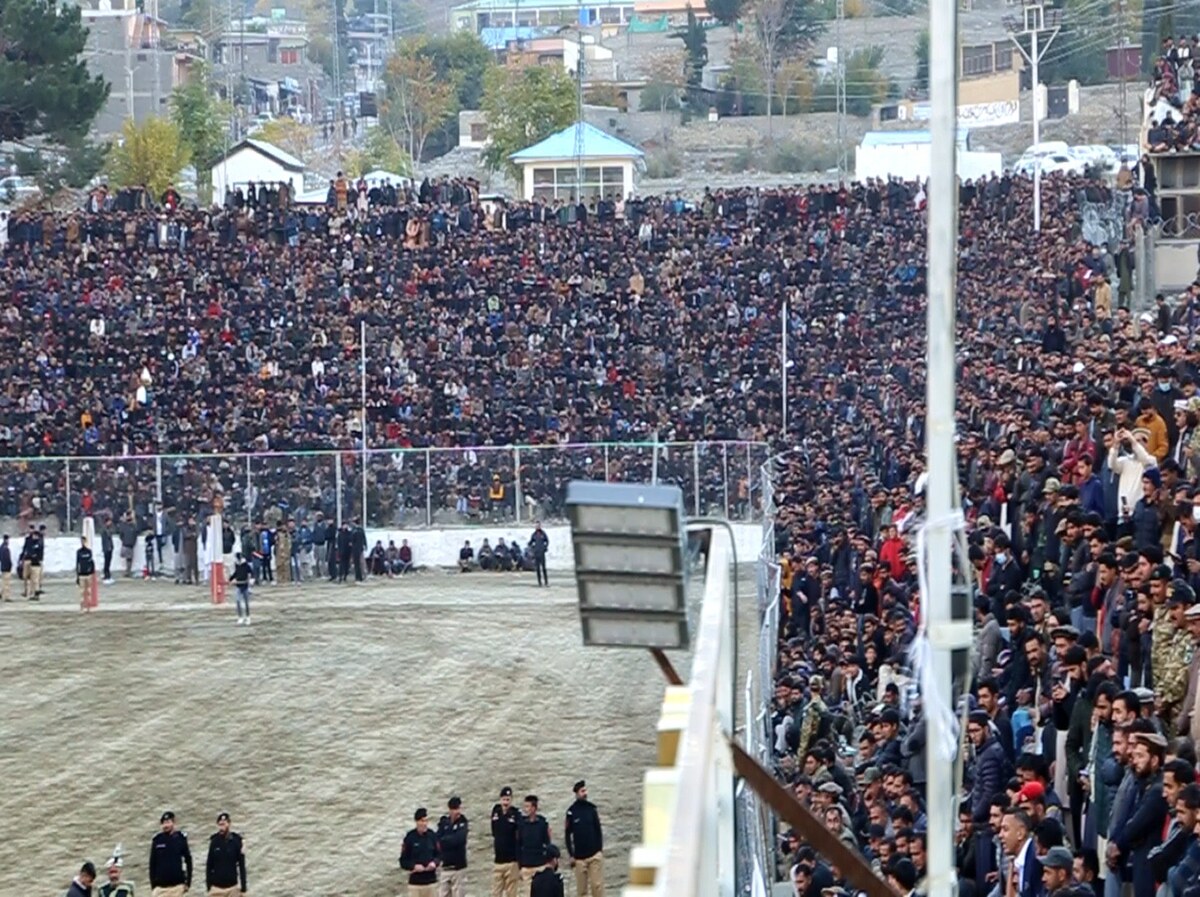


A Pakistani tribal polo team member chases the ball as the crowd watches the match during a polo game in Skardu, in Pakistan's northeastern Gilgit-Baltistan region on November 21, 2024. (Photo courtesy: ISPR)

“The final match was won by Chilas in civil and NLI teams in departmental categories respectively,” the statement added. 
Gilgit-Baltistan is also known for the annual polo festival at Shandur, an area between the northern Pakistani towns of Gilgit and Chitral, and at over 12,000 feet (3,700 meters) the world’s highest polo ground. 
Polo in GB is played without rules and at a blistering pace, suggesting more of a clash of cavalry than a sport. Locals believe polo was born in their land and Gilgit is home to the famous polo inscription: “Let other people play at other things, the King of Games is still the Game of Kings.”
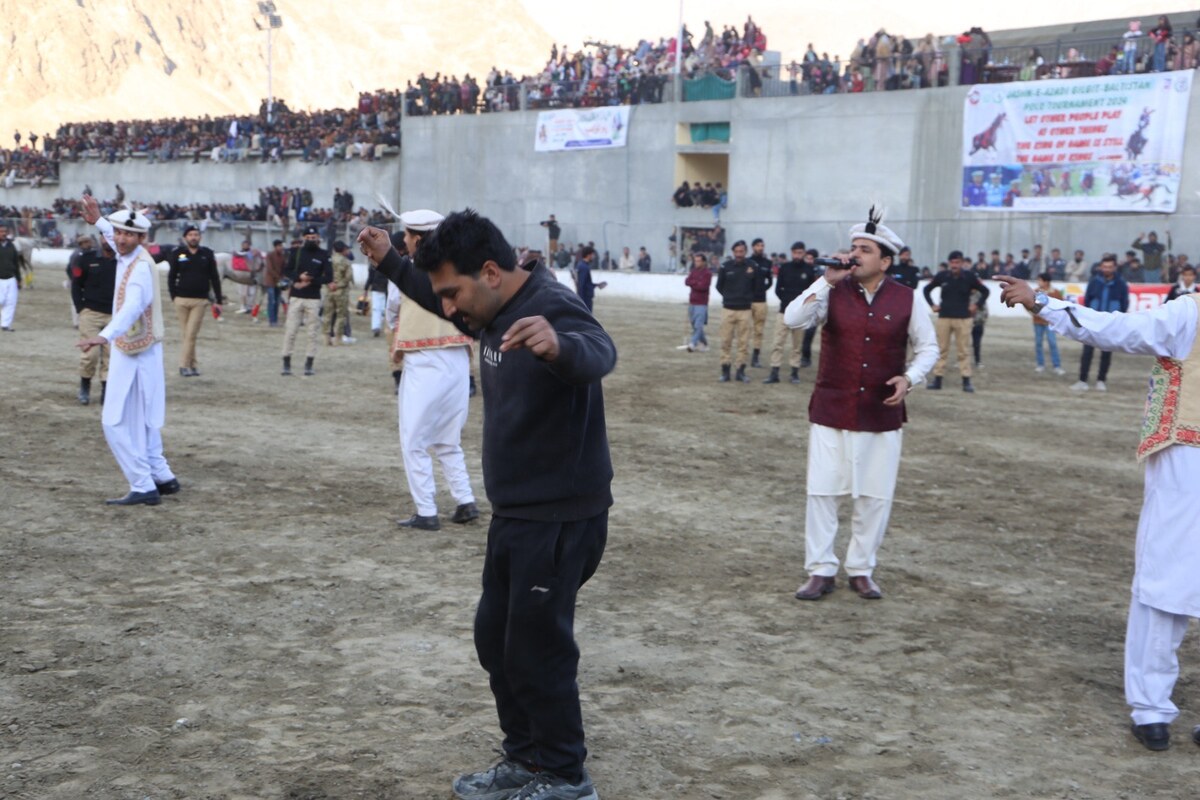


A Pakistani tribalmen perform traditional dance during a polo game in Skardu, in Pakistan's northeastern Gilgit-Baltistan region on November 21, 2024. (Photo courtesy: ISPR)

Faizullah Faraq, the spokesperson for the G-B government, said thousands had come to watch the matches and celebrate the Gilgit-Baltistan Independence Day.
“Polo is the national game of Gilgit-Baltistan. And thousands of people reached Gilgit’s playground to watch the polo matches daily,” he told Arab News on Thursday. 
“Such kinds of activities unite the youth and they play their role to create harmony in the society. The promotion of polo is a need of time to maintain peace in society.”


Crowd watches the match during a polo game in Skardu, in Pakistan's northeastern Gilgit-Baltistan region on November 21, 2024. (Photo courtesy: ISPR)

Afrad Gul, the team captain of the winning Chilas team, appreciated locals who supported the tournament. 
“I have been playing polo for the last 15 years, my son was also part of my team,” Gul said in a phone interview. “We have left no stone unturned to keep this regional game alive.”


Pakistan urges developed nations, global institutions to expand role in climate financing

Updated 4 sec ago
Follow

Pakistan urges developed nations, global institutions to expand role in climate financing

  • Pakistan is recognized among countries worldwide most affected by climate-induced disasters
  • Planning minister stresses redesigning global financial system on principles of responsibility, equity

ISLAMABAD: Pakistan’s Planning Minister Ahsan Iqbal this week called on developed nations and international financial institutions to play a greater role in helping developing countries adopt green technologies at lower costs, state-run media reported. 

Pakistan has suffered frequent climate change-induced disasters over the past couple of years, ranging from floods, droughts, heatwaves, cyclones and other irregular weather patterns. 

This year the South Asian country reported over 1,000 deaths from floods and landslides triggered by heavy rains and the melting of glaciers. 

“He [Iqbal] said Pakistan has urged developed countries and international financial institutions to expand their role in climate financing to enable developing nations to adopt green technologies at lower costs,” state-run Associated Press of Pakistan (APP) reported on Saturday. 

The minister was speaking at the Second Asia Energy Transition Summit held at Pakistani university LUMS on Saturday. 

Iqbal warned that climate change is intensifying emergencies and increasing economic burdens on vulnerable countries, adding that financial incentives and concessional financing have become indispensable for sustainable climate action.

“He further emphasized the need to redesign the global financial system based on the principles of collective responsibility and equity,” APP said. 

The minister noted that Pakistan has been introducing comprehensive reforms in its development agenda to promote renewable energy, solar power and green technological solutions. 

The country, he said, possesses “strong solar potential,” a robust renewable energy market, a wide talent pool in engineering and science and an enabling environment for green innovation.

Pakistan has regularly urged developed countries to fulfill past pledges and provide easy access to climate funding without attaching conditions, especially at Conference of Parties (COP30) climate summits. 

Islamabad was instrumental in getting the Fund for Responding to Loss and Damage (FRLD) established at the COP27 climate summit in Egypt in 2022. The Loss and Damage Fund aims to help developing and least developed countries cope with both economic and non-economic impacts of climate change, such as extreme weather events and slow-onset crises like sea-level rise and droughts.