


KABUL/BAKU: United Nations agencies are trying to unlock key climate financing for Afghanistan, one of the world’s most vulnerable countries to climate change which has not received approval for any fresh such funds since the 2021 Taliban takeover, two UN officials told Reuters.
Plagued by drought and deadly floods, Afghanistan has been unable to access UN climate funds due to political and procedural issues since the former insurgents came to power.
But with the population growing more desperate as climate woes stack up, UN agencies are hoping to unseal project financing for the fragile country to boost its resilience.
If successful, this would be the first time new international climate finance would flow into the arid, mountainous nation in three years.
“There are no climate skeptics in Afghanistan,” said Dick Trenchard, UN Food and Agriculture Organization (FAO) country director for Afghanistan. “You see the impact of climate change and its environmental effects everywhere you go.”
Two UN agencies are currently drawing together proposals they hope to submit next year to shore up nearly $19 million in financing from the UN’s Global Environment Facility (GEF), part of the financial mechanism of the 2015 UN Paris Agreement on climate change.
These include the FAO, which hopes to get support for a project costing $10 million that would improve rangeland, forest and watershed management across up to four provinces in Afghanistan, while avoiding giving money directly to Taliban authorities.
That’s according to diplomatic sources, who say that the world’s 20 major economies have reached a consensus — but a fragile one.
The UN Development Program, meanwhile, hopes to secure $8.9 million to improve the resilience of rural communities where livelihoods are threatened by increasingly erratic weather patterns, the agency told Reuters. If that goes ahead, it plans to seek another $20 million project.
“We’re in conversations with the GEF, the Green Climate Fund, the Adaptation Fund — all these major climate financing bodies — to reopen the pipeline and get resources into the country, again, bypassing the de facto authorities,” said Stephen Rodriques, UNDP resident representative for Afghanistan.
National governments often work alongside accredited agencies to implement projects that have received UN climate funds. But because the Taliban government is not recognized by UN member states, UN agencies would both make the request and serve as the on-the-ground partner to carry out the project.
A Taliban administration spokesperson did not respond to requests for comment.
FLOODS, DROUGHT
“If one of the countries most impacted by climate change in the world cannot have access to (international climate funds), it means something isn’t working,” Rodriques said, adding that any funds should come alongside continued dialogue on human and women’s rights.
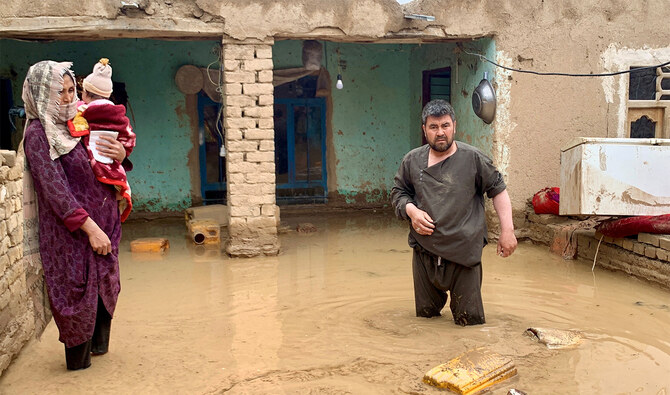
Flash floods have killed hundreds in Afghanistan this year, and the heavily agriculture-dependent country suffered through one of the worst droughts in decades that ended last year. Many subsistence farmers, who make up much of the population, face deepening food insecurity in one of the world’s poorest countries.
The FAO and UNDP will need to receive initial approvals by the GEF secretariat before they can submit their full proposals for a final decision from the GEF Council, which comprises representatives from 32 member states.
If the agencies get that first green light, Trenchard said, they would aim to submit their proposals in early 2025.
We “are awaiting guidance as to whether it would be possible to proceed,” Trenchard said.
No foreign capital has formally recognized the Taliban government, and many of its members are subject to sanctions. The United States has frozen billions in central bank funds since the former insurgents took over and barred girls and women over the age of 12 from schools and universities.
Many human rights activists have condemned the Taliban’s policies and some have questioned whether interaction with the Taliban and funnelling funds into the country could undermine foreign governments’ calls for a reversal on women’s rights restrictions.
The Taliban says it respects women’s rights in accordance with its interpretation of Islamic law.
Countries mired in conflict and its aftermath say they have struggled to access private investment, as they are seen as too risky. That means UN funds are even more critical to their populations, many of whom have been displaced by war and weather.
Taliban members are attending the ongoing annual UN climate negotiations COP29 in Baku, Azerbaijan as observers for the first time, Reuters has reported.
The Taliban’s presence could build trust between Afghanistan and international donors, said Abdulhadi Achakzai, founder of the Afghanistan climate nonprofit Environmental Protection Trainings and Development Organization, on the sidelines of COP29.
“It will be a safer world for the future to include Afghanistan officially in the agenda,” he said. “We see this is an opportunity. There are funds for Afghanistan, we just need to secure it.”


