KYIV: Russian drones attacked Ukraine’s Black Sea port of Odesa overnight, killing one person and injuring 13 others, including two boys, regional governor Oleh Kiper said on Saturday.
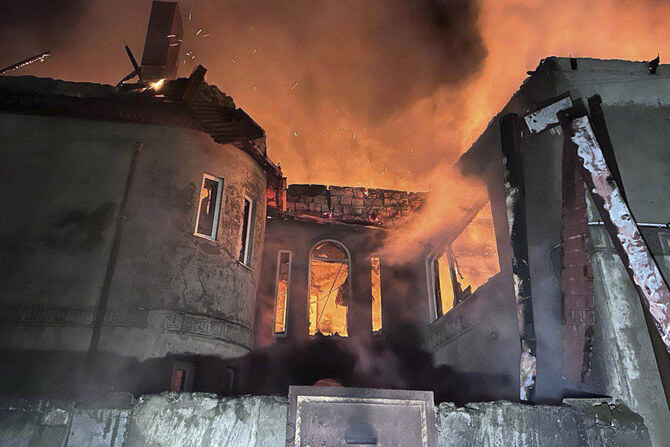
Several residential apartment buildings, private houses, commercial buildings and dozens of private cars were damaged in what was the second day in a row of Russian drone attacks on the city, Kiper said.
“At night the enemy again attacked Odesa and the nearby region with attack drones. One person died and 13 were wounded. Among the injured there were two children,” he said on the Telegram messaging app.
Prosecutors said the children were boys aged four and 16.
Russia launched 51 drones, focusing its attack on Odesa and the nearby region in the south of Ukraine, the Ukrainian air force said, adding that Ukrainian air defense units and mobile drone hunter groups shot down 32 Russian drones.
It also said that 18 drones were “lost,” most likely meaning they had been thwarted electronically.
Russian drones also triggered a large fire in one of Odesa’s districts, public broadcaster Suspilne reported, quoting residents.
Other media outlets in the city posted video footage showing cars and buildings ablaze and thick smoke billowing skyward.
As the war against Russia nears its 1,000-day mark, Moscow’s forces have intensified air attacks on Ukrainian cities and towns, sending swarms of drones almost every night.
Ukraine’s military said that Russia launched more than 2,000 attack drones at civilian and military targets in October.
Moscow says it does not target civilians. The UN Human Rights Monitoring Mission in Ukraine had verified 11,743 civilian deaths in conflict-related violence from Russia’s full-scale invasion in Feb. 2022 to the end of August this year. The Ukrainian government says the toll is likely to be much higher due to difficulties accessing parts of the country.


![]()

Russian drone attack on Ukraine’s Odesa kills one, injures 13, governor says
Short Url
https://arab.news/44mbu
Russian drone attack on Ukraine’s Odesa kills one, injures 13, governor says
- Russia launched 51 drones, focusing its attack on Odesa and the nearby region in the south of Ukraine
- Ukraine’s military said that Russia launched more than 2,000 attack drones at civilian and military targets in Octobe


Latest updates


© 2026 SAUDI RESEARCH & PUBLISHING COMPANY, All Rights Reserved And subject to Terms of Use Agreement.