



KARACHI: Thousands of men, women and children, both Hindus and Muslims, gathered on Friday at the 234-year-old Shri Swaminarayan temple in the southern Pakistani port city of Karachi to celebrate one of the biggest Hindu festivals, Diwali.
Diwali honors the victorious return of Lord Rama, one of Hinduism’s most revered figures, from exile and was celebrated in various parts of the world either on Thursday or Friday.
It is also known as the festival of lights to symbolize the triumph of light over darkness, or good over evil, explaining why fireworks are so central to the Diwali celebrations.
The Swaminarayan temple, situated in the Serai Quarters area, is not only frequented by Hindus living in the neighborhood, but members of the community from elsewhere in the bustling megapolis too.
“Diwali is a festival of happiness, a festival of lights. Our lord Rama returned to Ayodhya after 14 years in exile. His wife Sita and his [younger] brother Laxman were also with him, who stood by him,” Hansa Rani, an academic, told Arab News, lighting up small oil lamps, called ‘diyas,’ to welcome their Lord.
“We celebrate their return with happiness [on Diwali], wear new clothes, distribute sweets and make rangoli [in which] we decorate our floor with colors.”

A Hindu woman and a young girl hold clay-lamps during a ceremony to celebrate Diwali, the festival of lights, at Somi Narin temple, in Karachi on November 1, 2024. (AP)
One of the most prominent Hindu festivals, Diwali is celebrated across the globe wherever the community resides. Devotees light up their homes and workplaces to signify light over darkness.
The festivities span over the course of five days, starting with ‘Dhanteras,’ that marks the first day of Diwali, followed by ‘Naraka Chaturdashi’ [Choti Diwali], Diwali, ‘Govardhan Puja’ and Bhai Dooj. Each day has different rituals and significance.
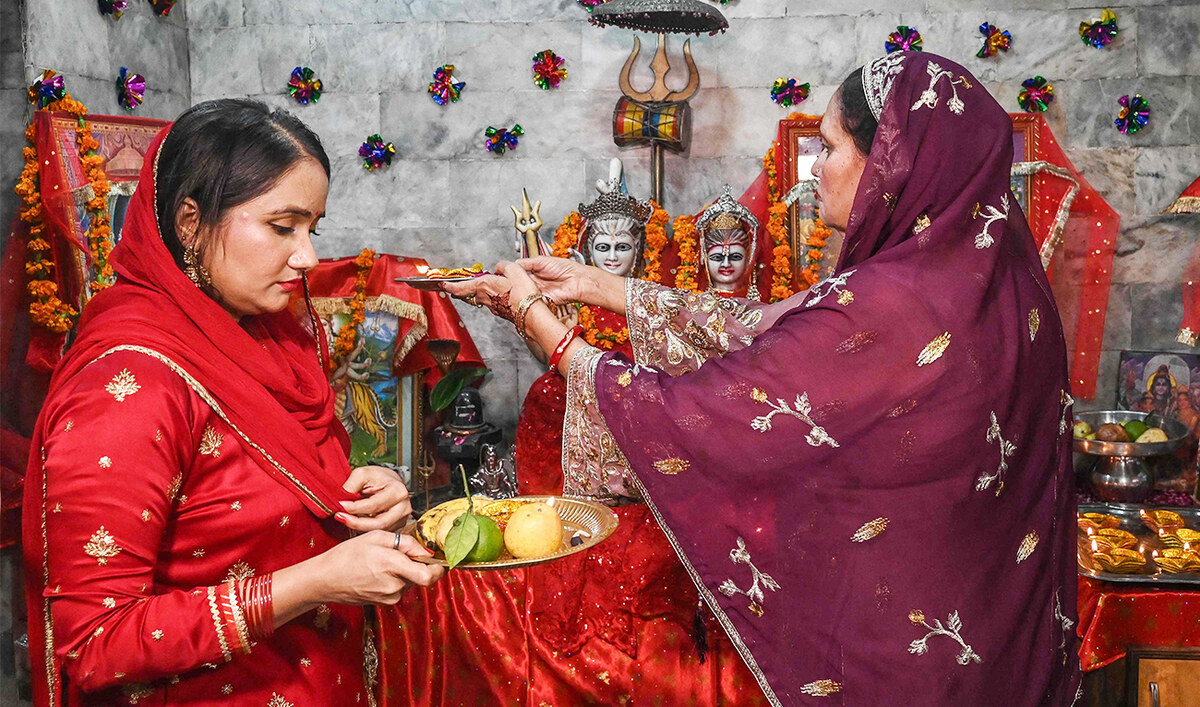
Pakistani Hindu women celebrate 'Diwali', the festival of lights, at the Krishna Temple in Lahore on November 1, 2024. (AFP)
“We are here to celebrate Diwali. As you can see, how happy these people are. There is one festival in the entire year during which we have mithai (sweetmeats), worship, light diyas, and meet our relatives,” Gauri Dara, who was at the temple with her family, told Arab News, on the sidelines of the celebrations.
“On this day, our cousins from other cities come to meet us too. We celebrate Diwali together.”
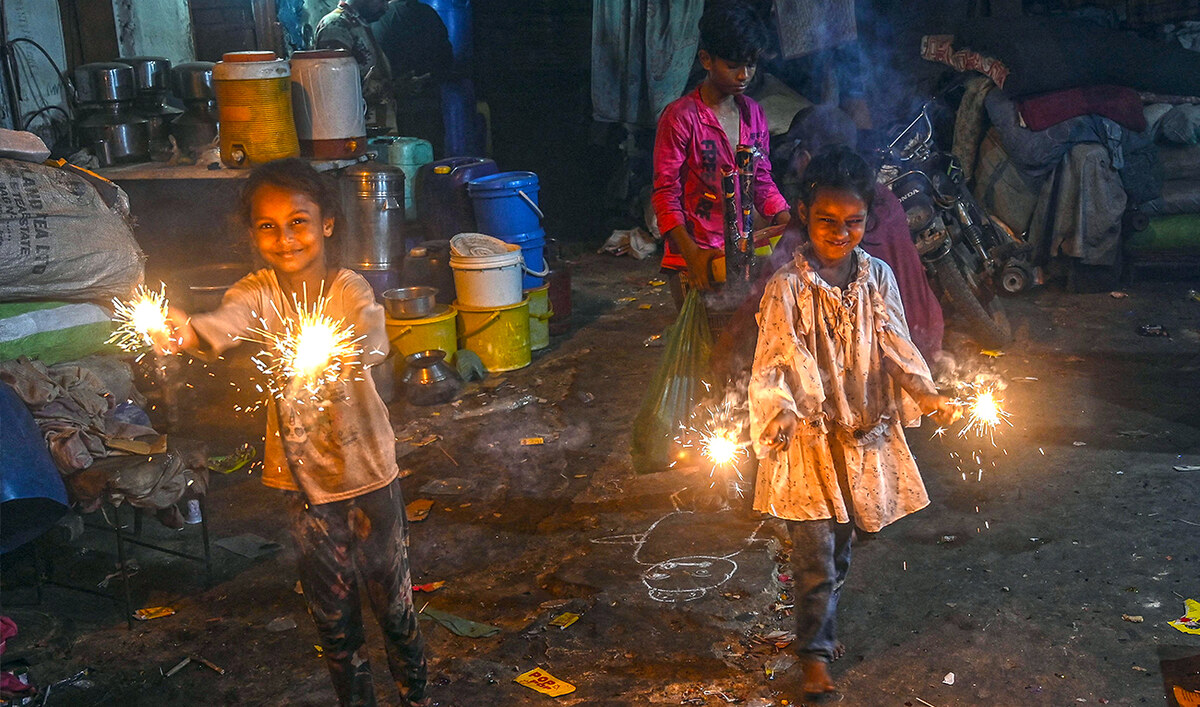
Children light firecrackers during 'Diwali' festival celebrations in Karachi on November 1, 2024. (AFP)
Muslims, who attended the celebrations at the Swaminarayan temple, said they had come to stand in solidarity with their Hindu brothers and sisters and share their happiness on the joyous occasion.
“[Despite] being a Muslim, I come here every year since the past 10 years in fact. I love the fact that we get to celebrate Diwali with our Hindu community every year because I have a lot of Hindu friends in Pakistan,” Qasim Shafique, a senior television news producer, told Arab News.
“Our flag also represents [minorities]. The white part in the [Pakistani] flag is for minorities. So, I come to celebrate that every year. I’ll meet all my Hindu friends here and we will enjoy the festivities together.”


