

16 Pakistani companies participate in UAE’s Beautyworld Middle East trade exhibition 

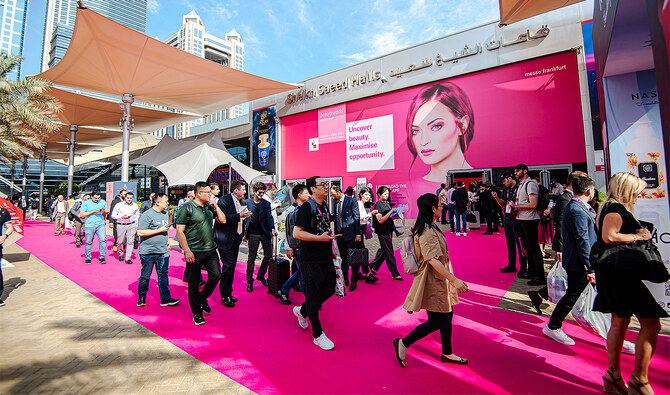
Particpants attend Beautyworld Middle East 2023 trade exhibition in Dubai, UAE. (Beautyworld Middle East/File)
Short Url
Updated 29 October 2024
Follow

16 Pakistani companies participate in UAE’s Beautyworld Middle East trade exhibition 

  • Beautyworld Middle East trade fair, taking place from Oct. 28-30 in Dubai, features over 1,800 exhibitors 
  • Pakistani companies showcasing hair, cosmetics and skincare, fragrance, perfumes and personal hygiene products

ISLAMABAD: Sixteen Pakistani companies are taking part in Beautyworld Middle East 2024 trade exhibition, one of the most renowned and prominent beauty trade shows around the world, in the United Arab Emirates, the Pakistani consulate general in Dubai said on Tuesday. 

The Beautyworld Middle East 2024 is the region’s largest international trade fair for the beauty and wellness industries, taking place at the Dubai World Trade Center from Oct. 28-30. The exhibition is hosting over 1,800 exhibitors from 60 countries with Pakistani companies showcasing hair, cosmetics and skincare, fragrance, perfumes and personal hygiene products.

“Sixteen exhibitors from Pakistan are participating under the patronage of the Trade Development Authority of Pakistan (TDAP),” the Consul General of Pakistan in Dubai said. 

Pakistan’s UAE envoy Faisal Niaz Tirmizi praised Pakistani exhibitors, crediting them for introducing “innovative and high-quality products.” He said their participation was an important step toward promoting Pakistan’s beauty and personal care products globally.

The Pakistan Pavilion at the exhibition was inaugurated by the consul general of Pakistan, Hussain Muhammad, who highlighted that the event allowed Pakistani businessmen to present their products in a bid to promote exports and attract foreign investment.

He commended Pakistani exhibitors for diversifying their products and expanding their market, underscoring the consulate’s support in this regard at the “globalized” Dubai market.

Pakistani businesses regularly participate in exhibitions held in the UAE. Earlier this month, they took part in a four-day Gulf Information Technology Exhibition (GITEX) in Dubai to showcase its growing prowess in the IT sector, with a focus on tapping into the lucrative Middle Eastern markets. 


Pakistan PM orders plan to boost farm exports, cut trade deficit

Updated 4 sec ago
Follow

Pakistan PM orders plan to boost farm exports, cut trade deficit

  • Shehbaz Sharif calls for institutional reforms to strengthen exports, warns against delaying tax refunds
  • Pakistan has been striving for export-led economic growth while upgrading its ports and logistics systems

ISLAMABAD: Prime Minister Shehbaz Sharif on Wednesday ordered officials to draw up a plan to increase agricultural exports and reduce the country’s trade deficit, highlighting the government’s push toward export-led growth as the economy shows signs of stabilization.

The directive comes amid Islamabad’s efforts to strengthen foreign exchange inflows, expand export destinations through economic diplomacy and shift growth away from consumption-led demand, following months of fiscal tightening and external financing pressures.

“Achieving export-based growth targets is our priority,” Sharif said while chairing a review meeting on export promotion, according to a statement from his office.

It added that the prime minister “directed authorities to draw up a plan to boost exports, especially agricultural exports, and cut the trade deficit.”

Sharif instructed authorities to fast-track institutional reforms aimed at improving facilitation for exporters and warned that any delays in processing tax refunds would be unacceptable.

He also directed officials to work with the Rice Exporters Association to develop a strategy to boost rice exports, with Islamabad holding talks with several countries on government-to-government agreements to expand overseas sales.

Officials briefed the meeting on plans to increase exports from high-value sectors such as engineering goods, pharmaceuticals, medical devices and processed foods, while upgrading ports and logistics systems to ease trade bottlenecks and integrate Pakistan more deeply into global value chains.