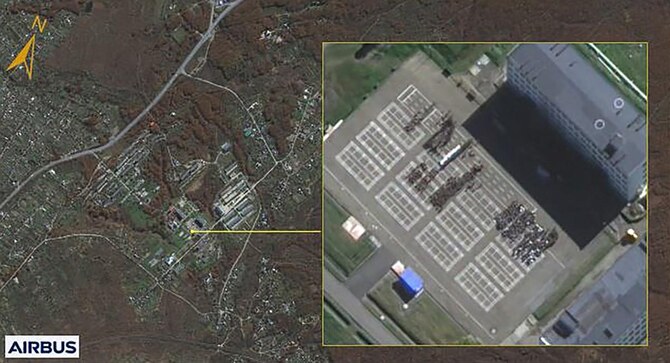
BRUSSELS: NATO on Monday confirmed that North Korean troops have been sent to help Russia in its almost three-year war against Ukraine and said some have already been deployed in Russia’s Kursk border region, where Russia has been struggling to push back a Ukrainian incursion.
“Today, I can confirm that North Korean troops have been sent to Russia, and that North Korean military units have been deployed to the Kursk region,” NATO Secretary-General Mark Rutte told reporters.
Rutte said the move represents “a significant escalation” in North Korea’s involvement in the conflict and marks “a dangerous expansion of Russia’s war.”
Adding thousands of North Korean soldiers to Europe’s biggest conflict since World War II will pile more pressure on Ukraine’s weary and overstretched army. It will also stoke geopolitical tensions in the Korean Peninsula and the wider Indo-Pacific region, including Japan and Australia, Western officials say.
Russian President Vladimir Putin is keen to reshape global power dynamics. He sought to build a counterbalance to Western influence with a summit of BRICS countries, including the leaders of China and India, in Russia last week. He has sought direct help for the war from Iran, which has supplied drones, and North Korea, which has shipped large amounts of ammunition, according to Western governments.
Russia’s Foreign Minister Sergey Lavrov shrugged off Rutte’s comments and noted that Pyongyang and Moscow signed a joint security pact last June. He stopped short of confirming North Korean soldiers were in Russia.
Lavrov claimed that Western military instructors already have been covertly deployed to Ukraine to help its military use long-range weapons provided by Western partners.
“Western military personnel long have been working in Ukraine,” Lavrov said after a meeting with the Kuwaiti foreign minister in Moscow.
Ukraine, whose defenses are under severe Russian pressure in its eastern Donetsk region, could get more bleak news from next week’s US presidential election. A Donald Trump victory could see key US military help dwindle.
In Moscow, the Defense Ministry announced Monday that Russian troops have captured the Donetsk village of Tsukuryne — the latest settlement to succumb to the slow-moving Russian onslaught.
Rutte spoke in Brussels after a high-level South Korean delegation, including top intelligence and military officials as well as senior diplomats, briefed the alliance’s 32 national ambassadors at NATO headquarters.
Rutte said NATO is “actively consulting within the alliance, with Ukraine, and with our Indo-Pacific partners,” on developments. He said he was due to talk soon with South Korea’s president and Ukraine’s defense minister.
“We continue to monitor the situation closely,” he said. He did not take questions after the statement.
The South Koreans showed no evidence of North Korean troops in Kursk, according to European officials who were present for the 90-minute exchange and spoke to The Associated Press about the security briefing on condition of anonymity.
It’s unclear how or when NATO allies might respond to the North Korean involvement. They could, for example, lift restrictions that prevent Ukraine from using Western-supplied weapons for long-range strikes on Russian soil.
Ukrainian President Volodymyr Zelensky, citing intelligence reports, claimed last Friday that North Korean troops would be on the battlefield within days.
He previously said his government had information that some 10,000 troops from North Korea were being readied to join Russian forces fighting against his country.
Days before Zelensky spoke, American and South Korean officials said there was evidence North Korea had dispatched troops to Russia.
The US said around 3,000 North Korean troops had been deployed to Russia for training.


![]()

NATO confirms that North Korea has sent troops to join Russia’s war in Ukraine
NATO confirms that North Korea has sent troops to join Russia’s war in Ukraine
Latest updates


Recommended


© 2026 SAUDI RESEARCH & PUBLISHING COMPANY, All Rights Reserved And subject to Terms of Use Agreement.