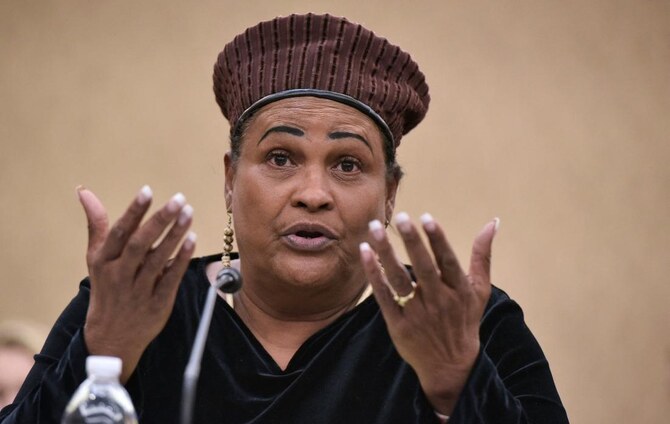
Kabul: A former wife of legendary US boxer Muhammad Ali arrived in the Afghan capital, a Taliban government official said Friday, to reportedly open a stadium in a country where women are barred from sports.
The head of the Taliban government’s sports directorate, Ahmadullah Wasiq, told AFP that Khalilah Camacho-Ali, who was married to the boxer for a decade from 1967, had arrived in Kabul.
State media cited the directorate as saying she was in the city “to build a sports stadium to be named ‘Pirozi’ (victory in Dari) and a sports association named after Muhammad Ali.”
Born Belinda Boyd in 1950 in the United States, Camacho-Ali, like her world champion boxer ex-husband, converted to Islam after they married.
Muhammad Ali himself visited Kabul in 2002, a year after the US forces overthrew the first Taliban government, visiting a girls’ school in his role as a United Nations peace ambassador.
Since the Taliban government came to power in Afghanistan in 2021, they have imposed a strict interpretation of Islamic law, with women bearing the brunt of restrictions the United Nations have called “gender apartheid,” including blocking women from participating in sports.
During the Taliban’s first rule from 1996 to 2001, public executions in sports stadiums were common.
Public corporal punishment has continued since their return to power and at least two public executions have been held in a sports stadium.
The authorities have recently set restrictions on combat sports as well, saying free fighting such as in Mixed Martial Arts was un-Islamic.
Camacho-Ali is a martial artist, as well as an actress and author, according to her website.
Ali was born Cassius Clay in the southeastern state of Kentucky and is known as both a sporting great and for his role in fighting for civil rights for African Americans. He died in 2016.


![]()

Ex-wife of Muhammad Ali in Afghanistan: Taliban govt
Short Url
https://arab.news/zmqj2
Ex-wife of Muhammad Ali in Afghanistan: Taliban govt
- During the Taliban’s first rule from 1996 to 2001, public executions in sports stadiums were common
- Khalilah Camacho-Ali is opening a stadium in a country where women are barred from sport


Latest updates



Recommended


© 2026 SAUDI RESEARCH & PUBLISHING COMPANY, All Rights Reserved And subject to Terms of Use Agreement.