
RIYADH: Saudi Arabia is set to strengthen regional industrial ties by partnering with Tunisia on a series of joint ventures, according to a top official.
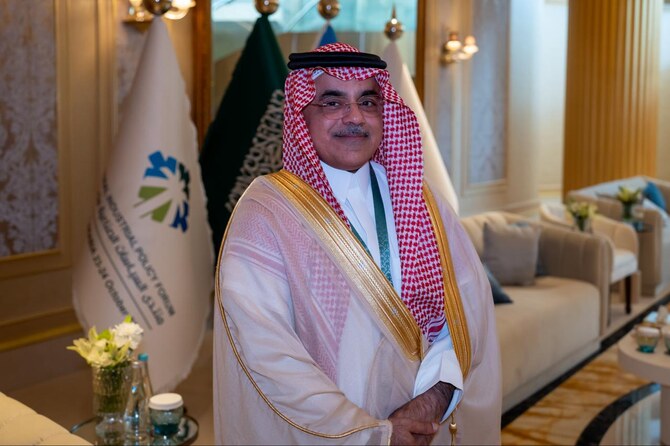
Speaking to Arab News on the sidelines of the UN Multilateral Industrial Policy Forum in Riyadh, the Kingdom’s Vice Minister of Industry Affairs, Khalil bin Salamah, confirmed upcoming collaboration with Tunisia, saying it’s now a matter of selecting which products to begin with and how to proceed.
“It’s out of the question that, whether there will be or not, there will be because no one will succeed alone. Sustainable success and growth only come with collaboration,” said Bin Salamah.
He continued: “We understood that. We have seen it in the petrochemical, and we will see it in other multiple sectors.”
The vice minister said that Saudi Arabia is in talks with two neighboring Arab countries to integrate policies that could boost industries such as pharmaceuticals.
He emphasized the importance of establishing common policies among Arab nations as a foundation for regional collaboration in various industrial sectors.
Rather than focusing solely on producing specific products, the countries aim to align their industrial policies first, creating a unified platform that can later be applied to different goods.
“There are many, so each group of countries will focus on different products, but with the same policy platform. We want to capture those common policies before it translates to products and keep them at that level between the countries,” Bin Salamah said.
He added: “When we talk about API (active pharmaceutical ingredients), one country is Egypt (and a) potential country could be Jordan, because the maturity of manufacturing of medicine does exist. But now we have to utilize the chemicals, especially the fine chemicals into API, and that goes to serve all of our country’s demand for the medicine.”
The vice minister also highlighted a broader vision of industrial collaboration, such as in the auto industry, where countries, including the UAE, Morocco, Tunisia, and Egypt, are already contributing various components and capabilities.
“We have already multiple countries of interest. When we go to component-wise, there is already in the UAE. In Morocco, there is very good industrialization. In Tunisia, in Egypt, there is a good integration, no repetition but value addition,” Bin Salamah said.
Regarding Tunisia, the vice minister underlined that the collaboration would not be limited to the auto industry, a key sector of focus, but would extend to other divisions with high potential, including the phosphate and power generation sectors.
He shed light on the human capital aspect of the collaboration, underscoring the potential for shared expertise and workforce development between the two countries.
Bin Salamah said Saudi Arabia’s industrial strategy is transitioning from basic and intermediate chemicals to downstream sectors, including fine chemicals and API.
The move is seen as crucial for expanding the Kingdom’s industrial base and supporting its Vision 2030 objectives.
“When I look at Tunisia, from even previous experiences, there is the phosphate industry, there is the power generation,” the vice minister said.
The conversation also touched upon a broader Arab industrial integration, a key topic during a recent meeting in Morocco. Bin Salamah said that this cooperation would take shape not only in Tunisia but also in other Arab nations.
His remarks underscore Saudi Arabia’s commitment to regional cooperation as part of its broader industrial strategy.
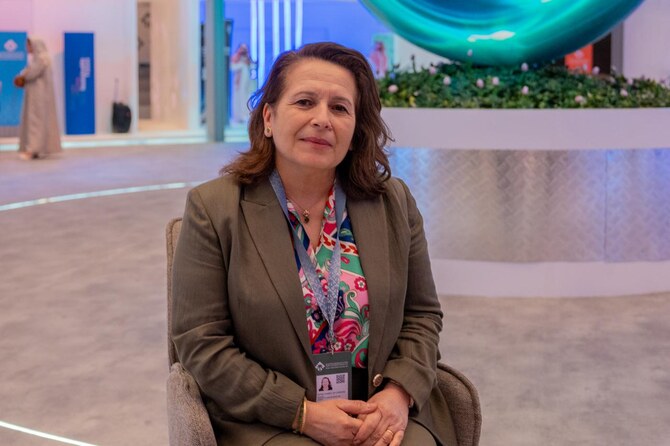
Reaffirming this collaboration, Tunisian Minister of Industry, Mines and Energy Fatma Thabet Chiboub said that her country has a distinctive type of mining resource that could be open to investment from the Saudi side.
“This is part of the discussions we have had. I believe the automotive components sector could be one of the promising sectors for investment, and the pharmaceutical industry could also be a fruitful area for cooperation between both sides,” she told Arab News.
Chiboub added: “Tunisia has significant advantages in the health care sector, both in services and manufacturing. Tunisia boasts important competitive advantages and skilled professionals, many of whom have been working in Saudi Arabia for around 50 years.”
She said that despite the resources available in the Kingdom, the current level of investment in Tunisia does not reflect the full potential of the relationship between the two countries.
“We believe there is room to significantly enhance this cooperation to serve the interests of both nations,” she said.
She added: “As Arab countries, our goal should be deeper integration and collaboration, which is the primary objective of this forum — to strengthen cooperation and foster greater unity between Arab nations.”
In terms of promising sectors, Tunisia is open to foreign investment across all industries, focusing on food, metal, textiles, clothing, automotive and aerospace components, and pharmaceuticals.
“We continue to support the presence of foreign and national investments. We consider foreign investment to be equivalent to domestic investment under Tunisian investment law, offering the same preferential advantages to foreign investors as we do to Tunisian investors,” Chiboub said.
“Tunisia has had relations with Saudi industries, and the goal is to further develop these networks. Tunisia is currently open in the energy transition sector, and I believe that the Saudi side has made remarkable progress in the field of alternative energy,” she also said.