

EU coast guard agency must ‘act to save refugee lives’ in Mediterranean: HRW

Short Url
Updated 24 October 2024
Follow

EU coast guard agency must ‘act to save refugee lives’ in Mediterranean: HRW

  • Frontex ‘should uphold EU and international law and our shared commitment to humanity and the protection of life’
  • More than 30,500 people have died or gone missing crossing to Europe by sea in past decade

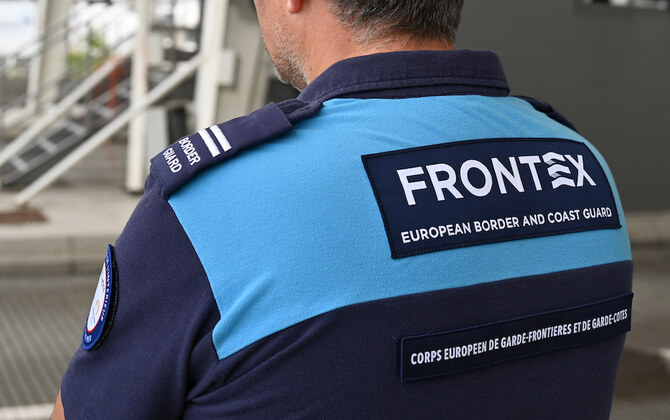
LONDON: The EU’s coast guard agency, Frontex, should use its reconnaissance capabilities to help rescue refugee vessels in the Mediterranean, Human Rights Watch said on Thursday.

HRW launched a new campaign, #WithHumanity, calling on Frontex to help save the lives of thousands of people making the perilous journey to Europe.

Over the past decade, more than 30,500 people have died or gone missing in the Mediterranean, and this year at least 1,600 have been recorded dead or missing alone.

Judith Sunderland, HRW’s associate Europe and Central Asia director, said: “Frontex planes and drones should use their eyes on the Mediterranean Sea to save lives. With thousands dying in the Mediterranean every year, it’s vital for Frontex to do all it can to help ensure that people on unseaworthy boats are rescued and brought to safety.”

Coordination issues between Frontex, national coast guards in Europe and NGOs must be resolved, HRW said.

“By focusing on the aspirations of people taking these dangerous journeys, we hope that people across Europe will join us in urging Frontex to prioritize saving lives at sea,” Sunderland said.

“Europe’s coast guard should uphold EU and international law and our shared commitment to humanity and the protection of life.”

As it stands, when Frontex staff sight refugee vessels in the Mediterranean using aircraft, it informs rescue centers in EU member states as well as Libya and Tunisia.

But nearby NGO rescue ships are often left out of the communication loop, as are nearby vessels, which HRW said should receive emergency alerts.

In many cases, Libyan and Tunisian forces have received alerts and interdicted the refugee vessels, returning passengers to countries where they “face serious human rights abuses.”

A 2022 report by HRW found that Frontex’s decisions make the agency complicit in abusive and indefinite arbitrary detention practices in Libya.

Last month, 11 people rescued from Libya on the Medecins Sans Frontieres ship Geo Barents were interviewed by HRW.

All had suffered abuse — including claims of sexual violence, forced labor and physical assault — while in Libyan detention centers or smuggler captivity.

The Pylos shipwreck in 2023 “demonstrated the fatal consequences” of failing to respond appropriately to refugee vessels, HRW said.

More than 600 people died after the severely overcrowded ship capsized in Greece’s search-and-rescue region.

Frontex informed coastal authorities but failed to issue an emergency alert to nearby ships on the basis that there was no “imminent risk of loss of life.”

NGO rescue staff told HRW that Frontex coordination can prove crucial to saving the lives of refugees.

Last October, Geo Barents performed a nighttime rescue, saving 64 people including women and children, after receiving the coordinates of an overcrowded raft in the Mediterranean.

Fulvia Conte, MSF’s search-and-rescue team leader, said: “To have precise coordinates, taken from the sky, with a thermal camera, of course it helps when searching for a boat.”

Frontex must ensure that the locations of vessels in distress are automatically transmitted to NGO rescue ships in the vicinity, HRW said.

“Through the #WithHumanity campaign, Human Rights Watch is asking the public to take a closer look at the lives and rights at risk in the Mediterranean Sea and their shared humanity with those making the crossing, and to demand action by the responsible authorities,” the organization added.

CIA tracked Iranian leaders for months ahead of attacks that began with 3 strikes in 60 seconds

Updated 8 sec ago
Follow

CIA tracked Iranian leaders for months ahead of attacks that began with 3 strikes in 60 seconds

WASHINGTON: Israeli and American authorities spent weeks tracking the movements of senior Iranian leaders, including Supreme Leader Ayatollah Ali Khamenei, sharing information that allowed the strikes to be carried out in a surprise daylight attack, according to an Israeli military official and a person familiar with the operation.
The eventual barrage of US-Israeli attacks on Iran came so quickly that they were nearly simultaneous — with three strikes in three locations hitting within a single minute — killing Khamenei and some 40 senior figures, including the head of the Revolutionary Guard and the country’s defense minister, the Israeli military official said Sunday.
The official insisted on anonymity to more fully detail the attack, but said that a variety of factors created a golden opportunity to take out much of Iran’s leadership, like weeks of training and monitoring the movements of senior figures as well as intelligence in real-time before the attack began that key targets were gathered together.
Striking by day also gave an additional element of surprise, said the official, who said that so many major, rapid-fire strikes were critical to keep key officials from fleeing after the first strike. The official said Israel closely cooperated with its US counterparts and had used a similar tactic at the beginning of last June’s war — which resulted in the killing of several senior Iranian figures.
The official also noted Khamenei having posted defiant tweets taunting President Donald Trump in the days before the attack.
The details about the strikes came as the conflict entered its second day, with Trump saying in a video message Sunday that he expected it would continue until “all of our objectives are achieved.” He did not spell out what those objectives were.
The Republican president also said the US military and its partners hit hundreds of targets in Iran, including paramilitary Revolutionary Guard facilities, Iranian air defense systems and nine warships, “all in a matter of literally minutes.”
CIA had long tracked top Iranian leaders
Before the attacks, the CIA had for months tracked the movements of senior Iranian leaders, including the country’s supreme leader.
The intelligence was shared with Israeli officials, and the timing of the strikes was adjusted in part because of that information about the Iranian leaders’ location, according to the person, who was not authorized to comment publicly and spoke on condition of anonymity.
The intelligence-sharing between US and Israel reflects the preparation that went into the strikes, which continued for a second day Sunday after Khamenei’s killing threw the future of the Islamic Republic into uncertainty and raised the risk of escalating regional conflict.
Arkansas Republican Sen. Tom Cotton, chairman of the Senate Intelligence Committee, told CBS’ “Face the Nation” that tracking the movements of the supreme leader and the heads of other adversarial nations “is obviously one of the highest priorities of our intelligence community.”
The US regularly shares intelligence with allies including Israel. Those partnerships, and the accuracy of the intelligence they yield, is often critical not only to the success of a military operation but also to the public’s support for it.
Virginia Sen. Mark Warner, the senior Democrat on the committee, told The Associated Press that, historically, “our working relationship with the Mossad and Israel is really strong.” Mossad is the Israeli spy agency.
Warner said he has serious concerns about the justification for the strikes, Trump’s long-term plans for the conflict and the risks that US service members will face. The military announced that three American troops had been killed in the Iran operation.
“No tears will be shed over their leadership being eliminated, but always the question is: OK, what next?” Warner said.
Iran has signaled it’s open to talks with the US
A senior White House official said Iran’s “new potential leadership” has suggested it is open to talks with the United States. That official, who spoke on condition of anonymity to discuss internal administration deliberations, said Trump has indicated he’s “eventually” willing to talk but that for now the military operation “continues unabated.”
The official did not say who the potential new Iranian leaders are or how they made their alleged willingness to talk known. Separately, Trump told The Atlantic that he planned to speak with Iran’s new leadership.
“They want to talk, and I have agreed to talk, so I will be talking to them,” he said Sunday, declining comment on the timing.
The potential future diplomatic opening comes as the details were emerging about the detailed planning that went into the US-Israeli strikes and some of the targets that were hit in Iran.
US Central Command said that B-2 stealth bombers struck Iran’s ballistic missile facilities with 2,000-pound bombs. That mirrors the approach that the military took in June, when Trump agreed to deploy B-2 bombers to attack three key Iranian nuclear sites.
Trump said during his State of the Union speech last week that Iran had been building ballistic missiles that could reach the US homeland — a justification he repeated again Saturday as he announced that the bombardment of Iran was underway.
Iran has not acknowledged that it is building or seeking to build intercontinental ballistic missiles. The US Defense Intelligence Agency, however, said in an unclassified report last year that Iran could develop a militarily viable intercontinental ballistic missile by 2035 “should Tehran decide to pursue the capability.”