
KIGOGWA: A fuel truck ran out of control and exploded into flames near the Ugandan capital on Tuesday, killing 11 people, including two minors, police said.
The impoverished East African country has witnessed several similar disasters in recent years as people rushed to steal fuel from tankers involved in road accidents.
Ugandan police said the latest tragedy struck at 3 p.m. (1200 GMT) when the tanker overturned and caught fire in the town of Kigogwa, about 25 kilometers (15 miles) north of Kampala.
Eleven people died, including two minors, the Uganda Police Force said in a statement on X, adding: “The victims were burnt beyond recognition.”
The incident took place just days after a fuel tanker exploded in northern Nigeria on October 15, killing more than 170 people.
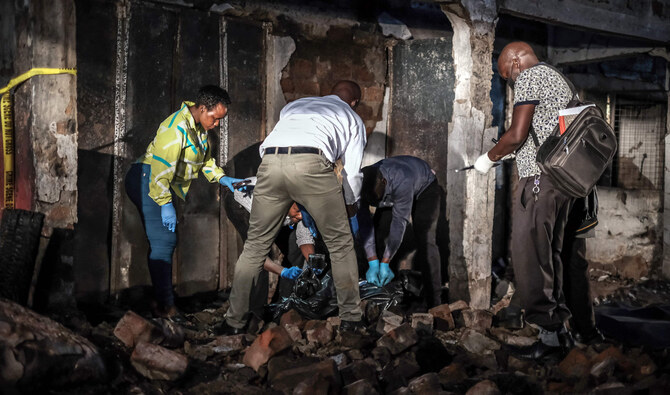
Images from the scene in Kigogwa showed yellow police tape around the charred wreck of the tanker while forensic specialists and emergency responders inspected nearby properties destroyed in the blast.
Bukenya Jefferson 29, a shopkeeper at Kigogwa trading center who witnessed the blast, said fuel started to spill onto the road after the vehicle rolled over.
“People rushed to the truck. Some people had begun taking fuel in cans. Then we heard a loud sound and smoke started coming toward us,” he told AFP.
“We were confused and saw everyone running and I ran, then saw smoke increasing.”
The police statement said the tanker was traveling from Kampala to Gulu in northern Uganda, a journey of about 650 kilometers.
“Unfortunately, people who rushed to siphon fuel from the tanker were the most affected,” it said.
Four buildings housing nine shops were destroyed in the blaze, it added, saying property worth millions of Ugandan shillings was lost.
“This tragic incident serves as a reminder of the risks associated with fuel tanker accidents and the importance of exercising caution when dealing with hazardous materials.”
Charles Lwanga, resident district commissioner for the area, told AFP that investigations were under way.
He also told reporters that firefighters had brought the blaze under control, preventing the flames from reaching a nearby petrol station.
The town lies on the road between Kampala and the town of Bombo, where the Uganda Land Forces have their headquarters.
In August 2019, 19 people died when a fuel truck barrelled into other vehicles in the busy town of Kyambura in western Uganda and exploded.
In 2002, 70 people were killed when an oil truck rammed into a bus in Rutoto, less than 50 kilometers (30 miles) from Kyambura.
And in 2013, 33 people died in a blast after a fuel truck overturned in Kampala.
Uganda imports an average of 2.5 billion liters of petroleum a year, according to local media reports.
It is currently developing oil fields in the Lake Albert area of northwestern Uganda in a controversial mega-project with TotalEnergies of France and China’s state-run CNOOC.
The $10 billion project — which also involves building a 1,443-kilometer (900-mile) heated pipeline to ship the crude to Tanzania — has come under fire from rights groups and environmental campaigners.
Uganda’s veteran President Yoweri Museveni says the oil is vital to help economic development in the country, where the poverty rate stood at about 20 percent in 2020-21, according to government figures.