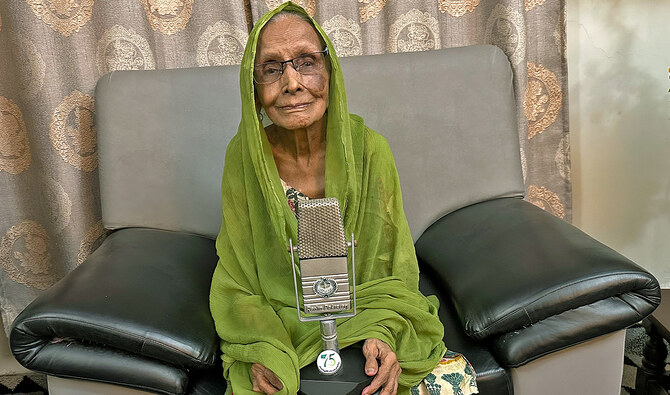

KARACHI: A bespectacled Najam Ara’s eyes light up with pride when the last words of Pakistan’s national anthem play on a vintage gramophone. For millions in Pakistan, the national anthem evokes pride, patriotism and respect. For Ara, a lot more: after all, hers is one of the timeless voices that sang the very first version of the anthem that the world heard.
Ara, 86, was one of eleven singers who recorded Pakistan’s national anthem over seven decades ago. The original musical score was composed by Ahmed Ghulam Ali Chagla in 1949 while its words were penned by renowned Pakistani poet Hafeez Jalandhari in 1952.
Written in the Persian language and comprising several words widely used in Urdu, the anthem was first broadcast on Pakistan’s state broadcaster Radio Pakistan on Aug. 13, 1954, sung by Jalandhari himself.
It was recorded later the same year by eleven singers in total, featuring the likes of legendary playback singer Ahmad Rushdi and others. A 16-year-old Ara was one of them.
“I wasn’t a famous artist so it was a matter of great pride for me to be one of the singers of the national anthem,” Ara told Arab News from her modest apartment in Karachi’s Nazimabad area.
“Everyone was saying, ‘You’ve made it into the national anthem.’”
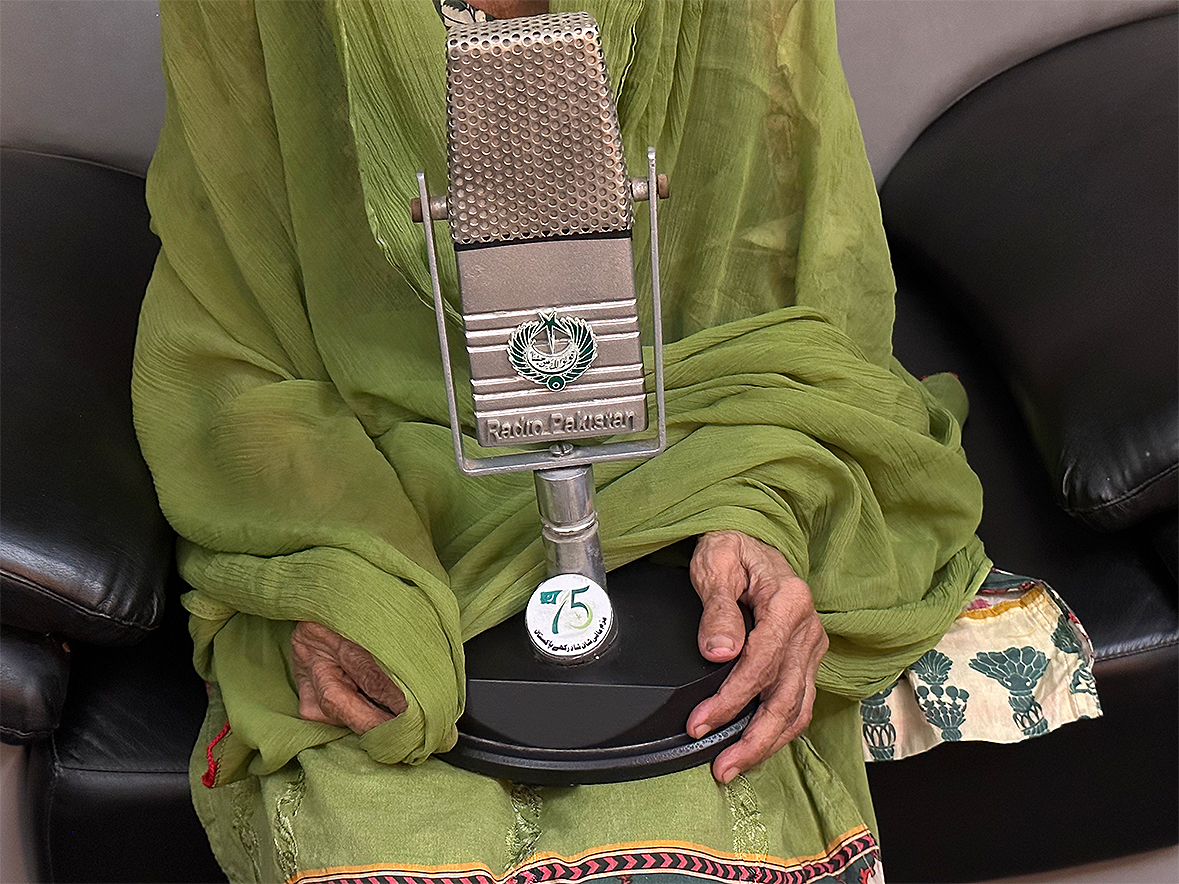
Veteran Pakistani singer Najam Ara holding an award in Karachi, Pakistan on October 19, 2024. (AN photo)
She was recommended as one of the singers by Zulfikar Ali Bukhari, Radio Pakistan’s first director-general who was also an acclaimed broadcaster and poet. Ara vividly remembers the energy in the room as the excited musicians gathered, nearly 70 years earlier, to record the national anthem.
“It was a very nice atmosphere, everyone was happy that we were participating in the [singing of] anthem,” Ara recalled, adding that rehearsals often continued for several days and Jalandhari would himself witness the sessions.
The singers were finally introduced to the national anthem’s melody when it came time for the recording. Renowned Pakistani poet, musician and radio producer Mehdi Zaheer was responsible for adjusting the melody to suit everyone’s voice.
“The fusion of lyrics and melodies was the brilliance of Mehdi Zaheer, who created it,” Ara explained.
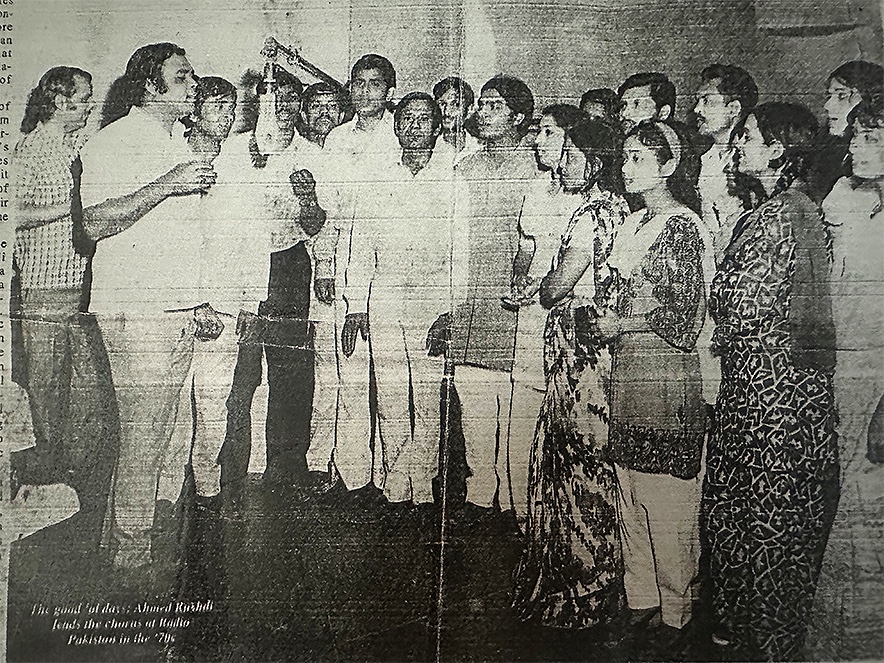
The photograph shows Najam Ara and ten other singers who recorded Pakistan’s national anthem over seven decades ago. (AN photo)
Ara vividly recalled how Zaheer chided her for standing too close to the microphone, repeatedly asking her to step back.
“Despite that, my voice was the loudest,” she said. “He pleaded, ‘For god’s sake, step back; your voice is very prominent.’ Because of this, he made sure to seat me quite far back,” Ara said, laughing.
‘GREAT PRIDE, HONOR’
But once the anthem was released, Ara became an overnight star.
“After that for a long time, everyone continued to talk about it and treated me with great respect,” she said, beaming with pride. “At various functions, everyone would invite me, saying, ‘She has come, she is the artist of our national anthem.’”
Singing the national anthem was such a huge honor for her that Ara did not even take a dime for lending her voice to it.
“My father had made it clear that there was no question of any payment,” the octogenarian singer said, describing the national anthem as a “treasure.”

The picture taken on October 19, 2024, shows record of Pakistan’s national anthem at Najam Ara's house in Karachi, Pakistan. (AN photo)
Ara migrated with her family to Pakistan in 1948, a year after Pakistan gained independence, and her brother was arrested on charges of treason . She continued to sing for Radio Pakistan, participating in the hit singing program ‘Sargam’ hosted by Shahid Ahmed Dehlvi, an iconic Pakistani author and editor.
Ara credits Dehlvi for teaching her music, saying that she received letters of praise from hundreds of people in India and East Pakistan (now Bangladesh) for her performances on the show.
Ara sang for the 1954 film ‘Roohi’ starring actors Mohammad Afzal, Maya Devi, and Santosh Kumar. She sang numerous Punjabi songs but her Urdu ones, such as ‘Muddat Se Hi Armaan’ and ‘Bhaiya Mera Dulha Banega’ won her critical acclaim.
However, for the veteran Pakistani singer, every achievement pales in comparison when it comes to singing Pakistan’s national anthem.
“Participating in the national anthem from which every event starts, was a source of great pride and honor for me,” Ara said wistfully as she gazed at the cover of the decades-old gramophone record.