KARACHI: The United Kingdom has allocated £10 million ($12.2 million) in humanitarian aid for Pakistan’s flood-hit communities, a press release from the British High Commission said on Wednesday, with a focus on providing immediate relief and early recovery assistance.
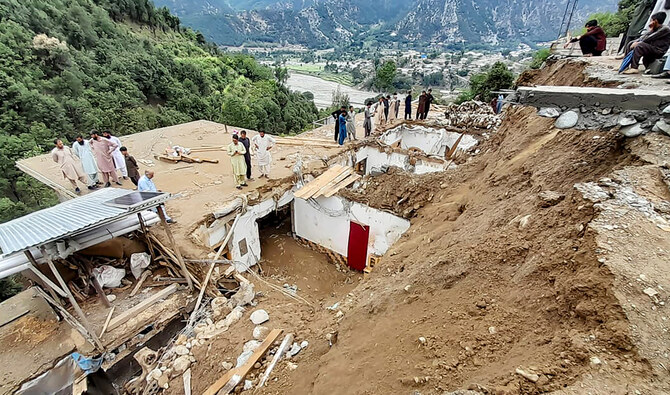
Heavy monsoon rains in Pakistan this year, especially in the northwestern Khyber Pakhtunkhwa and eastern Punjab provinces, killed nearly 350 people and injured hundreds of others. Thousands of homes were damaged and destroyed in flash floods, landslides and other rain-related disasters.
In 2022, unusually heavy rains triggered flash floods in many parts of the country, killing over 1,700 people, inflicting economic losses of around $30 billion, and affecting at least 30 million people.
Scientists have attributed Pakistan’s erratic weather patterns to climate change effects. The South Asian nation is widely recognized as one of the most vulnerable countries to climate change.
“‘Monsoon may be ending, but recovery has only just begun. Once again flooding has resulted in a loss of lives, livelihoods and the destruction of infrastructure,” British High Commissioner Jane Marriott was quoted as saying in a press release from the UK mission as it announced the £10 million funding.
“We’re providing immediate relief and early recovery assistance to families whose lives have been overturned by these floods.”
The UK’s support will be targeted at meeting urgent humanitarian and early recovery needs of the most vulnerable, affected families in 13 worst hit districts of Khyber Pakhtunkhwa, Gilgit Baltistan, Balochistan, Punjab and Sindh. Immediate support includes the provision of temporary shelters, essential relief items as well as cash assistance for affected families. Work had already begun to restore damaged drinking water and sanitation infrastructure, irrigation channels, remove debris, and restore damaged infrastructure, the UK High Commission said.
The agricultural industry was particularly affected by the floods, and the UK is helping to restore people’s livelihoods through supporting climate smart agriculture, livestock provision, and vocational skills training, the statement added.
Working with the Concern Worldwide led consortium and the World Food Programme (WFP), the UK is supporting over 130,000 affected families, approximately 900,000 individuals, through emergency relief and restoration of infrastructure and livelihoods, the statement said.
“The UK’s focus is on improving Pakistan’s longer-term climate resilience, rather than purely responding to disasters,” Mariott added. “The UK has already helped 1.5 million people improve their resilience to extreme climate events, and aims to support a further 3 million people in the next 4-5 years.”
During the devastating floods of 2022, the UK helped over 2.3 million people, dedicating a total of £39 million in UK aid. The British public mobilized and raised £41.5 million as part of the Disasters Emergency Committee appeal. Support included emergency cash assistance, shelter kits, nutritional support, learning kits and infrastructure repair.


![]()

UK allocates £10 million for early recovery assistance for Pakistan’s flood-hit communities
Short Url
https://arab.news/432cr
UK allocates £10 million for early recovery assistance for Pakistan’s flood-hit communities
- Support includes cash assistance, temporary shelters, livestock provision, rebuilding damaged infrastructure
- Heavy monsoon rains in Pakistan this year killed over 350 people and damaged thousands of homes
Latest updates


© 2026 SAUDI RESEARCH & PUBLISHING COMPANY, All Rights Reserved And subject to Terms of Use Agreement.