X agrees to pay Brazil fines, court orders finances unblocked

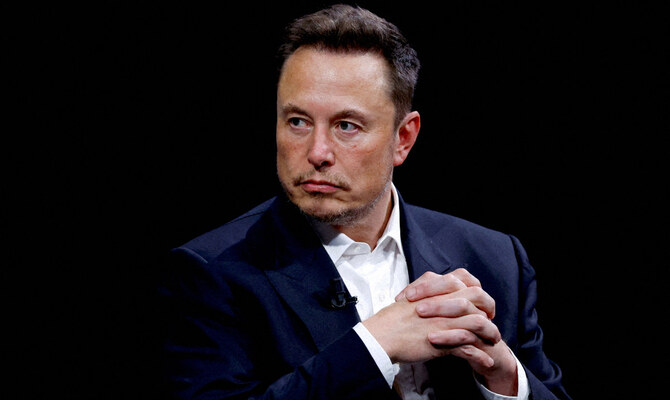
A Brazilian judge on Tuesday ordered the unblocking of the bank accounts of Elon Musk’s X in the country. (Reuters)
Short Url
Updated 02 October 2024
Follow

X agrees to pay Brazil fines, court orders finances unblocked

  • High-profile judge Moraes has been engaged in a long feud with Tesla and SpaceX owner Musk as part of his drive to crack down on disinformation in Brazil

RIO DE JANEIRO: A Brazilian judge on Tuesday ordered the unblocking of the bank accounts of Elon Musk’s X in the country after the social media platform agreed to pay more than $5 million in fines.
The ruling by Supreme Court Justice Alexandre de Moraes paves the way for the suspension of X to be lifted in Brazil, where it has been off-limits to users since August 31 in a standoff over disinformation between the judge and Musk.
Moraes ordered X shut down in Latin America’s biggest country after Musk refused to remove dozens of right-wing accounts and then failed to name a new legal representative in the country as ordered.
In his latest decision, the judge ordered Brazil’s central bank to unblock X’s bank accounts so it can receive transfers and “immediately make payment of the fines indicated.”
X had informed the court it would pay fines to the tune of some $5.2 million, according to the ruling.
High-profile judge Moraes has been engaged in a long feud with Tesla and SpaceX owner Musk as part of his drive to crack down on disinformation in Brazil.
The clash between the Brazilian court and the billionaire has morphed into a high-stakes tussle testing the limits of both freedom of expression and corporate responsibility in South America’s largest country.
X had more than 22 million users in Brazil before the ban, which was put into place on August 31.
The company has in the last week started complying with the Brazilian court’s conditions to get reactivated.
Musk has repeatedly hit out at Moraes in social media posts, calling him an “evil dictator” and dubbing him “Voldemort” after the villain from the “Harry Potter” series.


Saudi who swapped ejection seats for tech reviews — and topped KSA charts 

Updated 19 December 2025
Follow

Saudi who swapped ejection seats for tech reviews — and topped KSA charts 

  • In an exclusive interview with Arab News, the host of ‘2You’ and ‘Up To Date KSA’ talks about digital wellness, AI’s future, and his plans to fill the gap in Arabic tech content 
  • Top Arab content creator in Saudi Arabia’s 2025 top 10 most-viewed YouTube channels describes milestone as ‘shockingly’ positive 

LONDON: Speaking to Faisal Al-Saif, a self-described tech lover, one of the least likely things you expect to hear is advice on disconnecting from technology. 

Yet the idea of a “tech diet” — more commonly known as digital wellbeing — takes on added weight when it comes from someone whose work revolves around gadgets and who relies on social media as their primary platform. 

Beyond this seemingly analytical, Web 1.0-style perspective, Al-Saif draws on more than two decades of experience as a tech expert — or, in today’s terms, a content creator. 

“I’m an early believer that technology is here to connect us more, to make the world even smaller than what it is, and make us just more active, more productive, and have more time for our religion, for our families and for our actual lives,” Al-Saif told Arab News. 

Al-Saif trained as an aircraft engineer at BAE Systems, where he specialized in ejection seats for Royal Saudi Air Force jets, before entering broadcasting in 2004, hosting and producing KSA2’s English-language “2You” and, later, the technology show “Up To Date KSA.” 

In 2009, he pivoted to YouTube — a platform with more limited reach and no monetization at the time — to help fill the gap in Arabic tech content. 

“Back then, if you searched about a device or a system or a piece of information, the main language you would find the result in was English. So, I just started creating a channel and putting some good content in (both) Arabic and in English,” he said. 

This approach required filming videos twice. Initially, videos in English drew more views, while Arabic lagged, but that shifted month by month as Arabic content gained traction. 

“To put it in perspective, back then, it wasn’t a source of income — not a main, not a minor, not a partial.” 

Today, Al-Saif’s channel delivers straightforward reviews that guide viewers on whether to buy or avoid products based on their needs, not brand pressure. 

“I love creating content that gives value to the people. I love simplifying information. I love tech in a crazy way,” he said. “I like to see new tech, test it, be an early adopter of it. Tell people, ‘This is good because of this, and (that) could have been better with those implemented.’ Tell people to buy or not to buy based on their preferences, not based on companies and what they want to push.” 

Creators typically earn through ad revenue, fan funding, product placement, and sponsorships, though Al-Saif distances himself from the “influencer” label. 

“Part of it is that struggle we went through throughout the years, of trying to create valuable business propositions for everybody who works with us, being very fair and honest about what I present, and trying to help companies, just to help companies. Not seeking business.” 

Earlier this month, almost two decades after starting his channel, Al-Saif was named top Arab content creator — and the only regional entry — in Saudi Arabia’s 2025 top 10 most-viewed YouTube channels, a milestone he described as “shocking” in a positive sense. 

“Being on that top 10 list gives me a cool push after 16 years,” he said of his UTD Saudi channel, which has 8.92 million subscribers. 

“(When) I go into a hospital, I find a lot of Saudis that know me. But also, I find some Filipino nurses coming to me (telling me), ‘I watch your videos.’ I like that kind of diversity (which) is only possible on YouTube and educational content.” 

Al-Saif views YouTube as a modern visual library to help informed decisions. While social media shifts toward short-form videos, he believes the platform is resisting this trend. 

“If it’s all short-term content, it’s us supporting that short attention span (which) is being developed with people.”  

He champions long-form reviews, beginning with a brief story, then details, to encourage informed decisions. By contrast, he argued, three-second or ultra-short videos may be excellent at grabbing attention, but are largely useless for serious decisions, “unless (perhaps) it’s a cooking video.” 

In 2012, after seeing an opening, Al-Saif left BAE Systems — “initially only for two years” — to launch Tech Pills Productions, helping companies such as Intel, Microsoft, and HP create content, a move that boosted his career. He later diversified into tech startups, though he shuns the “investor” label. 

“I don’t see myself as an entrepreneur or an investor. I just see myself as a tech lover,” he said. “I try to push myself into diversifying the business and creating other pillars. So, I went into other types of investments, working and developing applications with different partners, and all of that went well. That part made me more comfortable creating content for the joy of it instead for the business side of it.” 

In 2021, Al-Saif backed Karaz (Arabic for “cherries”), an EHR platform using IoT, AI, and real-time data for healthcare, originally a gamified app for diabetic children. “(I’m drawn to a project) if there’s a human touch,” he said. “It’s relating data to human change in a positive way that made me not hesitate and go for it.” 

While AI pitches flood in, past flops have left him with a degree of “marketing resistance.” 

“I find that AI does add value if you have those (proper) steps into getting into AGI (artificial general intelligence) and the later steps that will come. It’s the proper development. But the hype about relating everything to AI, that part, I’m definitely against,” he said. 

AI has dominated headlines for three years, fueling an economic boom, and sparking debate over job losses and ethical risks. Al-Saif acknowledges the technology’s “endless opportunities,” but doubts the hype will last and that AI will ultimately drive the world. “They will find something else; either it’s diverted from AI or from another field in technology to create that marketing sense.” 

Asked what people should be more aware of, he urged greater public education on AI’s dual nature. 

“It’s a knife that you can cook with, or it’s a knife that can stab someone. There’s a seriousness about AI, and sadly, the world does not do enough regarding the sense of awareness,” he said. 

Without greater understanding, unchecked AI could create generations shaped entirely by whatever information they are fed, regardless of truth, he said, adding that the technology already enables bad behavior excused as “AI-generated” and blurs fact and fiction, making regulations essential. 

Saudi Arabia is leading responsibly through its Data and AI Authority, he said. “I think they’re going very well within multiple sides: the regulatory part, the governance side, as well as when it comes to investing heavily with the infrastructure and AI companies.”  

Through the authority, the Kingdom has launched an ambitious plan to position itself at the forefront of AI technology. Al-Saif has contributed directly and indirectly, including advising on public strategies such as the Riyadh Charter on AI Ethics in the Islamic World. 

“It’s a very interesting place to be (at a) very interesting time. I’ve sat with the Crown Prince (Mohammed bin Salman). He talked about AI, his vision, and how AI will create this next wave of businesses and next wave of economy.” 

Asked whether our society is obsessed with technological progress, Al-Saif replies that “we are adopting (technologies) for what we need,” but adds that limits, such as Australia’s recent social media ban for youth, are needed. “But the thing is, they don’t ban stuff in the Kingdom of Saudi Arabia. They try to create a system.” 

At home, he supervises his children’s screen time or watches content together. “YouTube is still, I find, the safest platform (out) there because of its nature of long videos and vlogs. It is much more mature than any other platform when it comes to how to censor, how to control, how to do things.” 

However, he agreed that younger generations, as tech natives, perceive tech interaction differently, specifically when it comes to privacy. 

“Privacy is kind of a stretchy thing. I define privacy different than my kids when they grow up, and that made me think of privacy different. It’s not that we’re letting go of information. It’s the environment that we live in that creates that sense of privacy.” 

Al-Saif believes privacy has already been reshaped — not as a value we hold dear, but as an illusion where true personal boundaries have been eroded. What remains is a mere reflection of our actions online, not tied to our names, but reduced to anonymous data points or numbers in the digital ether. 

For Al-Saif, part of the answer lies in the power of disconnection, an approach that he has strongly advocated. 

“I give myself an hour or two a day maximum (online) to know about certain other stuff. My advice for anybody who wants to live 12 hours of cool life is: Try to experience or to learn something unrelated to tech.” 

Pointing to a beehive he keeps in the office, Al-Saif added: “There are other fields that I like to, let’s say, learn about. It’s a clear state of mind that you reach with it. And I just try to do as normal, natural things as possible; try to work with gadgets and appliances that don’t have batteries.”