Saudi Arabia’s assets under management to reach $300bn in next 2 years: Fitch Ratings 

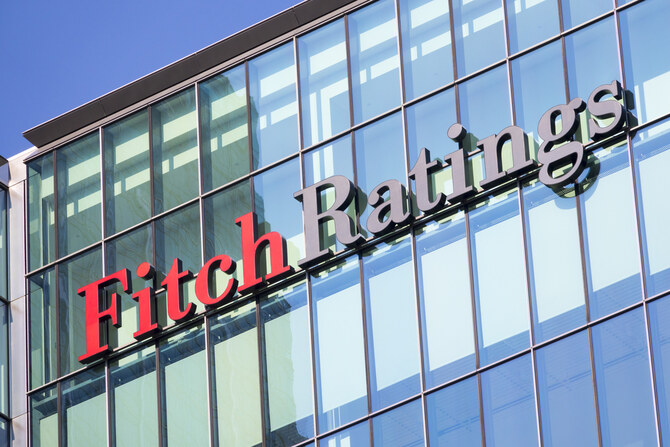
Fitch noted that private funds’ AUM has doubled since 2020. Shutterstock
Short Url
Updated 01 October 2024
Follow

Saudi Arabia’s assets under management to reach $300bn in next 2 years: Fitch Ratings 

RIYADH: Saudi Arabia’s assets under management are expected to reach $300 billion within the next two years, driven by regulatory reforms and expanding equity and debt capital markets, according to Fitch Ratings. 

In its latest report, the credit rating agency stated that AUM in the Kingdom’s asset management industry grew by 13.5 percent year on year by the end of the first half of 2024, surpassing $250 billion. 

The growth of the asset management industry, or AMI, in the second half of this year and in 2025 will be fueled by an increasing number of high-net-worth individuals seeking these services in Saudi Arabia. 

The Kingdom has the largest AMI in the Gulf Cooperation Council region and ranks fifth among countries in the Organization of Islamic Cooperation. Fitch further noted that Saudi Arabia is the second-largest public Islamic funds market globally. 

Bashar Al-Natoor, global head of Islamic Finance at Fitch Ratings, said: “We expect Saudi Arabian AUM to cross $300 billion within a couple of years, driven by Vision 2030’s Financial Sector Development Program. There is strong demand for Islamic products, with around 95 percent of mutual funds being shariah-compliant.”  

He added: “The industry’s AUM reached 22 percent of gross domestic product in 2023, with private funds three times larger than public funds. Saudi bank-affiliated managers held 63 percent of industry revenues, but competition from international managers is rising as the government attracts them to Saudi Arabia.” 

According to the report, the net income of all capital market institutions increased by 29 percent year on year to $1.1 billion in the first half of 2024. 

Fitch also noted that private funds’ AUM has doubled since 2020, with 43 percent allocated to equities and 40.5 percent to the real estate sector. 

About 28 percent of public funds are invested in money markets, followed by equities at 25.6 percent, Real Estate Investment Trusts at 18.7 percent, and debt at 16 percent. 

The report concluded that rising initial public offerings and the improving performance of the Tadawul All Share Index are attracting equity funds to the Kingdom. 

In April, Abdullah bin Ghannam, deputy for listed companies and investment products at Saudi Arabia’s Capital Market Authority, highlighted the significant growth in the AMI. 

He noted that asset management activity revenues for capital market institutions in Saudi Arabia reached $1.12 billion in 2023, reflecting a 58.6 percent increase over the past four years. 


Saudi Arabia, Japan trade rises 38% between 2016 and 2024, minister says

Updated 11 January 2026
Follow

Saudi Arabia, Japan trade rises 38% between 2016 and 2024, minister says

RIYADH: Trade between Saudi Arabia and Japan has increased by 38 percent between 2016 and 2024 to reach SR138 billion ($36 billion), the Kingdom’s investment minister revealed.

Speaking at the Saudi-Japanese Ministerial Investment Forum 2026, Khalid Al-Falih explained that this makes the Asian country the Kingdom’s third-largest trading partner, according to Asharq Bloomberg.

This falls in line with the fact that Saudi Arabia has been a very important country for Japan from the viewpoint of its energy security, having been a stable supplier of crude oil for many years.

It also aligns well with how Japan is fully committed to supporting Vision 2030 by sharing its knowledge and advanced technologies.

“This trade is dominated by the Kingdom's exports of energy products, specifically oil, gas, and their derivatives. We certainly look forward to the Saudi private sector increasing trade with Japan, particularly in high-tech Japanese products,” Al-Falih said.

He added: “As for investment, Japanese investment in the Kingdom is good and strong, but we look forward to raising the level of Japanese investments in the Kingdom. Today, the Kingdom offers promising opportunities for Japanese companies in several fields, including the traditional sector that links the two economies: energy.”

The minister went on to note that additional sectors that both countries can also collaborate in include green and blue hydrogen, investments in advanced industries, health, food security, innovation, entrepreneurship, among others.

During his speech, Al-Falih shed light on how the Kingdom’s pavilion at Expo 2025 in Osaka achieved remarkable success, with the exhibition receiving more than 3 million visitors, reflecting the Japanese public’s interest in Saudi Arabia.

“The pavilion also organized approximately 700 new business events, several each day, including 88 major investment events led by the Ministry of Investment. Today, as we prepare for the upcoming Expo 2030, we look forward to building upon Japan’s achievements,” he said.

The minister added: “During our visit to Japan, we agreed to establish a partnership to transfer the remarkable Japanese experience from Expo Osaka 2025 to Expo Riyadh 2030. I am certain that the Japanese pavilion at Expo Riyadh will rival the Saudi pavilion at Expo Osaka in terms of organization, innovation, and visitor turnout.”

Al-Falih also shed light on how Saudi-Japanese relations celebrated their 70th anniversary last year, and today marks the 71st year of these relations as well as how they have flourished over the decades, moving from one strategic level to an even higher one.