KARACHI: Under the guidance of a professional chef, Asad Javed, an apprentice at Karachi’s Café Khudee, skillfully prepares breakfast platters, while Fatima Irtiza, a trainee guest relations officer, welcomes and serves customers with a practiced smile.
But this café is more than just about food and warm service – it’s part of a mission to empower individuals with cognitive disabilities through vocational training in the hospitality industry. Opened last week, the facility, whose name “Khudee” translates to “selfhood” in Urdu, aims to equip its trainees with the skills needed to build careers in cafés, restaurants and hotels.
According to a recent report by The Borgen Project, a US-based non-profit, over six percent of children in Pakistan are diagnosed with developmental disorders, including cognitive disabilities.
These individuals often face social stigma, exclusion from the workforce and limited economic opportunities – challenges this café aims to address by fostering independence and professional skills.
“This is the training ground for differently abled,” Maria Khan, the project manager at the café, which is part of the Karachi Vocational Training Center (KVTC), working to help people with cognitive disabilities for 35 years, told Arab News.
“We are making them learn how they can be in the service industry so that we can find jobs for them and make them into independent individuals for society,” she added.
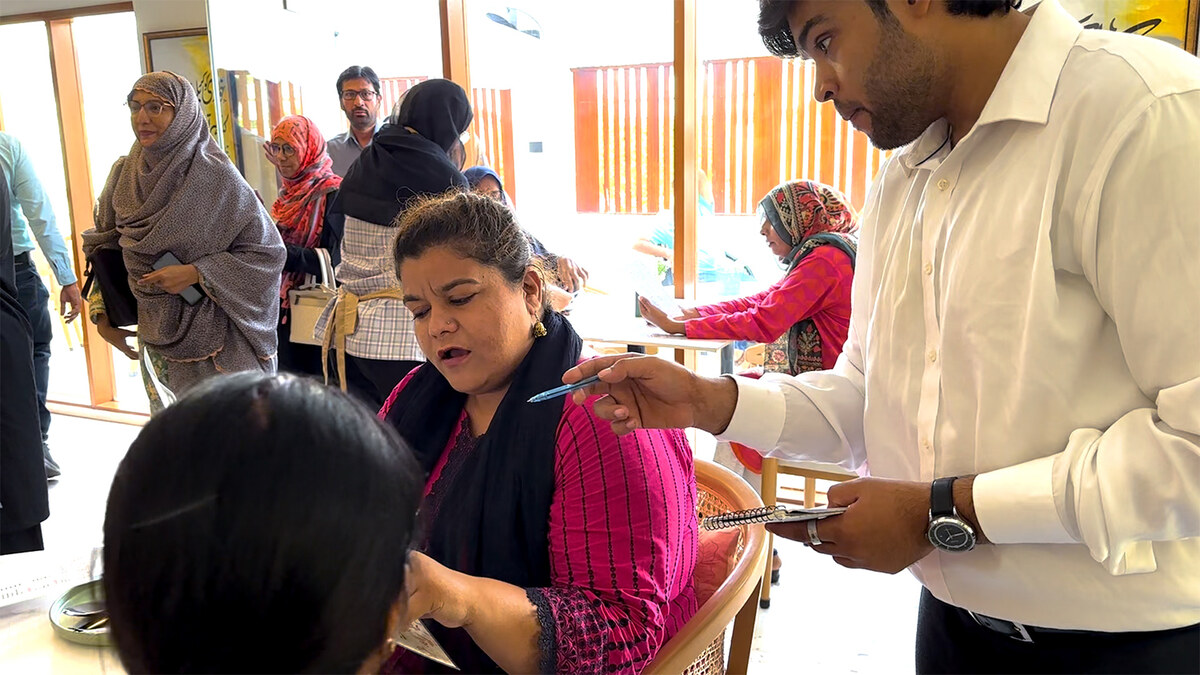
A waiter (right) takes an order from a customer at Café Khudee in Karachi, Pakistan, on September 21, 2024. (AN photo)
Unlike the developed world, Pakistan has lagged behind in integrating persons with disabilities into the mainstream due to weak implementation of disability policies and insufficient public awareness.
The situation can be particularly tough for individuals with cognitive disabilities, which affect mental processes such as memory, problem-solving and attention, often leading to significant social barriers that limit employment opportunities.
The café offers a diverse menu, catering to a wide range of tastes. From delectable pastries and cakes to savory breakfast platters along with local and international cuisines, there’s something for everyone.
For the trainees at Café Khudee, the opportunity to work in a professional environment is invaluable.
“I’m enjoying here,” Umair Ali Khan, a 37-year-old trainee cashier, said while expressing his enthusiasm. “After finishing my training here, I will go to another café or restaurant in the food industry to work.”
“We’ll do what we’ve learned, of course,” he continued while pointing out that everyone around him was very helpful.
Irtiza, 34, echoed the same sentiment, highlighting the importance of the practical experience offered by the café.
“I’m doing an internship here,” she said. “After it’s finished, I will get a job at a café, make new friends and try many new things.”
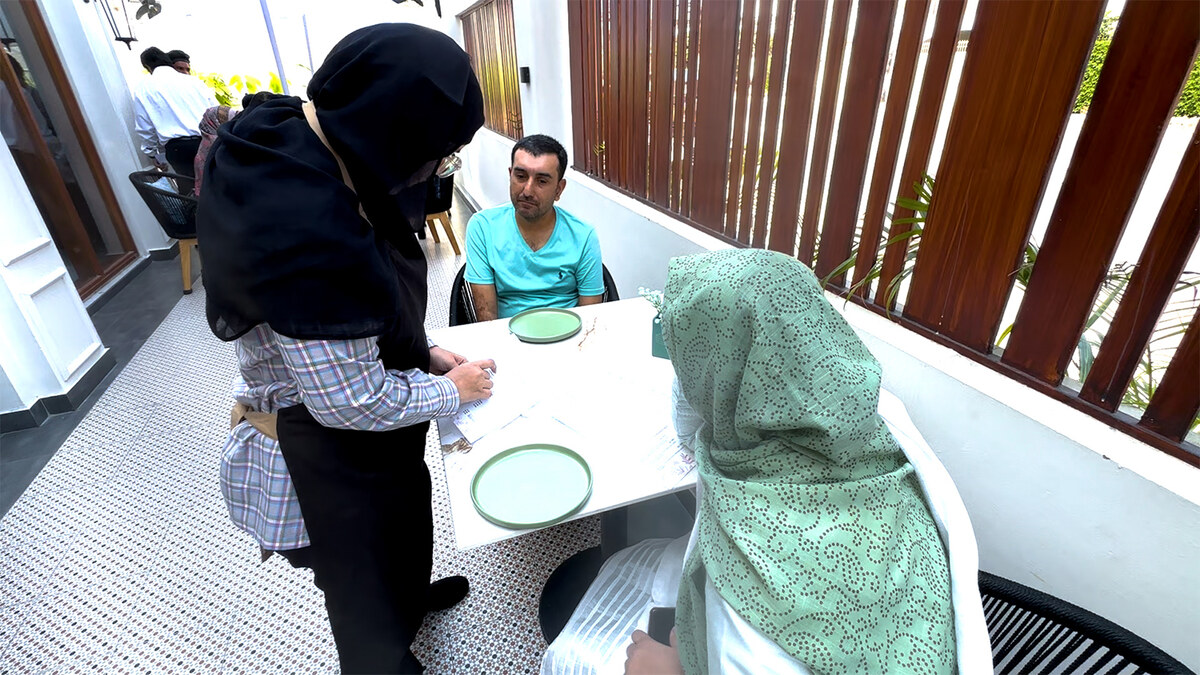
Fatima Irtiza (left), trainee guest relationship officer at Café Khudee, is assisting customers at Café Khudee in Karachi, Pakistan, on September 21, 2024. (AN photo)
According to Javed, his work at the training facility has earned him appreciation from his family.
“They were really happy with this work and said that I was learning well,” the 37-year-old trainee chef said. “I will continue to work hard and show them even more.”
Javed believes that if people with disabilities are given a little support, they can accomplish a great deal on their own.
Café Khudee has attracted many customers since its inauguration just a few days ago, with many describing it as a great experience.
“It was a very good experience,” Umar Khalid, an IT professional and customer, said.
“The engagement they’ve created for differently abled people, the restaurant, the café they have opened for their future – it’s a very good effort in my view,” he added.
Asked about the food, he said he ordered a sandwich, which was great.
“Everything was fantastic,” he continued.
Khan, the project manager, said the café has received a good response from the outset.
“We are mostly full here, and I’ve seen people who come today and they’re coming again tomorrow with different groups,” she said.
She noted that many customers who initially came out of sympathy were now returning for the quality of the food, saying many of them had told her they were back because they found the food to be quite amazing.
“They are coming back for the kids [with disabilities] and the food both,” she added.