What We Are Reading Today: ‘Cobalt Red’

Photo/Supplied
Short Url
Updated 22 September 2024
Follow

What We Are Reading Today: ‘Cobalt Red’

Author: Siddharth Kara

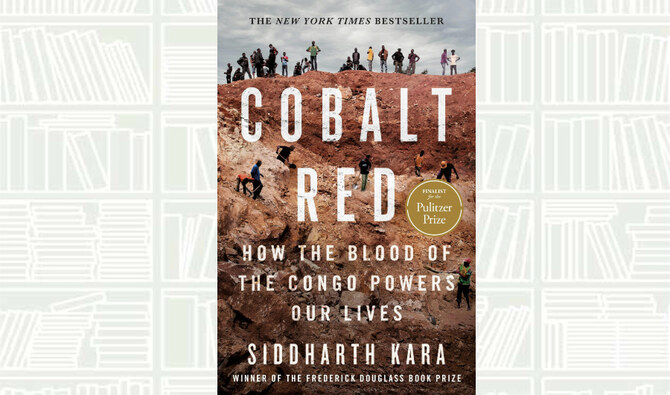
This book offers details of an investigation into the human rights abuses behind the Congo’s cobalt mining operation — and the moral implications that affect us all.
“Cobalt Red” is the searing, first-ever expose of the immense toll taken on the people and environment of the Democratic Republic of the Congo by cobalt mining, as told through the testimonies of the Congolese people, according to a review on goodreads.com.
To uncover the truth about brutal mining practices, the writer investigates militia-controlled mining areas and gathers shocking testimonies of people who endure immense suffering and even die while mining cobalt.


What We Are Reading Today: A Capital’s Capital

Updated 16 February 2026
Follow

What We Are Reading Today: A Capital’s Capital

Authors: Gilles  Postel-Vinay and Jean-Laurent Rosenthal

Successful economies sustain capital accumulation across generations, and capital accumulation leads to large increases in private wealth. In this book, Gilles Postel-Vinay and Jean-Laurent Rosenthal map the fluctuations in wealth and its distribution in Paris between 1807 and 1977. 

Drawing on a unique dataset of the bequests of almost 800,000 Parisians, they show that real wealth per decedent varied immensely during this period while inequality began high and declined only slowly. 

Parisians’ portfolios document startling changes in the geography and types of wealth over time.

Postel-Vinay and Rosenthal’s account reveals the impact of economic factors (large shocks, technological changes, differential returns to wealth), political factors (changes in taxation), and demographic and social factors (age and gender) on wealth and inequality.

Before World War I, private wealth was highly predictive of other indicators of welfare, including different forms of human capital, age at death, and access to local public goods.