

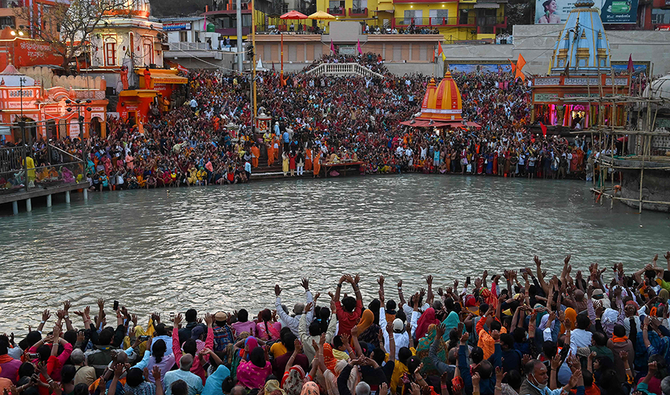

HARIDWAR, India: A year after extremists forced Muslim neighbors from their homes in India, victims live in despair as their tormentors seek to drive Islam from what they consider a Hindu “holy land.”
Mohammad Salim shudders when he remembers the campaign that erupted in May 2023 against his Muslim minority community in Purola, a seemingly sleepy town surrounded by forested hills in the northern state of Uttarakhand.
“If I had not escaped that day, they would have killed me along with my family,” said Salim, 36, a married father of three young daughters.
Salim, whose clothes shop was looted, now lives in basic accommodation with his family around 100 kilometers (60 miles) away in the city of Haridwar, struggling to make ends meet.
Rakesh Tomar, 38, is one of those who celebrated his departure.
The hard-line Hindu nationalist activist, based in state capital Dehradun, spouts hate-filled rhetoric against a minority he feels threatens him.
“Uttarakhand is the holy land of Hindus,” Tomar said, referring to the shrines around the sacred headwaters of the Ganges river in the state, an area larger than Switzerland.
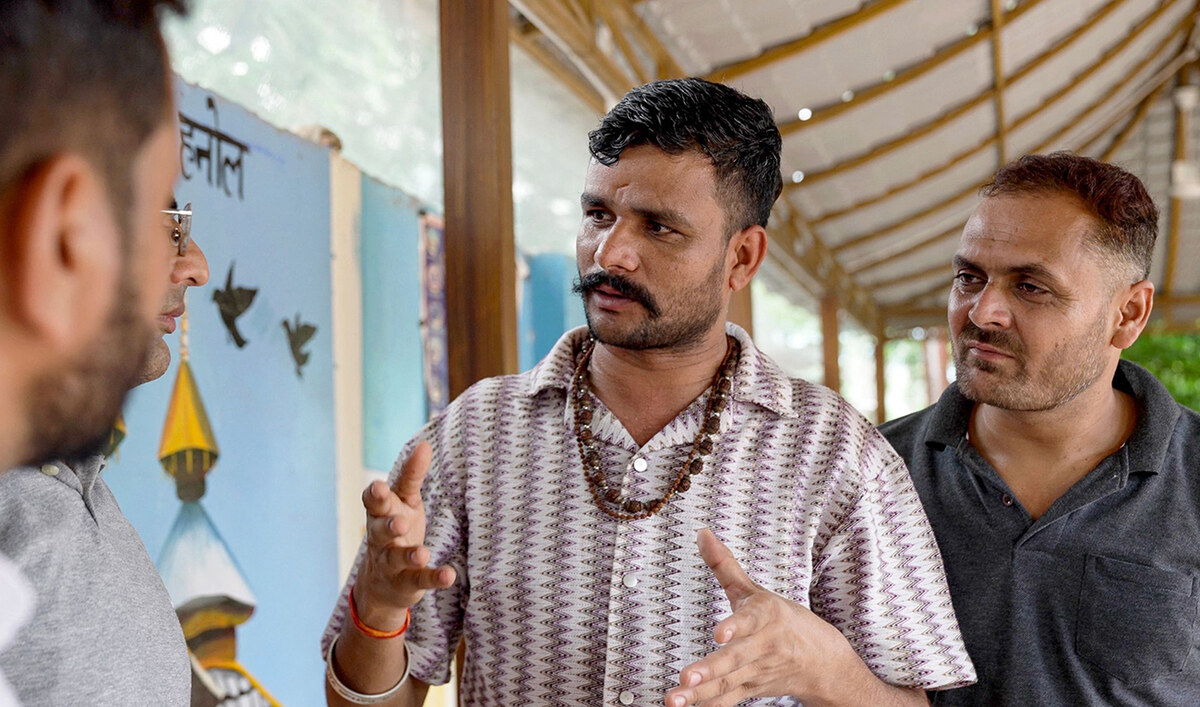
In this photograph taken on August 6, 2024, activist and Hindu right-wing group Rudra Sena’s founder Rakesh Tomar (2R), speaks to people in Dehradun. (AFP)
“We will not let it become an Islamic state under any circumstances, even if we have to sacrifice our lives for it.”
Only 13 percent of Uttarakhand’s 10 million people are Muslim, according to the last census in 2011.
Much of the hatred last year was fueled by “love-jihad” conspiracies, claiming predatory Muslim men wanted to seduce Hindu women to convert them.
Crude but effective, they are shared widely online, poisoning centuries of relative harmony in the area.
Many were shared by activists like Tomar, supporters of the ruling Hindu-nationalist Bharatiya Janata Party (BJP) of Prime Minister Narendra Modi.
The BJP’s nationalist rhetoric has left India’s Muslim population of more than 220 million fearful for their future. The BJP denies it is anti-Muslim.
Tomar sees himself on a frontline to stop what he alleges are Muslim efforts to take trade from Hindu businesses.
“We have started an initiative where Hindu shopkeepers put nameplates outside their shops so that Hindus buy goods from them,” he said.
“This economic boycott will curb ‘trade jihad’ waged by Muslims.”
It is a tried and tested tactic.
In Purola last year, the attacks on Muslims were preceded by a poster campaign plastered on Muslim homes and businesses telling them to leave.
Crowds demanded the “forced migration of Muslims” out of Purola, where some 500 Muslims had made up five percent of an otherwise Hindu town of some 10,000 people.
At first, Salim thought he would be safe.
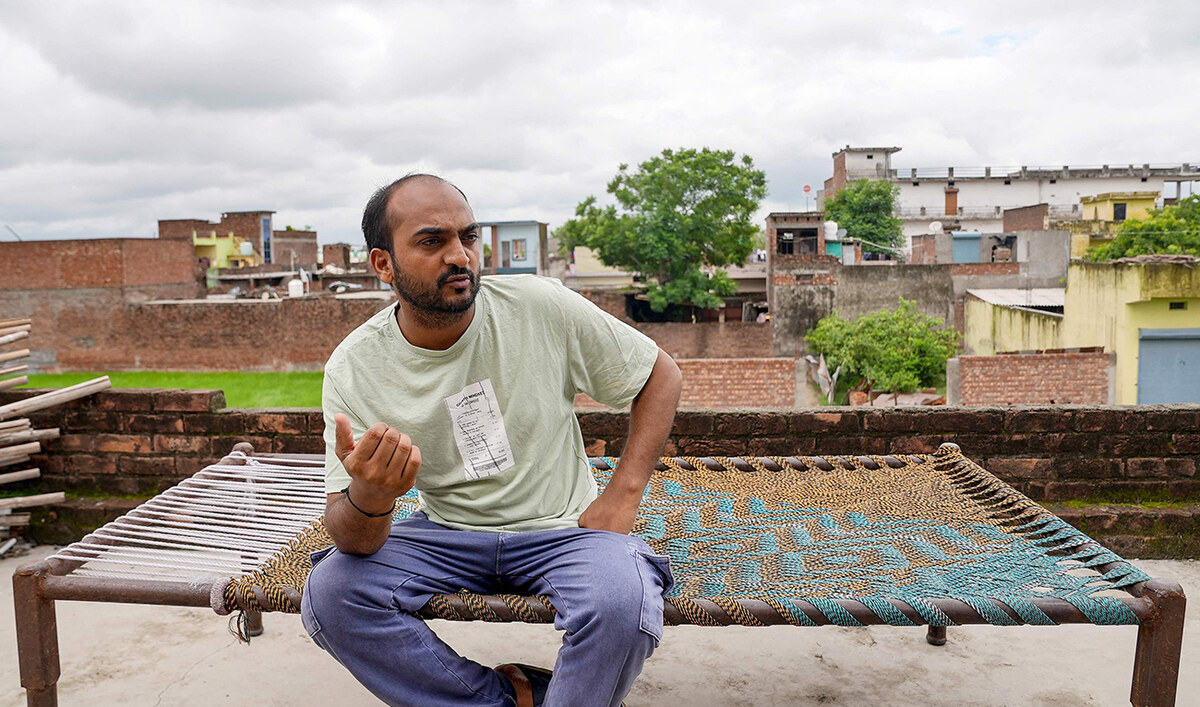
In this photograph taken on August 7, 2024, Mohammad Salim, who fled religious persecution at the hands of Hindu extremists, speaks during an interview with AFP on the roof of a rented accommodation in Haridwar. (AFP)
He had been born in the town — his father moved there half a century ago — and was old friends with his Hindu neighbors.
He was also a local leader of the BJP’s Minority Front — non-Hindu supporters of the party.
But months of online hate speech had divided old friends.
“I was threatened with death,” Salim said, adding his shop was looted and the building vandalized — losing assets he totalled at some $60,000.
“People said, ‘You should leave the town quickly or these people will kill you’.”
He and his family fled that night, among some 200 other Muslims driven out. Only a few have returned.
Tomar, a full-time activist who heads a self-described anti-Islam “army” of several hundred men, believes his Muslim neighbors are conspiring to seize Hindu women, land and businesses — none of which he can provide evidence to justify.
He spoke to AFP on a break from a meeting of the Rashtriya Swayamsevak Sangh (RSS), whose millions of members conduct paramilitary drills and prayer meetings.
The RSS campaigns for India to be declared a Hindu nation — rather than a secular one, as enshrined in its constitution — and is the ideological parent of Modi’s BJP.
“If a Hindu nation is to be created, it is only possible under the BJP,” Tomar said.
More moderate voices say some of the hatred is driven by jealousy at the perceived business acumen of Muslim traders, with extremists seeking a scapegoat for failing finances.
Indresh Maikhuri, a Hindu and civil society activist based in Dehradun, said political leaders saw benefit in boosting their popularity by sowing division.
“Some people want to create a rift between Hindus and Muslims,” he said, warning the “humiliating and segregated treatment” would have “dire consequences.”
As for Salim, he dreams of home.
“This is my motherland,” he said. “Where will I go, leaving this land where I was born?“


