Iran brings new charges against jailed reformist: media

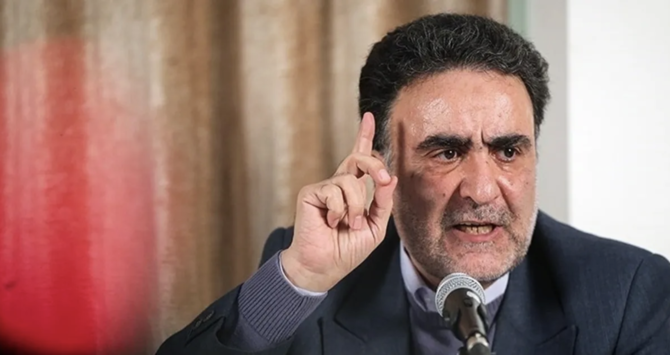
Mostafa Tajzadeh had already spent a total of seven years behind bars, having been arrested in 2009 alongside other reformist leaders following the re-election of hard-line president Mahmoud Ahmadinejad. (File/Tasnim)
Short Url
Updated 02 September 2024
Follow

Iran brings new charges against jailed reformist: media

  • Tajzadeh, jailed since July 2022 in Tehran’s Evin prison, served as deputy interior minister under the presidency of Mohammad Khatami
  • He was sentenced to five years in prison in October 2022 on charges of “plotting against state security” among others

TEHRAN: Jailed Iranian activist and former cabinet member Mostafa Tajzadeh, a prominent figure of the Islamic republic’s reformist camp, has been charged with “propaganda” against the state, local media said Monday.
Tajzadeh, jailed since July 2022 in Tehran’s Evin prison, served as deputy interior minister under the presidency of Mohammad Khatami, a reformist who oversaw a rapprochement with the West between 1997 and 2005.
He was sentenced to five years in prison in October 2022 on charges of “plotting against state security” among others, his lawyer said at the time.
Reformist daily Hammihan said Monday that new charges had been brought against Tajzadeh, accusing him again “of plotting against state security” and “propaganda against the Islamic republic.”
He had already spent a total of seven years behind bars, having been arrested in 2009 alongside other reformist leaders following the re-election of hard-line president Mahmoud Ahmadinejad in a vote contested by the opposition.
Tajzadeh, an outspoken commentator on national politics via social media channels operated by his relatives, said in a letter “that he would not appear in court” in the new case, according to Hammihan.
If convicted, Hammihan said, Tajzadeh could face up to six more years in jail.
In recent years, he has urged democratization and called on authorities to enact “structural changes” in the Iranian political system.


Soleimani warned Al-Assad about ‘spy’ Luna Al-Shibl: Al-Majalla

Updated 09 December 2025
Follow

Soleimani warned Al-Assad about ‘spy’ Luna Al-Shibl: Al-Majalla

LONDON: The late Iranian General Qassem Soleimani confronted Syria’s National Security Bureau chief Ali Mamlouk in late 2019 after seeing Luna Al-Shibl leaving his office. Al-Majalla magazine claims its reporters reviewed a document containing the full Arabic transcript of their exchange.

Soleimani reportedly asked, “Who is this?” and Mamlouk replied, “She is Louna Al-Shibl, the president’s adviser.”

The Quds Force commander pressed further: “I know, I know… but who is she really? Where did she work?”

According to Al-Majalla, a sister publication of Arab News, he said her former salary was “ten thousand dollars,” compared with her current salary of “five hundred thousand Syrian pounds,” before asking: “Does it make sense for someone to leave ten thousand dollars for five hundred thousand pounds? She is a spy.”

Both Soleimani and Maher Al-Assad, commander of the Syrian army’s powerful Fourth Division, had warned the ousted president’s inner circle about Al-Shibl, Al-Majalla reported.

‘Suspicious’ car crash

On July 2, 2024, Al-Shibl was involved in what officials described as a traffic accident on the Damascus-Dimas highway. She was hospitalized and died four days later.

But Al-Majalla reported that photos of her armored BMW showed only minor damage, raising immediate questions among those close to the case.

Eyewitnesses told the magazine that the crash was intentional. One said, “a car approached and rammed her vehicle,” and before her bodyguard could exit, “a man attacked her and struck her on the back of the head,” causing paralysis that led to her death.

She was first taken to Al-Saboura clinic, then transferred to Al-Shami Hospital. Several senior regime-linked figures, including businessman Mohammed Hamsho and an aide to Maher Al-Assad, were present when her condition deteriorated. One witness told Al-Majalla that when her bodyguard tried to explain what had happened, “he was arrested immediately in front of the others.”

The presidency later issued a brief statement announcing her death. Her funeral was attended only by a handful of officials. Then president Al-Assad did not attend.