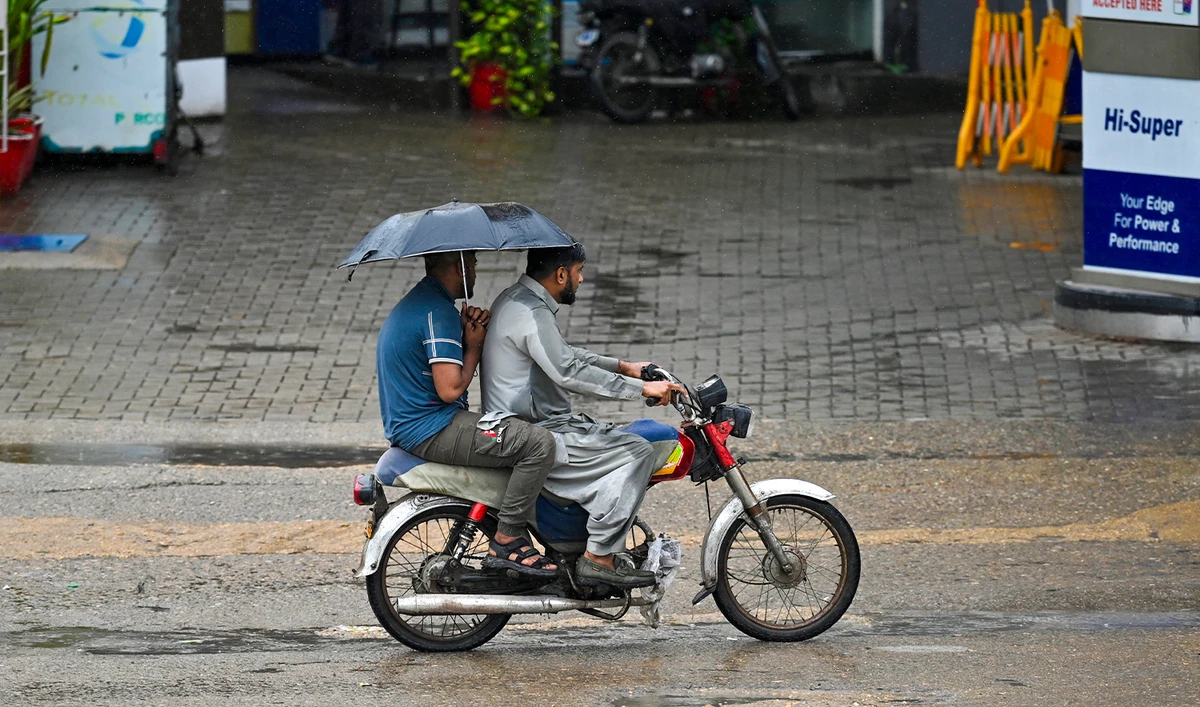
- Westerly wave to bring storms, thundershowers to Khyber Pakhtunkhwa, Punjab, Islamabad, Kashmir and Gilgit-Baltistan
- Pakistan has seen erratic changes in its weather patterns in recent years that scientists have blamed on climate change
ISLAMABAD: Weather authorities on Sunday forecast more monsoon showers in various parts of Pakistan this week, warning of urban flooding in several cities in the Punjab and Khyber Pakhtunkhwa provinces.
Pakistan has been witnessing massive monsoon rains that have killed more than 280 people since July 1, according to the National Disaster Management Authority (NDMA).
The Pakistan Meteorological Department (PMD) said on Sunday that a westerly wave was likely to approach upper parts of the country on Sept. 2, which could bring storms and thundershowers to Khyber Pakhtunkhwa, Punjab, Islamabad, Kashmir and Gilgit-Baltistan.
“Heavy downpour may cause urban flooding in low lying areas of Islamabad/Rawalpindi, Gujranwala, Lahore, Sheikhupura, Kasur, Sialkot, Sargodha, Faisalabad, Nowshera and Peshawar [on Sept. 2-3],” the PMD said in a statement.
“Heavy downpour/windstorm and lightning may affect damage weak structures like roof/wall of Kacha [mud] houses, electric poles, bill boards, vehicles, cause disruptions in the roads and solar panels etc. during the forecast period.”
Heavy rains were also expected in several cities across the southern Sindh and southwestern Balochistan provinces till Sept. 4, according to the PMD.
It advised travelers and tourists to remain extra cautious and farmers to manage their activities keeping in view the weather forecast.
Last week, heavy rains triggered flash floods in the southern Pakistani city of Karachi, causing power outages and forcing closure of schools.
Pakistan has seen erratic changes in its weather patterns in recent years that scientists have blamed on climate change. This year, the South Asian country recorded its “wettest April since 1961,” with 59.3 millimeters of rainfall, while some areas of the country faced deadly heat waves in May and June.
In 2022, unusually heavy rains triggered floods in many parts of the country, killing over 1,700 people, inflicting economic losses of around $30 billion, and affecting at least 30 million people.