

Omani rial’s effective exchange rate index rises 2.7% in first half of 2024

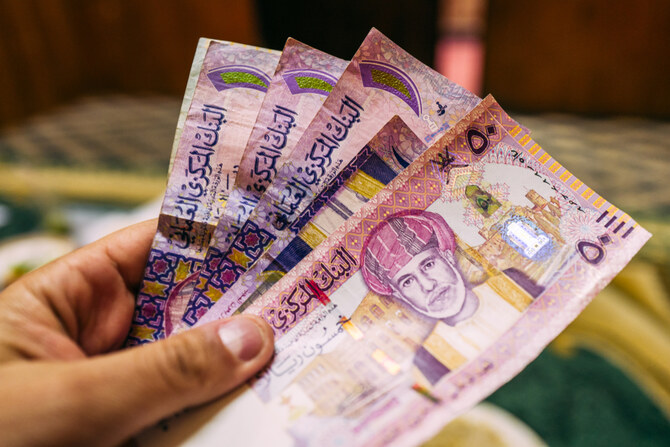
Oman’s public revenue saw an annual decline of 2 percent year on year in the second quarter of 2024. Shutterstock
Short Url
Updated 01 September 2024
Follow

Omani rial’s effective exchange rate index rises 2.7% in first half of 2024

  • Local liquidity in Oman reached 24 billion rials in the first half of the year
  • Growth in liquidity suggests vibrant and expanding economic activity, with more funds circulating within the economy

RIYADH: The Effective Exchange Rate Index of the Omani rial reached 118.4 points in the first half of 2024, up 2.7 percent compared to the same period last year, according to new data. 

The EER Index is a measure used to evaluate the value of a country’s currency relative to a basket of other currencies. It provides a broader view of performance compared to a single exchange rate. The index typically includes a weighted average of multiple rates, reflecting a country’s overall trade competitiveness in the global market.

Preliminary statistics issued by the National Center for Statistics and Information indicated that local liquidity in Oman reached 24 billion rials in the first half of the year, reflecting a 12 percent surge compared to the same period a year prior, the Oman News Agency reported. 

The growth in liquidity suggests vibrant and expanding economic activity, with more funds circulating within the economy.

This comes as Oman’s public revenue saw an annual decline of 2 percent year on year in the second quarter of 2024, reaching $16.1 billion, the country’s news agency disclosed in August. 

Oman’s economic landscape is heavily influenced by its reliance on oil and gas revenues, making it vulnerable to global price fluctuations. 

The government has been actively working to diversify the economy and reduce dependence on hydrocarbons as part of its Vision 2040 plan. 

This strategic undertaking aims to foster economic diversification, encourage private sector growth, and enhance social welfare programs to ensure long-term resilience.

The NCSI data further revealed a 3.3 percent decrease in total issued currency, amounting to 1 billion rials by the end of June, compared to the same period the previous year.

Conversely, the narrow money supply, or M1—which includes total cash outside the banking system, as well as current accounts and demand deposits in local currency—increased by 16.3 percent during the same timeframe, reaching 6 billion rials compared to the same period in 2023.

Additionally, the Central Bank of Oman's total foreign assets rose by 6.2 percent in the first six months of the year, totaling 6 billion rials by the end of June 2024, up from the end of June 2023.

Total loans and financing at commercial banks and Islamic windows reached 31 billion rials by the end of June, reflecting a 3.8 percent increase compared to the same period a year ago.

Finally, the average interest rate on total loans rose to 5.581 percent by the end of June, marking a 2.7 percent increase from the corresponding period in 2023.


Reforms target sustained growth in Saudi real estate sector, says Al-Hogail

Updated 26 January 2026
Follow

Reforms target sustained growth in Saudi real estate sector, says Al-Hogail

RIYADH: The Real Estate Future Forum opened its doors for its first day at the Four Seasons Riyadh, with prominent global and local figures coming together to engage with one of the Kingdom’s most prospering sectors.

With new regulations, laws, and investments underway, 2026 is expected to be a year of momentous progress for the real estate sector in the Kingdom.

The forum opened with a video highlighting the sector’s progress in the Kingdom, during which an emphasis was placed on the forum’s ability to create global reach, representation, as well as agreements worth a cumulative $50 billion

With the Kingdom now opening up real estate ownership to foreigners, this year’s Real Estate Future Forum is placing a great deal of importance on this new milestone and its desired outcomes and impact on the market. 

Aside from this year’s forum’s unique discussions surrounding those developments, it will also be the first of its kind to launch the Real Estate Excellence Award and announce its finalist during the three-day summit.

Minister of Municipalities and Housing and Chairman of the Real Estate General Authority Majed Al-Hogail took to stage to address the diverse audience on the real estate market’s achievements thus far and its milestones to come.

Of those important milestones, he underscored “real estate balance” as a key pillar of the sector’s decisions to implement regulatory tools “with the aim of constant growth which can maintain the vitality of this sector.” He pointed to examples of those regulatory measures, such as the White Land Tax.

On 2025’s progress, the minister highlighted the jump in Saudi family home ownership, which went from 47 percent in 2016 to 66 percent in 2025, keeping the Kingdom’s Vision 2030 goal of 70 percent by the end of the decade on track.

He said the opening of the real estate market to foreigners is an indicator of the sector’s maturity under the leadership of Crown Prince Mohammed bin Salman. He said his ministry plans to build over 300,000 housing units in Riyadh over the next three years.

Speaking to Arab News,  Al-Hogail elaborated on these achievements, stating: “Today, demand, especially local demand, has grown significantly. The mortgage market has reached record levels, exceeding SR900 billion ($240 billion) in mortgage financing, we are now seeing SRC (Saudi Real Estate Refinance Co.) injecting both local and foreign liquidity on a large scale, reaching more than SR54 billion”

Al-Hogail described Makkah and Madinah as unique and special points in the Kingdom’s real estate market as he spoke of the sector’s attractiveness.

 “Today, the Kingdom of Saudi Arabia has become, in international investment indices, one that takes a good share of the Middle East, and based on this, many real estate investment portfolios have begun to come in,” he said. 

Al-Ahsa Gov. Prince Saud bin Talal bin Badr Al-Saud told Arab News the Kingdom’s ability to balance both heritage sites with real estate is one of its strengths.

He said: “Actually the real estate market supports the whole infrastructure … the whole ecosystem goes back together in the foundation of the real estate; if we have the right infrastructure we can leverage more on tourism plus we can leverage more on the quality of life … we’re looking at 2030, this is the vision … to have the right infrastructure the time for more investors to come in real estate, entertainment, plus tourism and culture.”