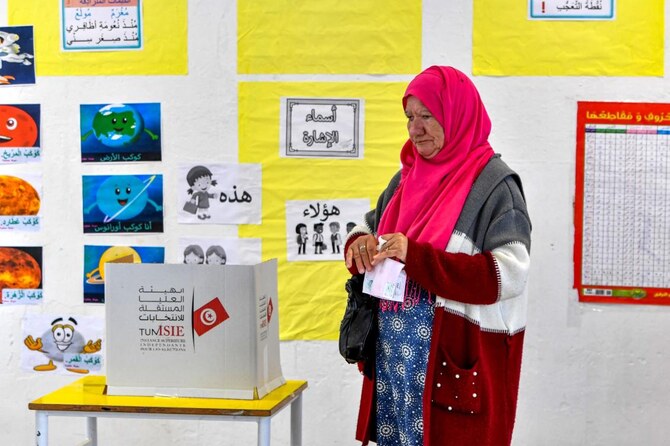
TUNIS: A petition signed by prominent Tunisians and civil society groups was published on Saturday urging that rejected candidates be allowed to stand in the October 6 presidential election.
Signed by 26 groups including Legal Agenda, Lawyers Without Borders and the Tunisian Human Rights League, it welcomed an administrative court decision this week to reinstate three candidates who had been disqualified.
They are Imed Daimi, who was an adviser to former president Moncef Marzouki, former minister Mondher Zenaidi and opposition party leader Abdellatif Mekki.
The three were among 14 candidates barred by the Tunisian election authority, ISIE, from standing in the election.
If they do take part, they will join former parliamentarian Zouhair Maghzaoui and businessman Ayachi Zammel in challenging incumbent President Kais Saied, whom critics accuse of authoritarianism.
Saied was democratically elected in 2019 but orchestrated a sweeping power grab in 2021.
A number of his political opponents and critics are currently in jail or being prosecuted.
Saturday’s petition was also signed by more than 180 civil society figures including Wahid Ferchichi, dean of the public law faculty at Carthage University.
It called the administrative court “the only competent authority to adjudicate disputes related to presidential election candidacies.”
The petition referred to statements by ISIE head Farouk Bouasker, who on Thursday indicated that the authority will soon meet to finalize the list of candidates, “taking into consideration judicial judgments already pronounced.”
This has been interpreted as suggesting the ISIE may reject new candidacies if they are the subject of legal proceedings or have convictions.
The administrative court’s rulings on appeals “are enforceable and cannot be contested by any means whatsoever,” the petition said.
It called on the electoral authority to “respect the law and avoid any practice that could undermine the transparency and integrity of the electoral process.”
Last week, Human Rights Watch said Tunisian authorities “have prosecuted, convicted or imprisoned at least eight prospective candidates” for October’s vote.
HRW said that the North African country was “gearing up for a presidential election amid increased repression of dissent and free speech, without crucial checks and balances on President Saied’s power.”


![]()

Tunisia groups urge inclusion of rejected candidates in poll
Short Url
https://arab.news/p58ej
Tunisia groups urge inclusion of rejected candidates in poll
Latest updates



© 2026 SAUDI RESEARCH & PUBLISHING COMPANY, All Rights Reserved And subject to Terms of Use Agreement.