TEHRAN: Two Iranian Revolutionary Guards were killed in a “gas leak” in a Guards’ workshop in the center of the country, local media reported Thursday.
“Lt. Col. Mokhtar Morshedi and Captain Mojtaba Nazari were martyred,” Fars news agency reported, citing a statement from the Revolutionary Guards.
It said their death came after a “gas leak incident on Wednesday night” in a Guards’ workshops in the central province of Isfahan, without providing further details.
Earlier, the official IRNA news agency had reported that “one person was martyred, and 10 others were injured due to a gas leak.”
Iran has recorded a number of previous cases involving deaths and hospitalizations due to gas leaks.
In January of last year, an explosion suspected to have been caused by a gas leak at a building in northwestern Iran killed six members of the same family.
And in June 2022, over 130 people were hospitalized with respiratory difficulties following a chemical leak at a factory in the southern city of Firuzabad.

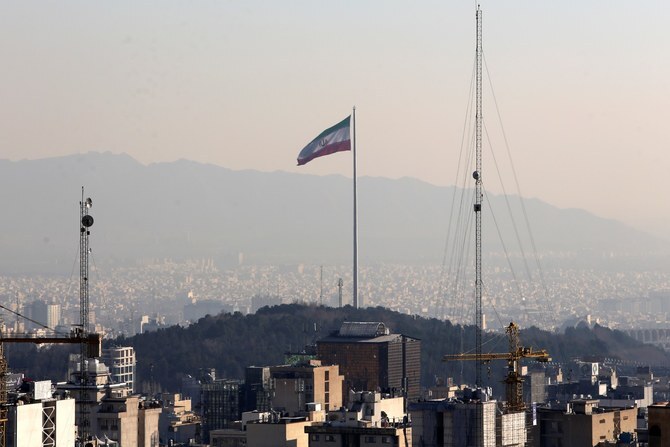
Two Guards killed in ‘gas leak’ in central Iran: media
https://arab.news/vp29q
Two Guards killed in ‘gas leak’ in central Iran: media
- Their death came after a “gas leak incident on Wednesday night” in a Guards’ workshops in the central province of Isfahan
Aid mechanisms deployed to fill UN void in Yemen’s Houthi-controlled areas
- Upcoming donor conference in Jordan seen as pivotal opportunity to re-mobilize international support
ADEN: Humanitarian operations in Yemen are entering a new and more complex phase after the UN was forced to rely on alternative aid-delivery mechanisms in Houthi-controlled areas, following the closure of its offices and the seizure of its assets.
The move has reshaped relief efforts in one of the world’s worst humanitarian crises.
The shift comes as Amman prepares to host an international donor conference aimed at curbing the rapid deterioration in food security, amid warnings that hunger could spread to millions more people this year.
Recent humanitarian estimates show that about 22.3 million Yemenis — nearly half the population — will require some form of assistance in 2026, an increase of 2.8 million from last year. The rise reflects deepening economic decline and persistent restrictions on humanitarian work in conflict zones.
Aid sources say the UN is reorganizing its operations by transferring responsibility for distributing life-saving assistance to a network of partners, including international and local non-governmental organizations and the International Committee of the Red Cross, which continues to operate in those areas.
The transition aims to ensure continued access to food and medicine for the most vulnerable despite the absence of a direct UN presence, which has been undermined by restrictions imposed by the Houthis.
International agencies are increasingly adopting a “remote management” model to reduce risks to staff and maintain aid flows.
Relief experts caution, however, that this approach brings serious challenges, including limited field oversight and difficulties ensuring aid reaches beneficiaries without interference.
Humanitarian reports warn that operational constraints have already deprived millions of Yemenis of essential assistance at a time of unprecedented food insecurity.
More than 18 million people are suffering from acute hunger, with millions classified at emergency levels under international food security standards.
The upcoming donor conference in Jordan is seen as a pivotal opportunity to re-mobilize international support and address a widening funding gap that threatens to scale back critical humanitarian programs.
Discussions are expected to focus on new ways to deliver aid under security and administrative constraints and on strengthening the role of local partners with greater access to affected communities.
Yemen’s crisis extends beyond food.
The health sector is under severe strain, with about 40 percent of health facilities closed or at risk of closure due to funding shortages.
Women and girls are particularly affected as reproductive health services decline, increasing pregnancy and childbirth-related risks.
The World Health Organization has warned that deteriorating conditions have fueled outbreaks of preventable diseases amid falling immunization rates, with fewer than two-thirds of children receiving basic vaccines.
More than 18,600 measles cases and 188 deaths were recorded last year, while Yemen reported the world’s third-highest number of suspected cholera cases between March 2024 and November 2025.


