KUALA LUMPUR: Tech companies must comply with local laws to continue operating in Malaysia, a minister said on Tuesday, after an industry group urged the government to pause a plan to require social media platforms to apply for a regulatory license.
The Asia Internet Coalition (AIC) — whose members include Google, Meta and X — had made the call in an open letter to Prime Minister Anwar Ibrahim, citing a lack of clarity over the proposed regulations.
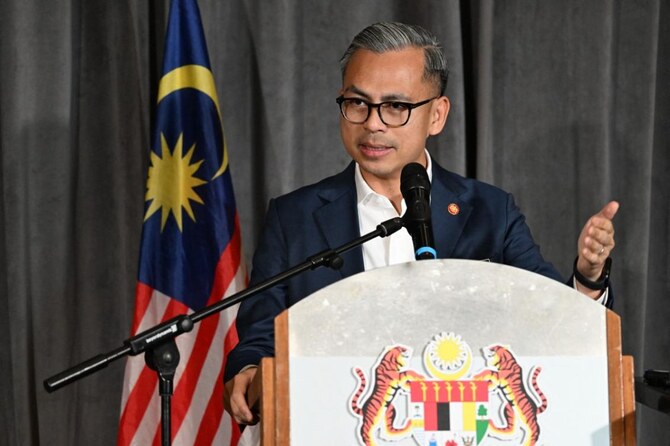
Communications Minister Fahmi Fadzil said the government was ready to discuss the proposed regulations with the AIC and other industry groups but had no plans to delay their implementation, aimed at tackling rising cybercrime.
Under the plan, social media platforms and messaging services with more than eight million users would be required to obtain a license and could face legal action if they failed to do so by Jan. 1, 2025.
“Big tech companies are big but our laws are bigger. If they want to operate in Malaysia, they must respect and comply with our laws,” Fahmi told reporters, adding earlier talks with representatives of social media firms on the plan had been positive.
The AIC letter, originally dated Aug. 23, was taken down from its website late on Monday. Ride-hailing firm Grab, also a member of the group, said separately on the same day that it had not been consulted on the letter’s contents.
A new version of the letter, dated Aug. 26, was later posted to AIC’s website with several sentences removed, including a reference to the government’s plan being “unworkable” for the industry.
The letter also removed a list of the AIC’s member companies, which remains available on the group’s website.
In a statement on Tuesday, Malaysia’s communications regulator said it would conduct a public inquiry and was seeking feedback on the regulation from industry players and the public.
In its letter, the AIC had said an absence of formal public consultations had led to industry uncertainty and concerns over potential unintended consequences from the regulatory license.

Tech firms must comply with Malaysia’s laws, minister says, amid backlash over social media licensing plan
https://arab.news/4vtt7
Tech firms must comply with Malaysia’s laws, minister says, amid backlash over social media licensing plan
- Government set to move forward with regulation despite request to pause on plan to license social media firms
- Google, Meta and X says proposed regulations lack clarity
BBC backs Israel’s participation in Eurovision Song Contest amid expanding boycott
- Ireland, Spain, the Netherlands and Slovenia withdraw, citing concerns about the war in Gaza, after organizers clear Israel to compete
- Critics accuse organizers of double standards, given that Russia was banned from Eurovision in 2022 after invasion of Ukraine
LONDON: The BBC has backed the European Broadcasting Union’s decision to allow Israel to participate in the 2026 Eurovision Song Contest, despite mounting opposition and an expanding boycott by European countries and public broadcasters.
National broadcasters in Ireland, Spain, the Netherlands and Slovenia have formally withdrawn from next year’s event, citing what they described as Israel’s violations of international law during its ongoing war on Gaza, which has killed more than 70,000 people, left much of the territory in ruins and prompted accusations of war crimes.
The BBC, however, said it backed the decision to allow Israel to take part in the contest.
“We support the collective decision made by members of the EBU,” a BBC spokesperson said. “This is about enforcing the rules of the EBU and being inclusive.”
Israel’s participation in the 2026 event, set to take place in the Austrian capital Vienna in May, was confirmed during the EBU’s general assembly in Geneva on Thursday.
However, pressure continued to build in opposition to the decision, with broadcasters from four countries pulling out and critics accusing organizers of double standards, given that Russia was banned from Eurovision in 2022 after the invasion of Ukraine.
Following the EBU decision, Irish public broadcaster RTE said it would neither participate in nor screen the contest. It said Ireland’s participation “remains unconscionable given the appalling loss of lives in Gaza and the humanitarian crisis there.” It also condemned the killing of journalists in Gaza and the denial of access to the international media. More than 200 Palestinian journalists have reportedly been killed since the start of the war.
Slovenian broadcaster RTV said it was withdrawing from the competition “on behalf of the 20,000 children who died in Gaza.” Chairperson Natalija Gorscak said the decision reflected growing public demand to uphold European values of peace and press freedoms, noting that the international media are still banned from Gaza.
She added that Israel’s 2025 Eurovision performance had been overtly political, and contrasted the decision about Israel with the ban on Russia’s participation following the invasion of Ukraine.
Dutch broadcaster AVROTROS also withdrew from the contest, describing the decision of the EBU as “incompatible with the public values that are essential to us.”
CEO Taco Zimmerman said: “Culture unites, but not at all costs. What happened last year touches our boundaries … Universal values like humanity and a free press have been seriously violated.”
The EBU did not hold a vote on Israel’s participation in the contest. Instead, member broadcasters voted in favor of new rules for contest voting to prevent governments or other groups from unfairly promoting songs to manipulate the result.
Austria, which is set to host the competition after Viennese singer JJ won this year with “Wasted Love,” supports Israel’s participation. Germany, too, was said to back Israel.


