

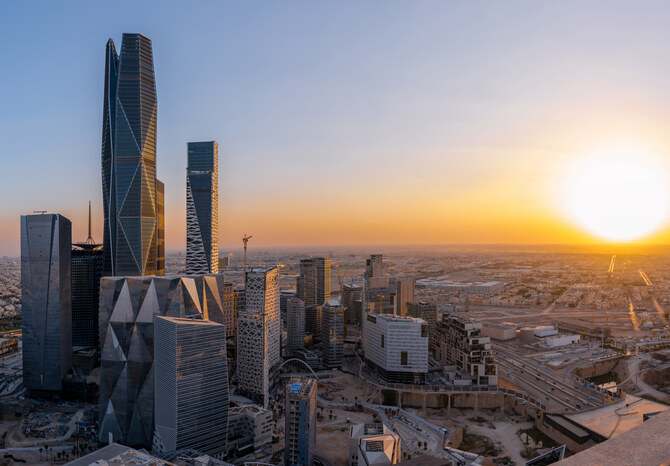

RIYADH: Saudi Arabia’s Public Investment Fund generated an average annual shareholders’ return of 8.7 percent by the end of 2023, highlighting its significant role in the Kingdom’s ongoing economic diversification.
As the nation advances its Vision 2030 agenda, PIF’s performance underscores its pivotal position in reducing the country’s dependence on oil revenues, a core objective of the initiative’s framework.
The Vision 2030 plan, launched in 2016, aims to transform Saudi Arabia’s economy by reducing its reliance on oil, fostering new industries, and attracting foreign investment.
Yasir Al-Rumayyan, governor of PIF, emphasized the fund’s mission, highlighting 2023 as a time of significant progress and broad achievement.
He said: “During a year of progress and widespread achievement, PIF has continued to deliver on its mandate as the driving force of Saudi Arabia’s sustainable economic transformation and diversification.”
Al-Rumayyan noted the unveiling of new giga-projects, the launch of portfolio companies across various sectors, and the establishment of landmark partnerships.
Central to this effort is PIF, which has been instrumental in channeling strategic investments into key sectors, thereby driving the Kingdom’s transition toward a more diversified and sustainable economic model.
PIF’s annual report for 2023 revealed that its assets under management, known as AuM, surged by 29 percent, reaching SR2.871 trillion ($765 billion) by year-end.
This figure climbed to over $3.47 trillion by July this year, indicating sustained growth.
PIF’s international AuM grew by 14.3 percent, reaching SR586 billion by the end of 2023, reflecting its expanding global footprint and efforts to diversify its investment portfolio across various international markets.
Domestically, PIF has been a key driver in the growth of critical sectors, creating over 730,000 direct and indirect jobs by the end of 2023 — a figure that rose to more than 763,000 by the first quarter of this year.
These efforts have supported high-value employment and strengthened the private sector, a crucial element in Saudi Arabia’s economic transformation.
The fund’s diversified portfolio spans a wide range of industries, including 23.1 percent of investments in energy, 17.0 percent in real estate, 9.4 percent in information technology, and 7.3 percent in financials.
A critical aspect of the fund’s domestic strategy is the Saudi sector development, which has been instrumental in advancing the Kingdom’s economic diversification for over five decades.
The SSD pool focuses on fostering growth in promising domestic industries through direct and indirect investments in emerging sectors and companies.
In 2023, the portfolio, encompassing over 100 companies valued at more than SR943 billion, achieved a remarkable 101 percent increase in AuM compared to the previous year.
Looking ahead, the fund’s investments are expected to play a vital role in achieving the Kingdom’s economic goals by 2025, the report said.
This includes contributing SR1.2 trillion to cumulative non-oil gross domestic product, creating 1.8 million jobs and ensuring a 60 percent contribution to local content through PIF and its portfolio companies.
The fund aims to attract SR1.2 trillion in cumulative non-governmental interest, including domestic and foreign direct investment, across 13 strategic sectors, including aerospace and defense, automotive, entertainment, and metals and mining.


