

PIF-owned Saudi Investment Recycling Co. expands PET flake exports to UK

The company, a subsidiary of the Kingdom’s Public Investment Fund, announced that its first shipment of heat-washed, recycled flakes has reached a major UK PET bottle manufacturer. File/Supplied
Short Url
Updated 13 August 2024
Follow

PIF-owned Saudi Investment Recycling Co. expands PET flake exports to UK

  • SIRC announced its first shipment of heat-washed, recycled flakes has reached a major UK PET bottle manufacturer
  • Cmpany said transport was facilitated through Masab, in partnership with SIRC’s joint venture, Yadoum

RIYADH: Saudi Investment Recycling Co. has expanded its export of recycled polyethylene terephthalate, or PET, flakes to the UK, following successful shipments to Spain earlier this year.  

The company, a subsidiary of the Kingdom’s Public Investment Fund, announced that its first shipment of heat-washed, recycled flakes has reached a major UK PET bottle manufacturer. 

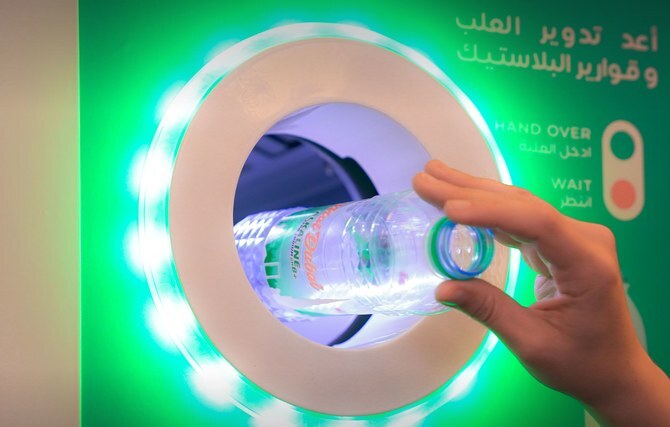
Recycled PET flakes are small plastic pieces made from used polyethylene terephthalate products like bottles. These flakes are processed into raw material for new PET bottles, textiles, and packaging, contributing to waste reduction and sustainability. 

The company said the transport was facilitated through the Masab plastic recycling project, in partnership with SIRC’s joint venture, Yadoum, established in 2022. 

This milestone represents a significant step for Yadoum as it enters the UK market, a region with substantial demand for recyclable materials. 

Earlier this year, SIRC began exporting PET flakes to Spain, with exports surpassing 1,650 tonnes. The company sees this expansion as a key opportunity to strengthen its European partnerships and enhance its export capabilities. 

This cooperation, it added, is expected to drive further integration in the PET recycling sector and other related fields. 

Ziyad Al-Shiha, CEO of SIRC, said: “We take pride in contributing to Saudi Arabia’s sustainability objectives through this initiative.” 

He emphasized the company’s role in reducing greenhouse gas emissions, diverting waste from landfills, and supporting the Saudi Green Initiative. 

In August 2023, SIRC joined the European Petrochemical Association, a network of over 650 companies worldwide, aligning with its strategic goals under Saudi Vision 2030 to reduce landfill reliance and lower carbon emissions. 


Jordan’s industry fuels 39% of Q2 GDP growth

Updated 31 December 2025
Follow

Jordan’s industry fuels 39% of Q2 GDP growth

JEDDAH: Jordan’s industrial sector emerged as a major contributor to economic performance in 2025, accounting for 39 percent of gross domestic product growth in the second quarter and 92 percent of national exports.

Manufactured exports increased 8.9 percent year on year during the first nine months of 2025, reaching 6.4 billion Jordanian dinars ($9 billion), driven by stronger external demand. The expansion aligns with the country’s Economic Modernization Vision, which aims to position the country as a regional hub for high-value industrial exports, the Jordan News Agency, known as Petra, quoted the Jordan Chamber of Industry President Fathi Jaghbir as saying.

Export growth was broad-based, with eight of 10 industrial subsectors posting gains. Food manufacturing, construction materials, packaging, and engineering industries led performance, supported by expanded market access across Europe, Arab countries, and Africa.

In 2025, Jordanian industrial products reached more than 144 export destinations, including emerging Asian and African markets such as Ethiopia, Djibouti, Thailand, the Philippines, and Pakistan. Arab countries accounted for 42 percent of industrial exports, with Saudi Arabia remaining the largest market at 955 million dinars.

Exports to Syria rose sharply to nearly 174 million dinars, while shipments to Iraq and Lebanon totaled approximately 745 million dinars. Demand from advanced markets also strengthened, with exports to India reaching 859 million dinars and Italy about 141 million dinars.

Industrial output also showed steady improvement. The industrial production index rose 1.47 percent during the first nine months of 2025, led by construction industries at 2.7 percent, packaging at 2.3 percent, and food and livestock-related industries at 1.7 percent.

Employment gains accompanied the sector’s expansion, with more than 6,000 net new manufacturing jobs created during the period, lifting total industrial employment to approximately 270,000 workers. Nearly half of the new jobs were generated in food manufacturing, reflecting export-driven growth.

Jaghbir said industrial exports remain among the economy’s highest value-added activities, noting that every dinar invested generates an estimated 2.17 dinars through employment, logistics, finance, and supply-chain linkages. The sector also plays a critical role in narrowing the trade deficit and supporting macroeconomic stability.

Investment activity accelerated across several subsectors in 2025, including food processing, chemicals, pharmaceuticals, mining, textiles, and leather, as manufacturers expanded capacity and upgraded production lines to meet rising demand.

Jaghbir attributed part of the sector’s momentum to government measures aimed at strengthening competitiveness and improving the business environment. Key steps included freezing reductions in customs duties for selected industries, maintaining exemptions for production inputs, reinstating tariffs on goods with local alternatives, and imposing a 16 percent customs duty on postal parcels to support domestic producers.

Additional incentives in industrial cities and broader structural reforms were also cited as improving the investment climate, reducing operational burdens, and balancing consumer needs with protection of local industries.