Pakistan’s Internet firewall could cost economy $300 million, association says 

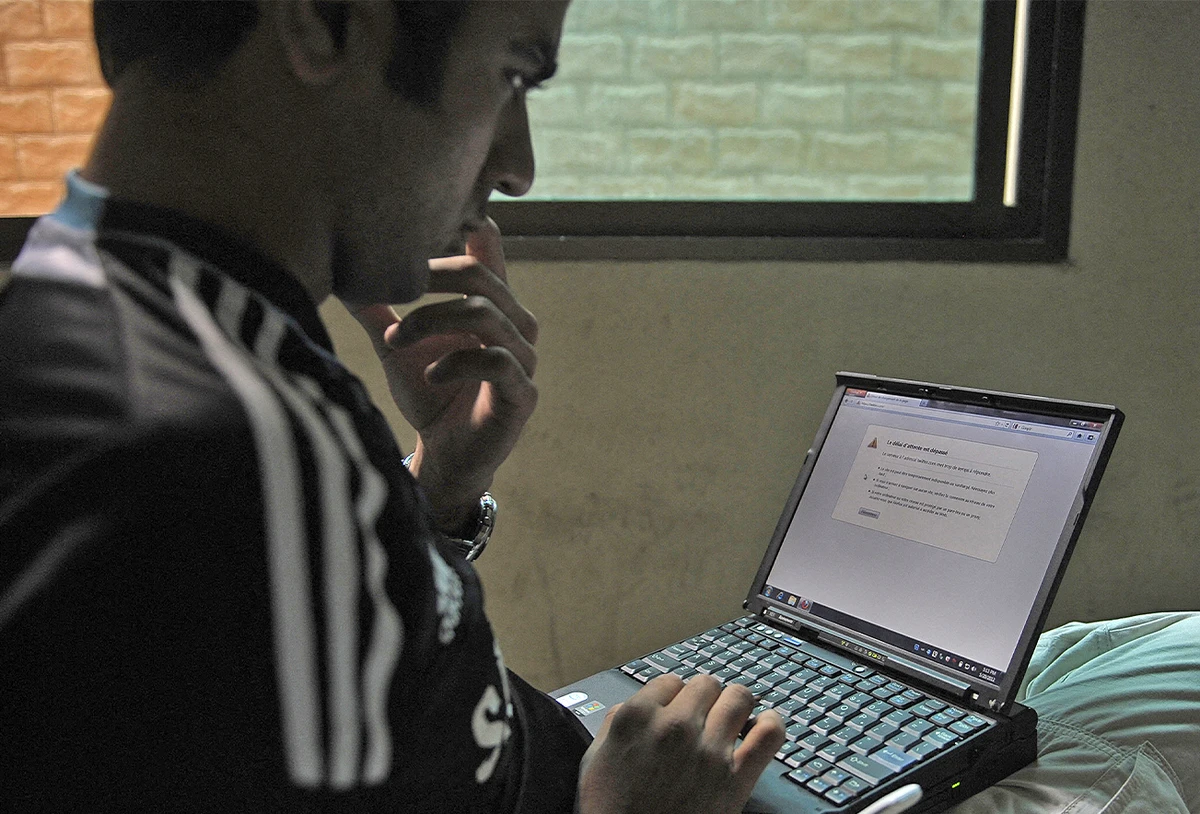
A Pakistani resident uses a computer to try to enter social networking website Twitter in Quetta on May 20, 2012, after the country's government blocked the website. (AFP/File)
Short Url
Updated 15 August 2024
Follow

Pakistan’s Internet firewall could cost economy $300 million, association says 

  • Islamabad is reportedly implementing an Internet firewall to monitor and regulate content and social media platform
  • Pakistan Software Houses Association says country’s global IT clients fear proprietary data, privacy will be compromised

KARACHI: Pakistan’s economy could lose up to $300 million due to Internet disruptions caused by imposition of a national firewall, the Pakistan Software Houses Association (P@SHA) said in a press release on Thursday.

Islamabad is implementing an Internet firewall to monitor and regulate content and social media platforms, according to local media reports. The government denies the use of the firewall for censorship.

Ali Ihsan, senior vice chairman of P@SHA, said the imposition of the firewall has already caused prolonged Internet disconnections and erratic VPN performance, threatening a “complete meltdown of business operations.”

“These disruptions are not mere inconveniences; but, a direct, tangible and aggressive assault on the industry’s viability – inflicting an estimated and devastating financial losses estimated to reach $300 million, which can further increase exponentially,” he said in the statement.

Pakistan’s telecommunication authority and Pakistan’s Minister of State for Information Technology Shaza Fatima Khawaja did not immediately respond.

Earlier this month, Khawaja told local media that the government did not plan to use firewalls as a form of censorship.

Pakistan has already blocked access to social media platform X since the February elections in which jailed former prime minister Imran Khan won the most seats despite a crackdown and ban on his party.

The government has said the blocking was to stop anti state activities and a failure by X to adhere to local Pakistani laws. Rights activists say blocking X is designed to stifle critical voices and democratic accountability in the country.

In its statement, P@SHA said that the government’s lack of transparency around the firewall had “ignited a firestorm of distrust” among Internet users and Pakistan’s global IT clients who fear their proprietary data and privacy will be compromised.

P@SHA demanded an “immediate and unconditional halt to this digital siege” and called on the government to engage with the industry to develop a cybersecurity framework.

Pakistan recorded $298 million in IT exports in June, up 33 percent from the year before. During the fiscal year that ended in June, IT exports were worth $3.2 billion, up 24 percent from $2.5 billion in the fiscal year 2023. 

Pakistan, ADB sign $730 loan agreements to boost SOE reforms, energy infrastructure

Updated 25 December 2025
Follow

Pakistan, ADB sign $730 loan agreements to boost SOE reforms, energy infrastructure

  • Both sign $330 million Power Transmission Strengthening Project and $400 million SOE Transformation Program loan agreements
  • Economic Affairs Division official says Transmission Project will secure Pakistan’s energy future by strengthening national grid’s backbone

KARACHI: Pakistan and the Asian Development Bank (ADB) on Thursday signed two loan agreements totaling $730 million to boost reforms in state-owned enterprises (SOEs) and energy infrastructure in the country, the bank said.

The first of the two agreements pertains to the SOE Transformation Program worth $400 million while the second loan, worth $330 million, is for a Power Transmission Strengthening Project, the lender said. 

The agreements were signed by ADB Country Director for Pakistan Emma Fan and Pakistan’s Secretary of Economic Affairs Division Humair Karim. 

“The agreements demonstrate ADB’s enduring commitment to supporting sustainable and inclusive economic growth in Pakistan,” the ADB said. 

Pakistan’s SOEs have incurred losses worth billions of dollars over the years due to financial mismanagement and corruption. These entities, including the country’s national airline Pakistan International Airlines, which was sold to a private group this week, have relied on subsequent government bailouts over the years to operate.

The ADB approved the $400 million loan for SOE reforms on Dec. 12. It said the program seeks to improve governance and optimize the performance of Pakistan’s commercial SOEs. 

Karim highlighted that the Power Transmission Strengthening Project will enable reliable evacuation of 2,300 MW from Pakistan’s upcoming hydropower projects, relieve overloading of existing transmission lines and enhance resilience under contingency conditions, the Press Information Department (PID) said. 

“The Secretary emphasized that both initiatives are transformative in nature as the Transmission Project will secure Pakistan’s energy future by strengthening the backbone of the national grid whereas the SOE Program will enhance transparency, efficiency and sustainability of state-owned enterprises nationwide,” the PID said. 

The ADB has supported reforms by Pakistan to strengthen its public finance and social protection systems. It has also undertaken programs in the country to help with post-flood reconstruction, improve food security and social and human capital. 

To date, ADB says it has committed 764 public sector loans, grants and technical assistance totaling $43.4 billion to Pakistan.