ROME: The UN refugee agency, which has expressed serious concerns about Italy’s deal to process some migrants’ asylum requests at holding centers in Albania, has agreed to monitor the first three months of the agreement.
UNHCR recalled that it wasn’t a party to the Italy-Albania deal, had maintained reservations about it and requested clarification about how it would be implemented. But the agency said in a statement on Wednesday that it had agreed to monitor its execution to help “safeguard the rights and dignity of those subject to it.”
The agency said that it would counsel migrants about their right to seek asylum and ensure that the procedures used are “consistent with relevant international and regional human rights standards, are fair, and promote protection and solutions for those in need of international protection.”
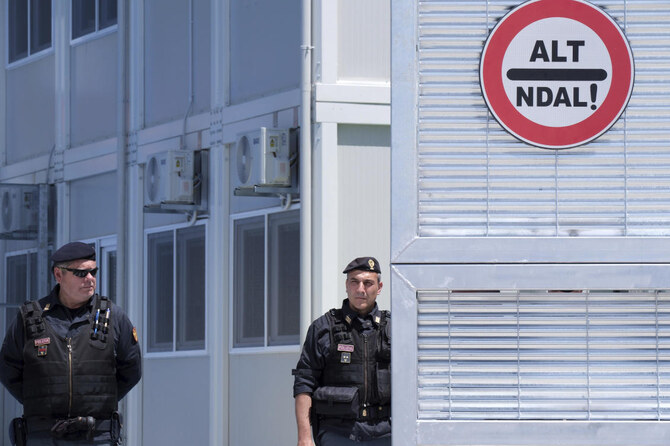
The contentious five-year deal, inked last year, calls for Albania to house up to 3,000 male migrants at a time who have been rescued in international waters while Italy fast-tracks their asylum claims. It was supposed to have become operational this month, but construction delays at the two new detention centers in Albania put off the start date.
Italy’s right-wing government has held up the agreement as an important example of burden-sharing of Europe’s migrant responsibilities, while also serving as a deterrent to would-be refugees. The European Commission, which has long struggled with Europe’s migrant debate, has endorsed it.
But human rights groups have denounced what they call Italy’s outsourcing of its responsibilities under international law to process the asylum requests of Italy-bound migrants rescued at sea. The center-left opposition in Italy has called the centers Italy’s “Guantanamo.”
UNHCR said that its monitoring mission would be funded by sources other than Italy and Albania to ensure that it remains independent and said it would report back after three months with recommendations.
According to the agreement, migrants will be screened initially on board the ships that have rescued them, with vulnerable migrants taken to Italy while others are sent to Albania for additional screening.
UNHCR and other agencies have expressed concern both about the onboard screenings, and whether they will truly be able to identify vulnerable migrants, as well as migrants’ access to adequate legal counsel once in Albania.
In a January appearance at Italy’s lower chamber of parliament, UNHCR’s Italy director, Chiara Cardoletti, said that the issue of legal representation would be complicated by housing the migrants in Albania, especially establishing a relationship of trust and confidentiality.
She noted that none of the protocols to date had established how migrants who aren’t eligible for asylum would be sent home. And she also questioned the costs, and recommended regardless that more resources be spent reinforcing the migrant processing centers in Italy.
The two centers in Albania will cost Italy 670 million euros ($730 million) over five years. The facilities will be fully run by Italy, and both centers are under Italian jurisdiction, while Albanian guards will provide external security.
UNHCR’s announcement of a monitoring mission came on the eve of an annual update by Italy’s interior minister about a host of security issues, including migration. Interior Minister Matteo Piantedosi noted that Italy had registered a 20 percent increase in the number of repatriations of migrants this year who aren’t eligible for asylum.
At the same time, the number of new migrants arriving in Italy is sharply down this year: As of Wednesday, 37,644 people had arrived by boat this year, compared to 100,419 over the same period last year, according to interior ministry statistics.


![]()

UNHCR to monitor implementation of Italy-Albania accord to ensure migrants’ asylum rights respected
Short Url
https://arab.news/6528j
UNHCR to monitor implementation of Italy-Albania accord to ensure migrants’ asylum rights respected
- The center-left opposition in Italy has called the centers Italy’s “Guantanamo”
- UNHCR said that its monitoring mission would be funded by sources other than Italy and Albania to ensure that it remains independent


Latest updates


© 2026 SAUDI RESEARCH & PUBLISHING COMPANY, All Rights Reserved And subject to Terms of Use Agreement.