Test captain Shan Masood says no match-fixers in current Pakistan cricket setup

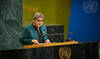
Pakistan's captain Shan Masood speaks during a press conference at the Gaddafi Cricket Stadium in Lahore on November 29, 2023. (AFP/File)
Short Url
Updated 12 August 2024
Follow

Test captain Shan Masood says no match-fixers in current Pakistan cricket setup

  • Many former Pakistani cricketers have been embroiled in match-fixing, spot-fixing controversies in the past 
  • Pakistan will play two Test matches against Bangladesh in Rawalpindi and Karachi from Aug. 21

ISLAMABAD: Pakistan’s Test captain Shan Masood this week clarified that no member of the current national squad is involved in match-fixing, saying that his players are intent on winning the upcoming series against Bangladesh and other nations. 

Pakistani cricketers in the past have been involved in match-fixing and spot-fixing controversies. The most high-profile fixing incident that rocked Pakistan cricket took place in 2010 when the International Cricket Council (ICC) banned former Pakistan captain Salman Butt, Mohammad Amir and Mohammad Asif after a tribunal found them guilty of spot-fixing during the Lord’s Test in 2010. 

A Pakistani high court judge in 2000 recommended a life ban on former captain Salim Malik for his involvement in match-fixing. The same judge also fined legendary Pakistani cricketers Wasim Akram, Waqar Younis, Inzamam-ul-Haq, Mushtaq Ahmed, Saeed Anwar and recommended to the Pakistan Cricket Board (PCB) not to give Akram and Ahmed positions of responsibility again in a detailed report.

During a press conference on Sunday, a journalist asked Masood if he would give any message to the players after javelin thrower Arshad Nadeem’s historic Olympic triumph. The reporter mentioned that bringing glory to the nation can reward players much more than they can earn through match-fixing and other illicit activities.

“I will never question any player’s intentions,” Masood responded. “You used the word match-fixing. I don’t think there is anything that points toward match-fixing in the current Pakistan setup or the current Pakistan cricketers.”

Pakistan cricket team’s dismal performance came under the spotlight during the T20 World Cup 2024 in June this year, when the green shirts crashed out of the group stage of the tournament after losing to minnows the United States and arch-rivals India. 

“Whatever happened in the World Cup, it happened. It is now in the past,” Masood said. “You always have to move forward.”

The first Test between the two sides will be played on Aug. 21 in Rawalpindi followed by the second in Karachi on Aug. 30. About the upcoming series, Masood said Pakistan has a “very good opportunity” to win the upcoming Test matches. 

“We have to play our own style of cricket that wins Pakistan matches,” Masood said. 

Pakistan squad:

Shan Masood (c), Saud Shakeel (vc), Aamir Jamal (subject to fitness), Abdullah Shafique, Abrar Ahmed, Babar Azam, Kamran Ghulam, Khurram Shahzad, Mir Hamza, Mohammad Ali, Mohammad Huraira, Mohammad Rizwan (wicket-keeper), Naseem Shah, Saim Ayub, Salman Ali Agha, Sarfaraz Ahmed (wk), Shaheen Shah Afridi.

Bangladesh squad: Najmul Hossain Shanto (c), Mahmudul Hasan Joy, Zakir Hasan, Shadman Islam, Mominul Haque, Mushfiqur Rahim, Shakib Al Hasan, Litton Kumar Das, Mehidy Hasan Miraz, Taijul Islam, Nayeem Hasan, Nahid Rana, Shoriful Islam, Hasan Mahmud, Taskin Ahmed, Syed Khaled Ahmed


Pakistan likely to import around 7 million cotton bales this year as local production nearly halves

Updated 5 sec ago
Follow

Pakistan likely to import around 7 million cotton bales this year as local production nearly halves

  • Pakistan produced 5.3 million cotton bales by mid-December against 10 million targeted, government data shows
  • While the imports may ensure smooth supply of raw material, they may put pressure on foreign exchange reserves

KARACHI: Pakistan is likely to import around 7 million cotton bales this year owing to a decline of nearly half the annual target set by the Federal Committee on Agriculture (FCA), industry stakeholders said on Tuesday.

Pakistan’s cotton production stood at 5.3 million bales each weighing 170 kilograms as of Dec. 15, according to state-run Pakistan Central Cotton Committee (PCCC) data. The FCA had set a target of 10.2 million bales in April.

Karachi Cotton Brokers Forum (KCBF) Chairman Naseem Usman Osawala sees the country’s cotton production declining by 46 percent this season, compared to the FCA target.

“The country is expected to produce about 5.5 million bales this year,” he told Arab News, adding Pakistan would have to import around 7 million bales to meet requirement of its textile industry which consumes about 12 million bales a year.

The country had sown cotton over 2.002 million hectares, which was down by 11 percent from the targeted 2.26 million hectares.

Muhammad Waqas Ghani, head of research at Karachi-based JS Global Capital brokerage firm, said the South Asian country is likely to miss its cotton output target of 10 million bales.

“At the current rate of arrival, the output can reach 7 million bales at its best,” he added.

Cotton is a raw material for Pakistan’s largest textile industry and was the worst hit crop by climate-induced floods earlier this year.

Osawala said Pakistan’s cotton production has been falling because of an increasing number of sugar mills being established in the country’s cotton-producing regions.

Courts in Pakistan have been issuing significant rulings to bar the establishment of sugar mills in the designated cotton belt areas of the Punjab province. In 2018, the Supreme Court ordered relocation of three sugar mills from cotton-producing districts in southern Punjab to protect the crop.

Since cotton prices are low in the international market, textile millers would go for more imports, according to the KCBF chairman.

On Dec. 22, the price of cotton in the New York market stood at as much as 65.85 cents per pound, 1.64 cents lower than last year, according to the PCCC data.

Osawala said Pakistan’s increasing textile imports are also “hurting local cotton production.”

According to the Pakistan Bureau of Statistics’ (PBS) July-November data, the country had imported raw cotton, synthetic fiber, synthetic and artificial silk yarn and worn clothing worth $2.82 billion, 5 percent more than the imports during the same period last year.

Speaking of the impact of Pakistan’s falling cotton production, Kamran Arshad, chairman of All Pakistan Textile Mills Association (APTMA), said the millers would have to import “a lot of cotton” this year.

“I think approximately 7-7.5 million bales will have to be imported this year,” he said.

The textile and apparel sector is Pakistan’s largest exporter, accounting for more than half of the country’s overall exports and contributing around 8.5 percent of the gross domestic product (GDP) by employing nearly 40 percent of the industrial labor force. But high energy costs and outdated infrastructure among other factors continue to slow growth and leave the country trailing regional peers.

In the last fiscal year, Pakistan imported as much as 6.2 million cotton bales each weighing 220 kilograms, mostly from Brazil and the United States, according to KCBF Chairman Arshad.

Shankar Talreja, head of research at Karachi-based Topline Securities, said Pakistan is likely to import cotton worth $1.2 billion this year “considering the requirement.”

“The full-year import of cotton is likely to remain over $1 billion,” Talreja said.

Economic experts say while importing more cotton would ensure smooth supply of raw material to Pakistan’s textile sector, it may put pressure on the country’s foreign exchange reserves that rose to $15.9 billion last week after the International Monetary Fund (IMF) released a $1.2 billion tranche under Pakistan’s $7 billion loan program.