

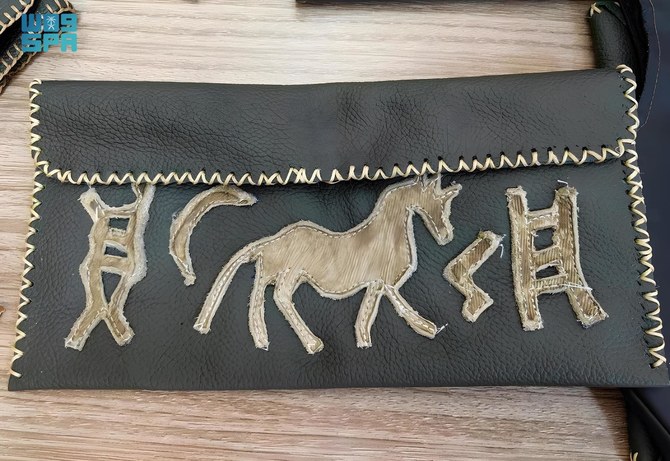

RIYADH: In the heart of Saudi Arabia’s Najran region, the ancient art of leather crafting, a symbol of local cultural heritage, is experiencing a renaissance.
Each piece of leather tells a unique story of art and industry, passed down through generations of Saudi artisans.
This traditional industry is finding new life under Saudi Vision 2030, contributing to the development of manufacturing techniques and product diversification, the Saudi Press Agency reported.
Leather products include footwear, bags, accessories, clothing, furniture and car accessories. These locally made items, known for their durability, quality and Saudi aesthetics, are popular both within the region and beyond.
In an interview with the SPA, Salem bin Ahmed, a leather craftsman, outlined the meticulous process of transforming animal hides from cattle, camels, sheep and goats into durable, flexible leather. The process involves cleaning and hair removal, pickling, tanning, drying and stretching, and finally, cutting, he said.
Ahmed added that several traditional leather products remain in use today, such as the mezab, a shoulder carry for infants; masbat, a leather belt worn around the waist; and zamalah, a large container for storing personal items.
Modern products like fashionable bags and accessories are now part of the leather repertoire, blending tradition with contemporary design.
Maha Al-Saeed, head of the Lar Association for Productive Families in Najran, told the SPA that traditional industries in Najran represent promising opportunities for community members. “This aligns with the country’s direction to promote traditional industries as national cultural heritage,” she said.
The Ministry of Culture supports artisans through specialized training programs and initiatives, teaching necessary skills for leather-making and other traditional crafts, with financial support provided in collaboration with the Social Development Bank.
Al-Saeed added that earlier this year, the association conducted a training program on leather manufacturing.
Trainees learned about key leather types, including cattle and goat hides, and acquired basic skills in leather crafting such as proper cutting, sewing, tailoring and embossing techniques.
The program also covered artistic skills like burning and drawing on leather to create attractive products, incorporating Najran’s heritage by adding engravings, drawings, and depictions of historical and heritage sites on leather pieces.


