

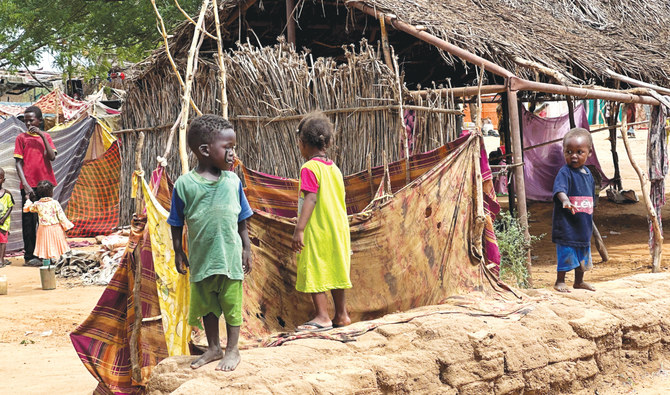

KHARTOUM: Sudan has denied the existence of famine in North Darfur’s Zamzam camp for internally displaced people.
In a statement, Sudan’s Federal Humanitarian Aid Commission said talk about famine in the camp was inaccurate and conditions were “not consistent” with those that must be met to declare famine.
On Sunday, an aid group said that malnourished children at the camp were at risk of dying, because it was forced to ration treatment due to a blockade imposed by a notorious paramilitary group
Doctors Without Borders said the Rapid Support Forces, which have besieged El-Fasher city as part of its war against the Sudanese military, have blocked three trucks carrying lifesaving medical supplies, including therapeutic food, for the city and the nearby Zamzam camp where famine was confirmed last week.
Sudan plunged into chaos in April last year when simmering tensions between the military and the RSF developed into open fighting in the capital, Khartoum, before spreading across the northeastern African country. Darfur saw some of the worst and most devastating bouts of fighting in the war.
The conflict has killed thousands of people and pushed many into starvation. It created the world’s largest displacement crisis with more than 10 million people forced to flee their homes since April 2023, according to the UN migration agency. Over 2 million of those fled to neighboring countries.
International experts on the Famine Review Committee confirmed Thursday that starvation at Zamzam camp, where up to 600,000 people shelter, has grown into full famine.
International experts use set criteria to confirm the existence of famines. A famine is declared in an area when one in five people or households severely lack food and face starvation and destitution that would ultimately lead to critical levels of acute malnutrition and death.
In Zamzam camp, which has swelled with the arrival of new displaced people, many children are in critical condition, Doctors Without Borders said, adding that the malnutrition ward at its field hospital in the camp is overcrowded with a 126 percent bed occupancy rate.
The group said RSF fighters have blocked the trucks in the town of Kabkabiya for over a month, adding that it was forced to limit the number of children receiving therapeutic food in the overcrowded camp as its stock of medicine covers only two weeks.
“Deliberately obstructing or delaying humanitarian cargo is putting the lives of thousands of children at-risk as they are cut-off from receiving life-saving treatment,” it said on social media platform X.
There was no immediate comment from the RSF.
The RSF has imposed a siege on El-Fasher in its monthslong attempt to take it from the military and its allied rebel groups. The city, the provincial capital of North Darfur, is the last stronghold for the military in the war-torn Darfur region.


