ISLAMABAD: A Pakistani religious political party warned the government on Thursday it would expand its sit-in protest from Rawalpindi to other cities if their demands are not accepted within two days.
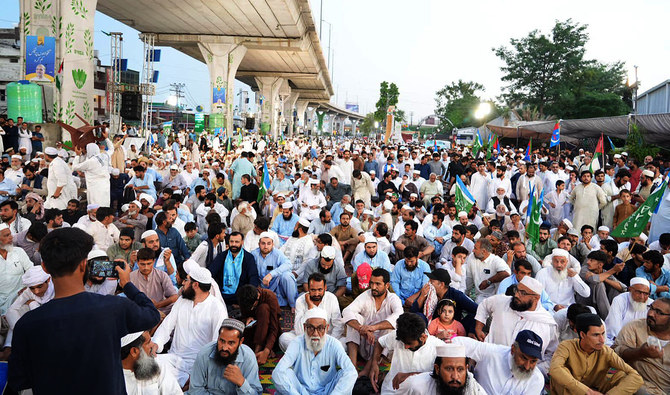
Hundreds of Jamaat-e-Islami (JI) party supporters have been staging a sit-in protest at Rawalpindi’s Liaquat Bagh since July 26 against the rising cost of living and additional taxes imposed by the government in the latest budget.
Led by party chief Hafiz Naeem-ur-Rehman, the JI has demanded the government reduce power tariffs amid soaring inflation and review Pakistan’s existing agreements with independent power producers (IPPs).
A three-member committee formed by Prime Minister Shehbaz Sharif comprising Information Minister Attaullah Tarar, ruling party members Amir Muqam and Tariq Fazal Chaudhry have held two rounds of talks with protesters this week but a deadlock persists.
“We have had two rounds of talks with the government committee, but no agreement has been reached yet,” Aamir Baloch, a JI spokesperson, told Arab News. “If our demands are not met in the next two days, then we will decide to spread our dharna to other cities.”
Baloch said the party was planning to stage sit-in protests in Karachi, Lahore, Peshawar and Quetta in the next phase to mount pressure on the government to accept its demands to decrease power bills and withdraw additional taxes on the salaried class.
He said the party’s negotiating team, led by Liaqat Baloch, held talks with the government’s technical committee on Wednesday in the office of the Rawalpindi commissioner. He said the JI had placed all their “genuine demands” before the committee.
“We have been waiting to hear back from the government,” Baloch said.
Arab News contacted Tarar for a comment regarding the JI’s statement but did not get a response till the filing of this report.
Meanwhile, Punjab police have beefed up security around the sit-in protest in Rawalpindi to protect protesters from any untoward incident.
Protesters include women and children while the party leadership, including Rehman, speak to their supporters at the venue daily after the Isha night prayers.


![]()

Pakistani religious political party threatens to expand protests if demands aren’t accepted
Short Url
https://arab.news/4fwcq
Pakistani religious political party threatens to expand protests if demands aren’t accepted
- Hundreds of Jamaat-e-Islami supporters are staging a sit-in protest at Rawalpindi’s Liaqat Bagh against rising cost of living, additional taxes
- JI gives government two days to accept its demands, failing which it vows to launch protests in Karachi, Lahore, Peshawar and Quetta
Latest updates


© 2026 SAUDI RESEARCH & PUBLISHING COMPANY, All Rights Reserved And subject to Terms of Use Agreement.