

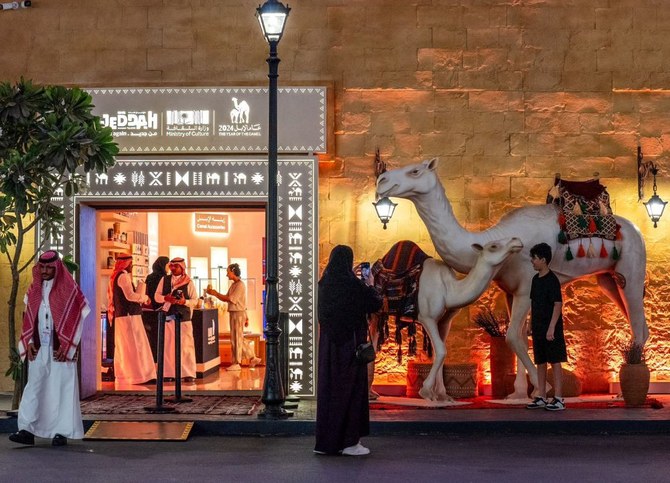
Camel culture comes to life at Jeddah Season 

1 / 5
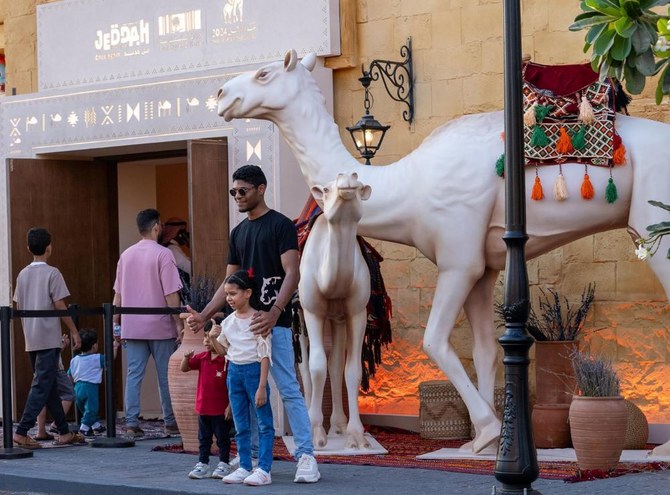
The Ministry of Culture is bringing the Year of the Camel to life at Jeddah Season 2024 with a dedicated pavilion. (SPA)
2 / 5
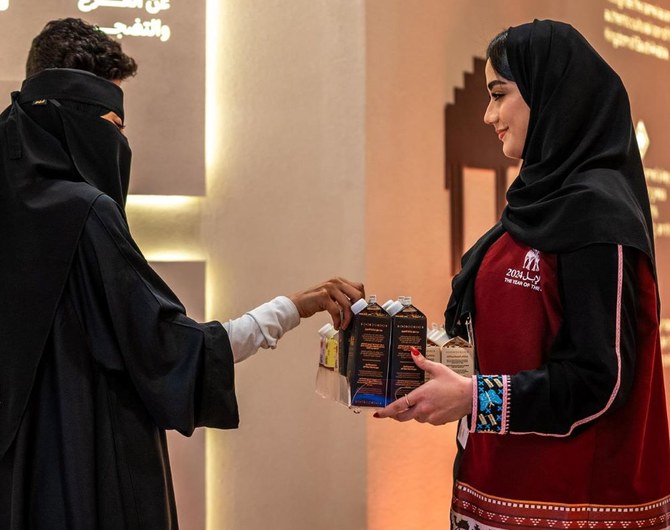
The Ministry of Culture is bringing the Year of the Camel to life at Jeddah Season 2024 with a dedicated pavilion. (SPA)
3 / 5
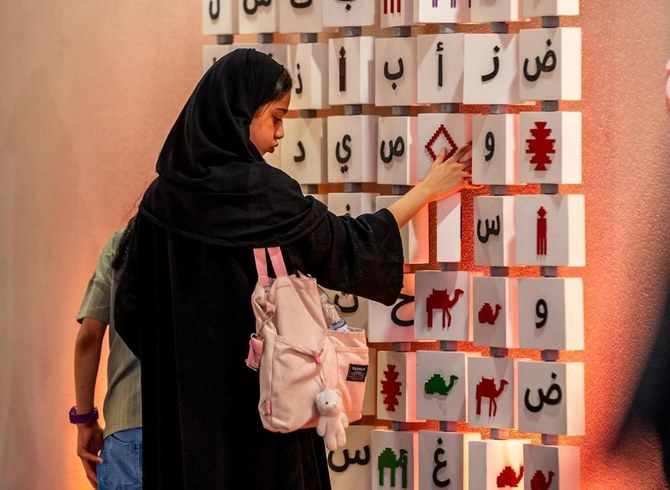
The Ministry of Culture is bringing the Year of the Camel to life at Jeddah Season 2024 with a dedicated pavilion. (SPA)
4 / 5
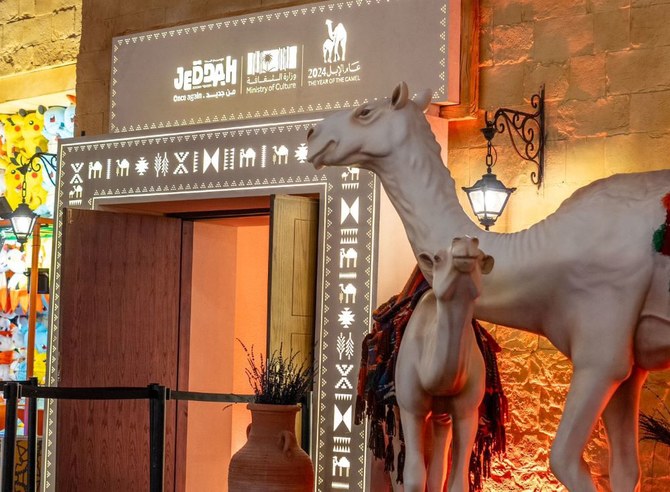
The Ministry of Culture is bringing the Year of the Camel to life at Jeddah Season 2024 with a dedicated pavilion. (Supplied)
5 / 5
The Ministry of Culture is bringing the Year of the Camel to life at Jeddah Season 2024 with a dedicated pavilion. (Supplied)
Short Url
Updated 24 July 2024
Follow

Camel culture comes to life at Jeddah Season 

  • Special pavilion highlights camels’ economic, cultural significance in Saudi society
  • Through illuminated murals and interactive touch screens, visitors are invited to delve into history

JEDDAH: The Ministry of Culture is bringing the “Year of the Camel” to life at Jeddah Season 2024 with a dedicated pavilion offering visitors an immersive experience of these iconic animals.

From life-size camel sculptures to interactive displays, the pavilion in City Walk, one of the Jeddah Season zones, showcases the camel’s enduring significance in society, the Saudi Press Agency reported.

Through illuminated murals and interactive touch screens, visitors are invited to delve into history and understand why 2024 was designated as the “Year of the Camel.”

These displays offer insights into the objectives behind honoring camels, and are provided in Arabic and English to provide access for a global audience.

The pavilion provides historical inscriptions dedicated to the animal, and the vast camel-related vocabulary in the Arabic language, the SPA stated.

One of the highlights of the pavilion is audio of camel sounds, each with its own name. These hold special significance in the daily lives of those who have long cherished the companionship of these remarkable animals.

The displays showcase the economic importance of camels, their role in ensuring food security, and the unique capabilities that have cemented their place in Saudi Arabia culture.


‘Cake not hate’ campaign becomes ‘Dates not hate’ in Madinah

“The Joshie-Man” and his father Dan Harris in the courtyard of the Prophet’s Mosque in Madinah. (Supplied)
Updated 02 February 2026
Follow

‘Cake not hate’ campaign becomes ‘Dates not hate’ in Madinah

  • Dan said he was very impressed by Saudi hospitality and that his family was warmly welcomed
  • He said being in Madinah exposed him to the true diversity of Islam

LONDON: A British autistic and non-verbal boy who has been visiting UK mosques and distributing cakes to promote solidarity amid an increase in far-right support in the country has taken his message of love to Madinah.

Joshua Harris, or “The Joshie-Man” as the 12-year-old is known to his social media fans, has handed out hundreds of his baked goods to worshipers at mosques in major British cities over the last few months.

The “Cake not hate” campaign came about after an Islamophobic attack on a mosque in his home city of Peterborough in October 2025.

Harris and his father visited Masjid Darassalaam, the mosque that was targeted, with cakes that the boy had baked and distributed them to the congregation soon after the attack. Since then, Harris has visited dozens of mosques in the UK.

On a recent trip to the Middle East, he and his father visited Madinah. In a local twist that pays tribute to the holy city’s famous date varieties including ajwa and ambar, Harris handed out dates to people in the courtyard of the Prophet’s Mosque. The “Cake not hate” campaign became “Dates not hate” for Saudi Arabia.

“He was greeted really, really warmly. There were some really touching moments where people were kissing his hands and his head. It was really lovely,” his father, Dan Harris, said.

Dan, the founder of global charity Neurodiversity in Business, said being in Madinah exposed him to the true diversity of Islam.

“We met people from all around the world. It was amazing. It’s like the United Nations there, you get people from different countries and it just goes to show you that the Muslim community, or the Ummah more generally, is not a homogeneous group,” he said.

“We saw people from Tajikistan and Uzbekistan and it was really interesting for us.”

Dan said his visit to Madinah, considered the second holiest city in Islam after Makkah for Muslims, was “profound and life-changing.”

He added: “I would say it’s my favourite city in the world due to the peace and tranquillity I felt there.”

Dan added that he was very impressed by Saudi hospitality: “Everywhere we went, people were taking down my number and insisting that we come for dinner, insisting they pick us up from the location. They were extremely attentive to Joshie as well, making sure his needs were met. We felt a great sense of welcome, something Saudi Arabia is known for.”