RAMALLAH, Palestinian Territories: The Palestinian Authority’s prisoners affairs minister on Monday accused Israel of waging an abusive “war of revenge” against Palestinian detainees since the start of the Israel-Hamas war.
Accounts of alleged mistreatment including torture, rape and other sexual abuses in Israeli jails have all been denied by Israeli authorities.
“Israel has been waging a war of revenge against prisoners within the walls of prisons and detention centers since the first day of the decision to go to war against Gaza,” said the PA’s Prisoners’ Affairs Authority head Qadura Fares.
Speaking at a press conference in Ramallah in the occupied West Bank, he added that Palestinian prisoners were treated as “hostages” and the mistreatment was part of the “pressure.”
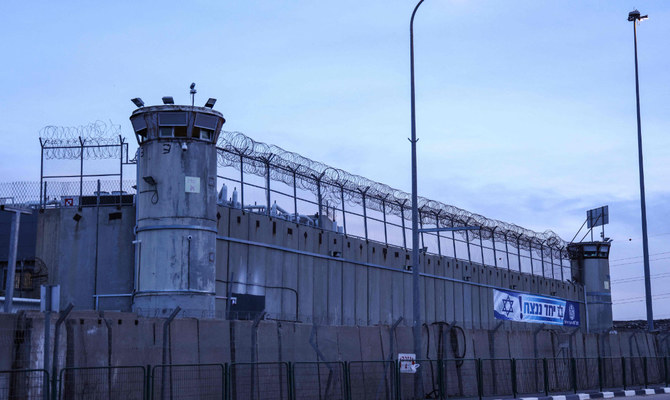
The authority’s lawyer Khaled MaHajjna denounced abuses which he said he had been told of when he visited detained Gaza journalists Mohammed Arab and Tariq Abed at the Ofer detention center near Ramallah.
MaHajjna said he was told how guards forced one prisoner to “lay on his stomach naked and then a fire extinguisher tube was inserted into his buttocks and the fire extinguisher was turned on.”
He said he was told how other inmates had “electric prods” used on their bodies.
In parallel to increasing complaints by Palestinians, some Israeli rights groups are fighting for a court order to close Sde Teiman, a desert detention camp just for detainees during Israel’s war with militant group Hamas.
The Israeli military said it “rejects outright allegations concerning systematic abuse of detainees in the ‘Sde Teiman’ detention facility, including allegations of sexually abusing detainees.” It also said that it acts within international law.
The lawyer said prisoners were handcuffed when they ate and that meals consisted of 100 grams (3.5 ounces) of bread or tomatoes with some milk.
MaHajjna quoted Arab as saying that he saw one handcuffed prisoner die after being beaten for demanding medical treatment. He said about 100 detainees had diseases and wounds in desperate need of treatment.
He alleged that some prisoners had their hands bound before dogs were then set upon them.
Five Israeli rights groups have gone to court over conditions at Sde Teiman.
The Association for Civil Rights in Israel (ACRI), one of the five, said that the high court on Monday ordered the government to respond within three days to the original petition filed in May.
ACRI, Physicians for Human Rights, HaMoked, the Public Committee Against Torture in Israel and Gisha have demanded the closure of Sde Teiman, saying that “severe violations of detainees’ rights” make imprisonment at the facility “unconstitutional and untenable.”
The government has not commented on the case.
According to the Palestinian Prisoners Club, around 9,600 Palestinians are in Israeli jails, including hundreds under administrative detention which allows the military to keep detainees for long periods without being charged or produced in court.
The war started with Hamas’s October 7 attack on southern Israel, which resulted in the deaths of 1,195 people, mostly civilians, according to an AFP tally based on Israeli figures.
The militants also seized 251 hostages, 116 of whom are still in Gaza including 42 the Israeli military says are dead.
Israel’s military retaliation has killed at least 38,664 people in Gaza, also mostly civilians, according to data from the health ministry in Hamas-run Gaza.


![]()

Israel waging ‘war of revenge’ on Palestinian prisoners: PA minister
Short Url
https://arab.news/52a9f
Israel waging ‘war of revenge’ on Palestinian prisoners: PA minister
- Accounts of alleged mistreatment including torture, rape and other sexual abuses in Israeli jails have all been denied by Israeli authorities


Latest updates



© 2026 SAUDI RESEARCH & PUBLISHING COMPANY, All Rights Reserved And subject to Terms of Use Agreement.