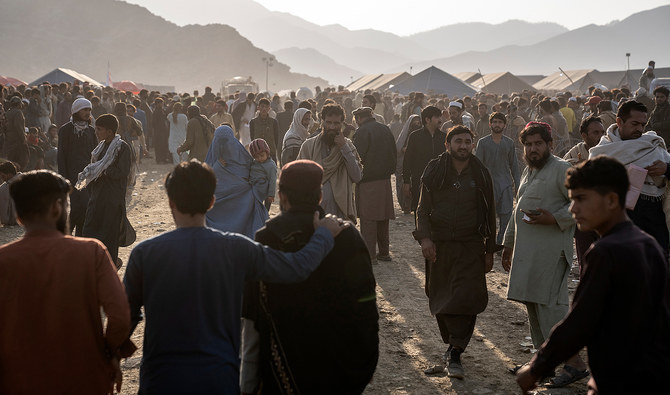
ISLAMABAD: Pakistan will consider a plan to expel hundreds of thousands more Afghans who have been living in the country for years, the foreign ministry said Thursday, the latest in a monthslong government clampdown on undocumented migrants.
The plan is still in the works, Foreign Ministry spokesperson Mumtaz Zahra Baloch told reporters — and the government may ultimately reject it.
It would mark the “second phase” of the “Illegal Foreigners Repatriation Plan” and it would involve persons who had been given identification documents known as “Afghan citizen cards” to legalize their stay in Pakistan for a limited time.
“At this stage, I do not have a date to share with you,” she said at a weekly news briefing in the capital, Islamabad, adding that an announcement about the action would be made “at an appropriate time.”
Pakistan’s crackdown on undocumented migrants has drawn sweeping criticism from the United Nations, aid agencies and human rights groups.
Since the deportations started, an estimated 600,000 Afghans have gone back to Afghanistan. After forcing thousands back daily, the deportations slowed down and appeared to halt in recent months.
On Wednesday, following a visit by the UN refugee agency chief, Filippo Grandi, Islamabad announced it has extended the stay of 1.45 million Afghan refugees residing in the country.
During his visit, Grandi welcomed what he described as the Pakistan government ‘s suspension of the deportations.
However, Baloch denied that was the case and said there has been no suspension in the anti-migrant crackdown that targets those without valid papers. The deportations only involve those in Pakistan illegally — and they are being carried out in a “humane manner,” Baloch said.
She insisted Afghan refugees living here need not worry as their stay has now been expended.
Amnesty International said Thursday it welcomed Islamabad’s decision to extend one-year stays. Thyagi Ruwanpathirana, the group’s regional researcher for South Asia, urged Pakistan to “extend this lifeline to all Afghan refugees in Pakistan.”
She also urged Pakistan to formally suspend the “Illegal Foreigners Repatriation Plan” and top all forcible returns of Afghans in the country.
Pakistan has long hosted an estimated 1.7 million Afghans, most of whom fled during the 1979-1989 Soviet occupation of their country. More than half a million others escaped Afghanistan after the Taliban takeover in 2021, with thousands waiting in Pakistan for resettlement in the United States and elsewhere.
Baloch also urged the international community to expedite the process for the relocation of thousands of Afghans who fled the Taliban takeover, most of who are still in Pakistan, she said.
These Afghans have been desperately waiting for their visa applications to be processed so they could leave for the United States, Canada, United Kington, Germany, Australia, Italy and several other countries.
The delay in the resettlement has left these Afghans in a vulnerable position, contending with economic hardship and lack of access to health, education and other services in Pakistan.
Baloch’s remarks appeared to catch Afghanistan’s Ministry of Refugees and Repatriation off guard.
Abdul Mutalib Haqqani, a spokesperson with the refugee ministry, said they had heard through official channels that the deportations have stopped. He said no Afghan refugees have been forcibly deported from Pakistan — whether they had proper papers or not — and that there were no reports of arrests in the neighboring country in the past 24 hours.
Haqqani appealed on the Islamabad government to give Afghans enough time to leave Pakistan in an orderly fashion and that there be no forced deportations.
“Our second request is for our Afghan brothers to return to their country voluntarily,” he said. “Now there is peace in the country ... the refugees should return to their country.”


![]()

Islamabad to consider expelling hundreds of thousands more Afghans in a continued clampdown
Short Url
https://arab.news/pdvwm
Islamabad to consider expelling hundreds of thousands more Afghans in a continued clampdown
- Pakistan’s crackdown on undocumented migrants has drawn sweeping criticism from the United Nations, aid agencies and rights groups
- Since the deportations started, an estimated 600,000 Afghans have gone back to Afghanistan, with deportations appearing to halt recently
Latest updates


Recommended


© 2026 SAUDI RESEARCH & PUBLISHING COMPANY, All Rights Reserved And subject to Terms of Use Agreement.