



ATHENS, Greece: Iran reformist Masoud Pezeshkian’s victory over his hardline rival Saeed Jalili in the country’s presidential runoff on Saturday offers Iranians desperate for change a sliver of hope, according to political observers.
While many Iranians are too disillusioned with their government to feel optimistic, some believe Pezeshkian’s win points to the possibility of reform in the midst of economic turmoil, corruption, and crackdowns on dissent.
The first round of elections began on June 28, just over a month after President Ebrahim Raisi died in a helicopter crash.
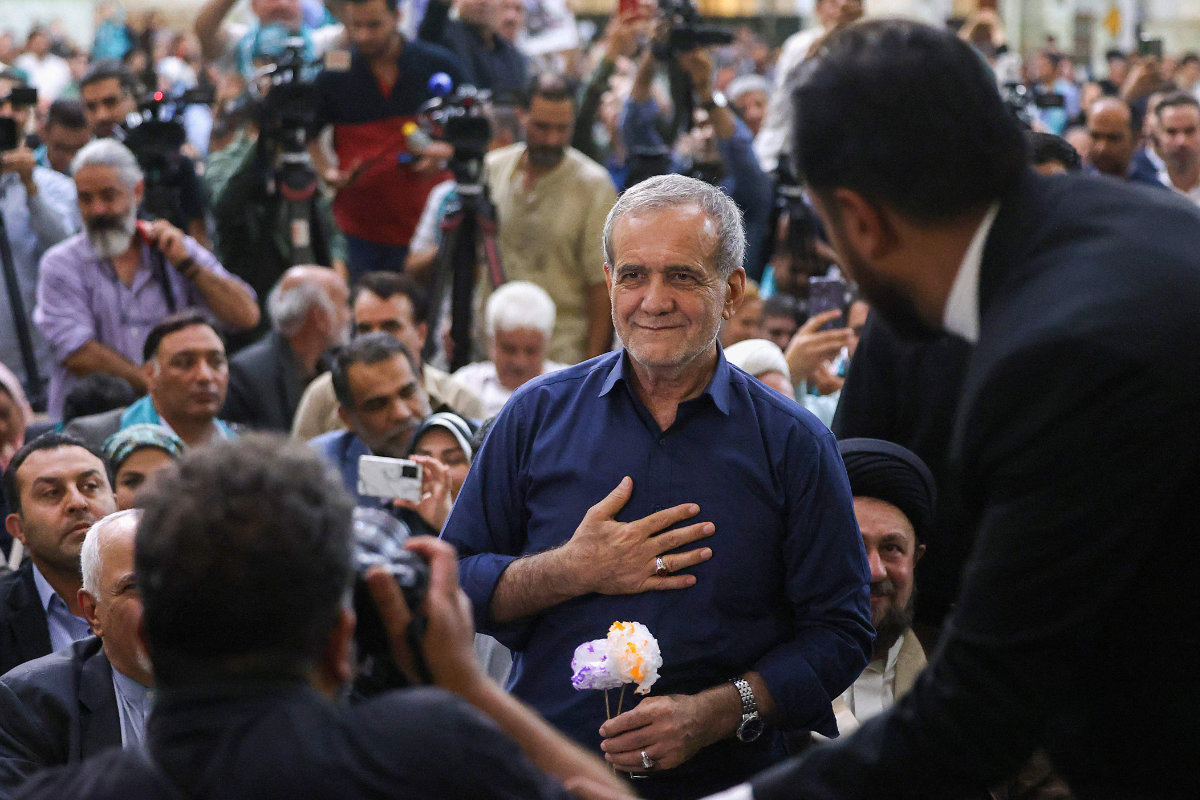
Newly-elected Iranian President Masoud Pezeshkian gestures during a visit to the shrine of the Islamic Republic's founder Ayatollah Ruhollah Khomeini in Tehran on July 6, 2024.(AFP)
However, the election failed to generate more than 50 percent of votes for any candidate, with the lowest turnout since the Islamic Revolution of 1979. Videos circulating on social media platforms, including X, showed almost empty polling stations across the country.
“How can you, while holding a sword, gallows, weapons, and prisons against the people with one hand, place a ballot box in front of the same people with the other hand, and deceitfully and falsely call them to the polls?” Narges Mohammadi, the imprisoned Iranian human rights activist and Nobel laureate, said in a statement from Evin Prison.
BIO
- Name: Masoud Pezeshkian
- Year of birth: 1954
- City of birth: Mahabad, Iran
- Occupation: Heart surgeon
The underwhelming turnout is part of a trend that began four years ago with the country’s 2020 parliamentary election, according to Ali Vaez, Iran Project director at the International Crisis Group (ICG).
“This clearly shows that the majority of the Iranian people have given up on the ballot box as a viable vehicle for change,” he told Arab News.
“The head-to-head between Jalili and Pezeshkian in the second round was a contest between two opposite ends of the spectrum acceptable to the system: Jalili’s hard-line, ideological approach and Pezeshkian’s moderate, liberal stance created intense polarization, seemingly driving a higher voter turnout. Jalili embodies confrontational foreign policy and restrictive social policies, while Pezeshkian advocates for moderate reforms and diplomatic engagement.”
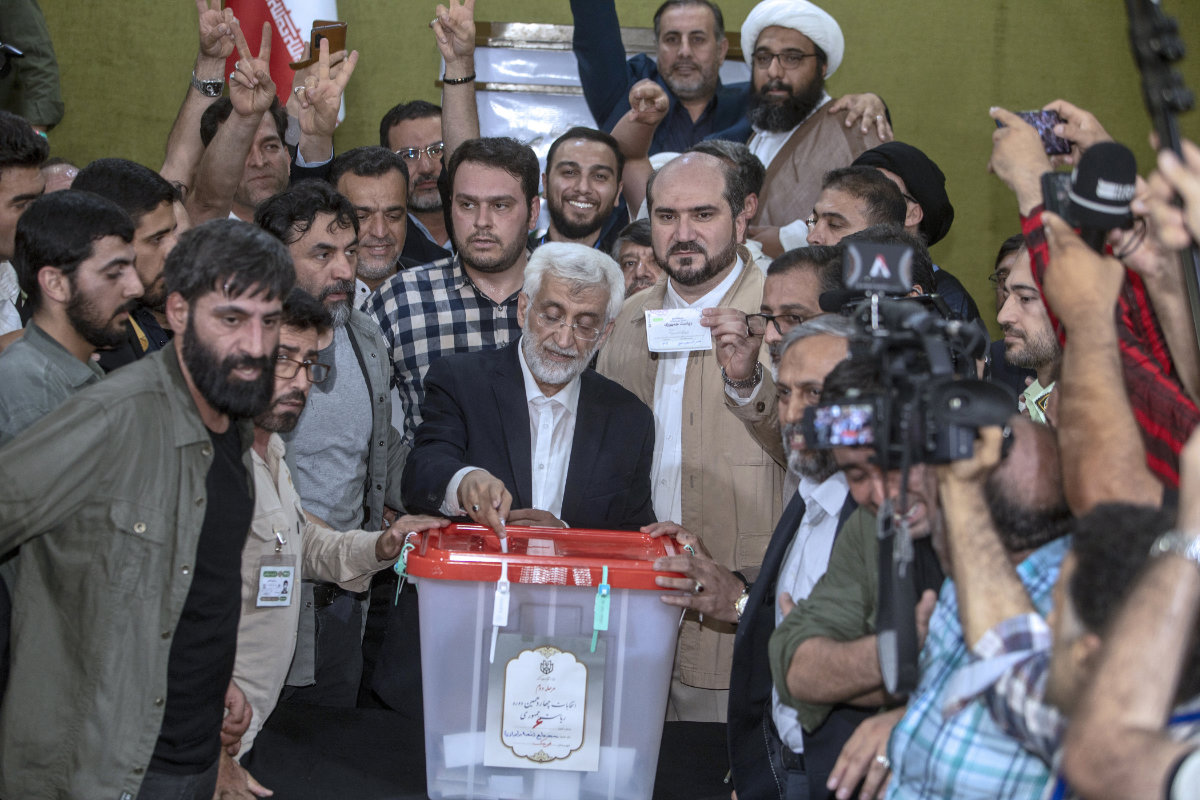
Iran's presidential election candidate Saeed Jalili, a hard-line former nuclear negotiator, casts his vote for the presidential runoff election at a polling station in Qarchak near Tehran on July 5, 2024. (AP)
Political analysts voiced cautious optimism in the wake of Pezeshkian’s victory.
“Pezeshkian prevailed in an election where just 50 percent of voters went to the polls. He lacks the mandate enjoyed by Iran’s previous reform-minded presidents. But boycotting is what made his candidacy possible,” Esfandyar Batmanghelidj, founder and CEO of the UK-based Bourse & Bazaar Foundation think tank, said on X on Saturday.
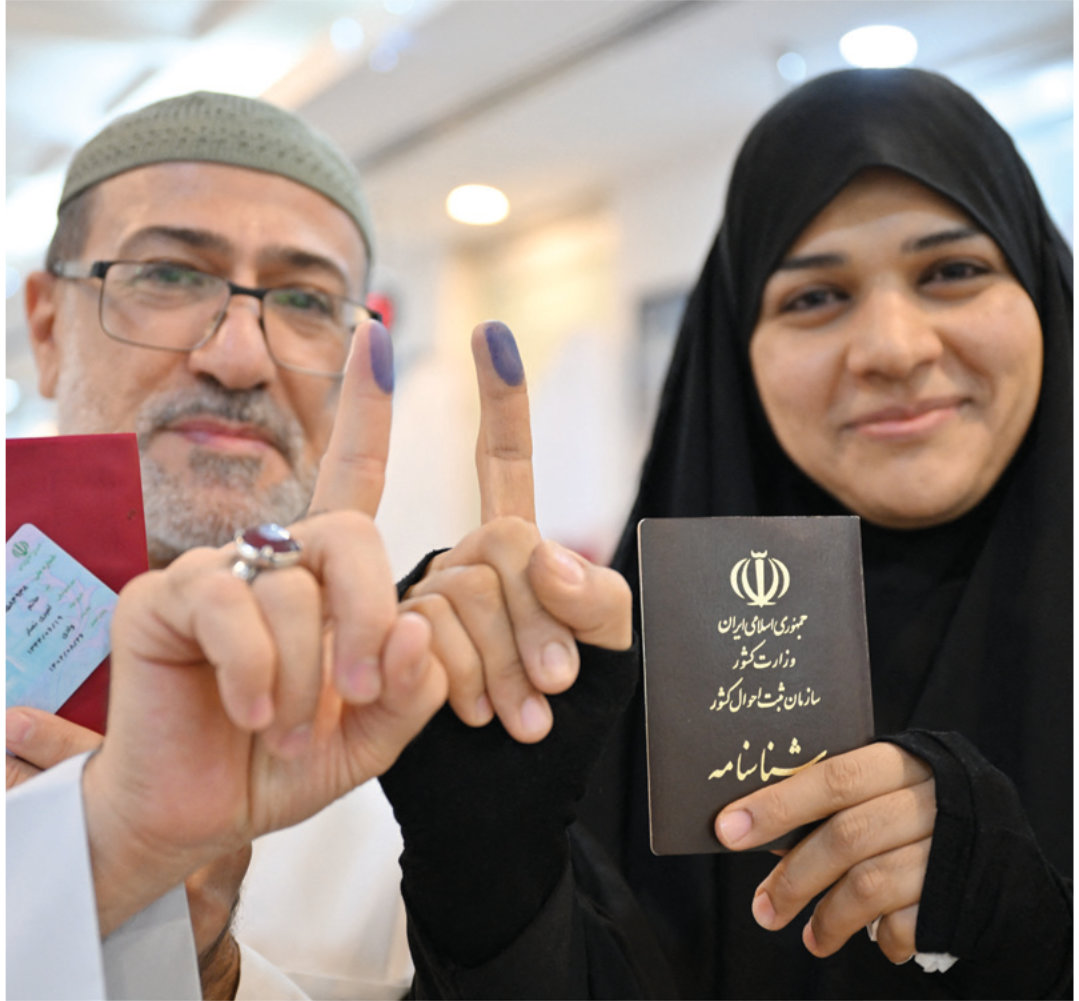
Iranian expatriates in Kuwait cast their votes at the Gulf country’s embassy in a closely watched presidential election. (AFP)
“Both voters and non-voters had an influence on this remarkable outcome. The turnout was high enough to push Pezeshkian into office, but low enough to deny the (Iranian regime) legitimacy and to maintain political pressure for more significant change.”
Some Iranians have said that while they do not have any great expectations for Pezeshkian’s governance, their decision to vote for him was motivated by the desire for change, however small.
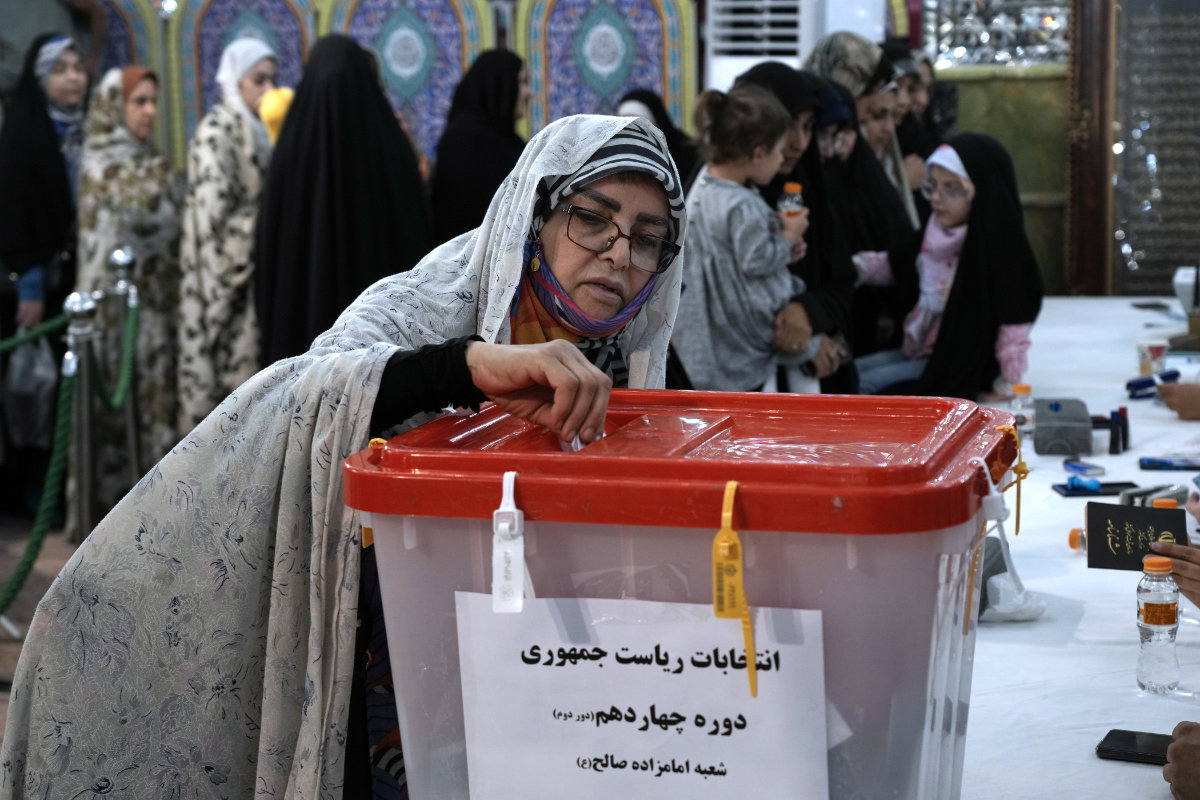
A woman casts her vote for the presidential election in a polling station at the shrine of Saint Saleh in northern Tehran on July 5, 2024. (AP)
“The reason for my vote is not that I have any special hopes for his government, no. I voted because I believe that society’s explosive desire for change is now so strong and ready to erupt that even if a small opportunity is provided, society itself … will change many things for the better,” Iranian journalist and Sadra Mohaqeq, who voted for Pezeshkian, said on Friday.
Pezeshkian, a heart surgeon whose political career includes a tenure as the Iranian health minister, will be the first reformist to assume the office of president in Iran since 2005. His promises include efforts to improve relations with the West and a relaxation of Iran’s mandatory headscarf law.
With both Azeri and Kurdish roots, he also supports the rights of minorities in Iran. Minority groups often bore the brunt of state-sanctioned violence in the wake of the 2022-2023 protests sparked by the death of Mahsa (Jina) Amini in police custody.

Supporters hold portraits of Iran's newly-elected president Masoud Pezeshkian visits the shrine of the Islamic Republic's founder Ayatollah Ruhollah Khomeini in Tehran on July 6, 2024. (AFP)
After Amini’s death, Pezeshkian said that it was “unacceptable in the Islamic Republic to arrest a girl for her hijab and then hand over her dead body to her family.”
However, just days later, amid nationwide protests and brutal crackdowns by the government, he warned protesters against “insulting the supreme leader.” For even the most optimistic of Iran observers, it is clear that Pezeshkian still answers to the country’s head of state.
“Despite being a reformist, Pezeshkian is loyal to the supreme leader of Iran, and reformists in Iran generally cannot pursue reforms that challenge the vision, goals, and values of the Islamic Revolution. The ultimate authority doesn’t rest with President-elect Pezeshkian but with (Supreme Leader Ali) Khamenei,” Mohammed Albasha, senior Middle East analyst for the US-based Navanti Group, told Arab News.
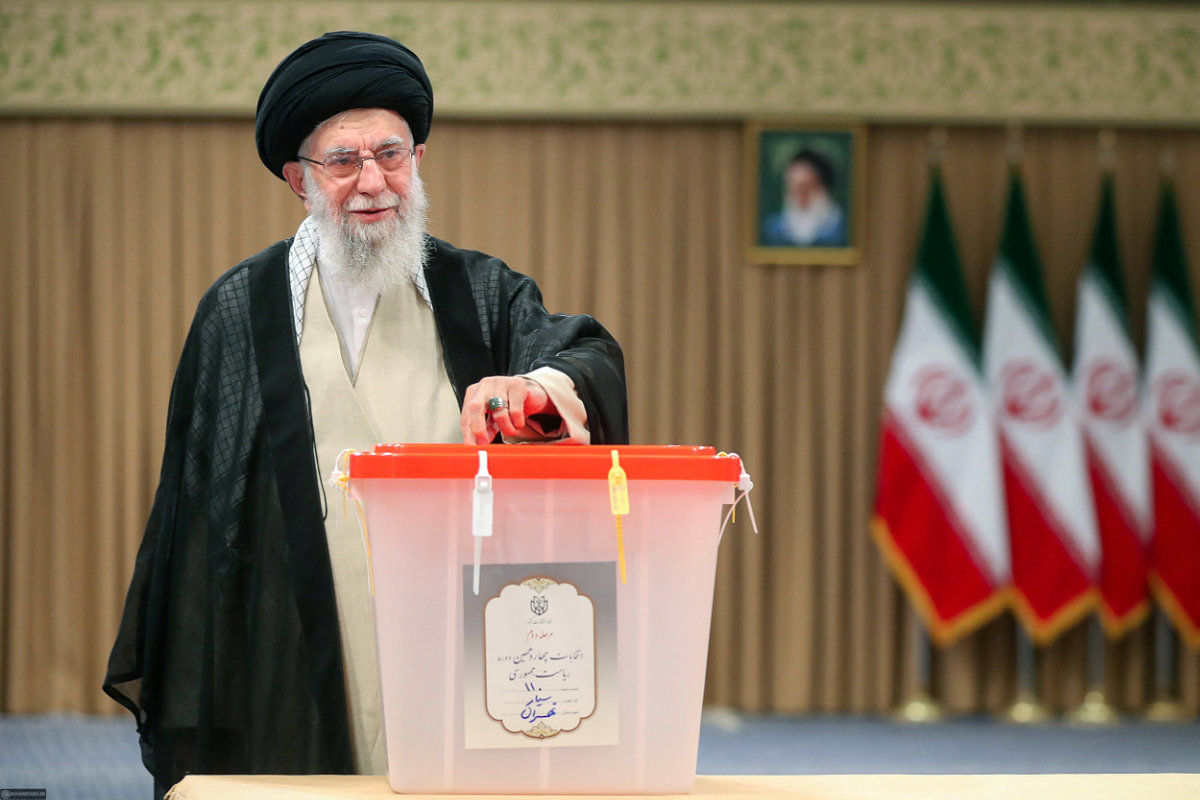
Iran's Supreme Leader Ayatollah Ali Khamenei votes during the presidential election in Tehran, on July 5, 2024. (Office of the Iranian Supreme Leader/WANA/Handout via REUTERS)
Furthermore, even if Pezeshkian proves willing to strongly push for reforms, the Iranian political environment is still dominated by hardliners.
Vaez said: “Given Pezeshkian’s relatively low votes, the continued conservative dominance of other state institutions, and the limits of presidential authority, Pezeshkian will face an uphill battle in securing the greater social and cultural rights at home and diplomatic engagement abroad he’s emphasized in debates and on the campaign trail.”
While Pezeshkian has expressed support for domestic reforms and improved international relations, he has also voiced his unequivocal support for the Islamic Revolutionary Guard Corps.
He has condemned the former Trump administration’s decision to label the IRGC as a terrorist organization and has worn the IRGC uniform in public meetings.
Opinion
This section contains relevant reference points, placed in (Opinion field)
It is unclear how Pezeshkian will reconcile a desire for ties with the West with his views, particularly given that the IRGC has been designated as a terrorist group by the US, Sweden, and Canada.
An increased push for improved ties with the West may also draw the ire of the Islamic Republic’s strongest military and economic allies, such as China and Russia.
However, Pezeshkian may not have much choice in the matter, regardless of his own aspirations.
“The president in Tehran is primarily responsible for implementing the daily agenda, not setting it. Nuclear policy, regional alliances, and relations with the West are dictated by the supreme leader and the Revolutionary Guard,” the Navanti Group’s Albasha said.
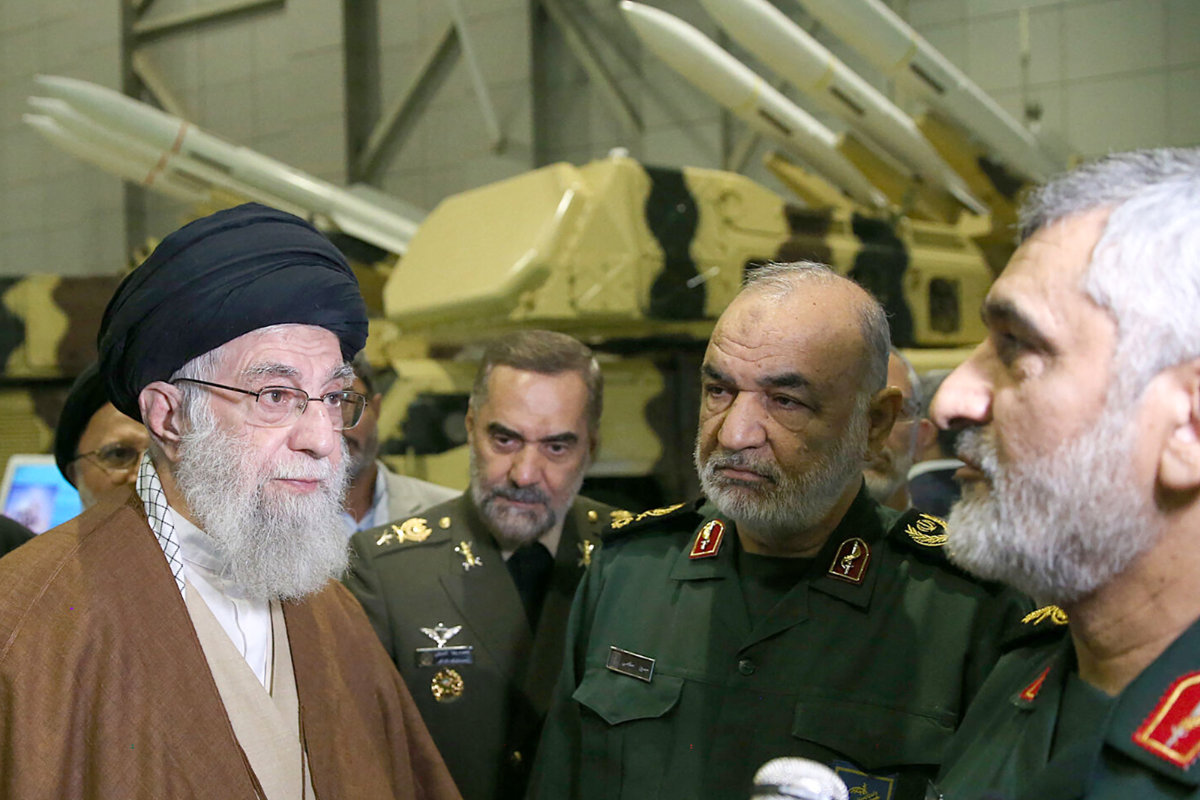
This handout picture taken on November 19, 2023, shows Iran's Supreme Leader Ayatollah Ali Khamenei with Hossein Salami (center), head of Iran's Islamic Revolutionary Guard Corps and General Amir Ali Hajizadeh, the head of the corps' aerospace division, (R) during a visit at the IRGC aerospace achievement exhibition in Tehran. (KHAMENEI.IR handout/ AFP)
Though not the head of state, Pezeshkian will undoubtedly have some influence over Iran’s domestic and foreign policies, as well as economic policy.
The government of Iran’s last reformist president, Mohammad Khatami, was characterized by some liberalization, including freedom of expression, a free market economy, and improved diplomatic relations with other countries.
Only time will tell how much change Pezeshkian is willing, or able, to bring about.
Pezeshkian’s election win is not a turning point, ICG’s Vaez said, but “another twist in the complex political dynamics of a system that remains split between those who want the 1979 revolution to mellow and those who want it to remain permanent.”


