DEIR AL-BALAH, Gaza Strip: The Hamdan family — around a dozen people from three generations — fled their home in the middle of the night after the Israeli military ordered an evacuation from the southern Gaza city of Khan Younis.
They found refuge with extended relatives in a building further north, inside an Israeli-declared safe zone. But hours after they arrived, an Israeli airstrike on Tuesday afternoon hit the building in the town of Deir Al-Balah, killing nine members of the family and three others.
In all, five children and three women were among the dead, according to hospital records and a relative who survived.
Israel’s order on Monday for people to leave the eastern half of Khan Younis has triggered the third mass flight of Palestinians in as many months, throwing the population deeper into confusion, chaos and misery as they scramble once again to find safety.
About 250,000 people live in the area covered by the order, according to the United Nations. Many of them had just returned to their homes there after fleeing Israel’s invasion of Khan Younis earlier this year — or had just taken refuge there after escaping Israel’s offensive in the city of Rafah, further south.
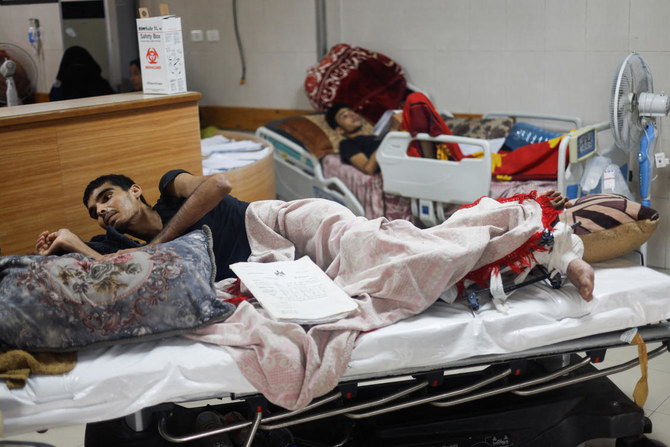
The order also prompted a panicked evacuation from European General Hospital, one of the main medical facilities still operating in the Gaza Strip. Videos circulating on social media shows people wheeling a hospital bed down a street from the hospital.
The International Committee of the Red Cross said in a statement that the hospital could no longer function because so many of its staff had evacuated. Hours after issuing the initial evacuation orders, the military said the facility itself was not included, though it is located within the zone.
On Tuesday, cars loaded with personal belongings streamed out of eastern Khan Younis, though the number of those fleeing was not immediately known. The new exodus comes on top of the 1 million people who fled Rafah since May, as well as tens of thousands who were displaced the past week from a new Israeli offensive in the Shujaiyah district of northern Gaza.
“We left everything behind,” said Munir Hamza, a father of three children who on Monday night fled his home in an eastern district of Khan Younis for the second time. “We are tired of moving and displacement.
Once we settle in a place and start to cope,” the Israeli military “forces people to move again,” he said. “This is unbearable.”
Nowhere safe
Up to 15 members of the Hamdan family fled their Khan Younis home and arrived late on Monday at their extended family’s building in Deir Al-Balah, said Asmaa Salim, a relative who lived in the building.
The building was located inside the extended humanitarian zone that the Israeli military had declared when it began its offensive in Rafah in May, telling Palestinians to evacuate there for safety.
The strike came around 3 p.m. on Tuesday. Associated Press video shows an entire floor of the building gutted. “Almost everyone inside was martyred, only two or three survived,” Salim told the AP.
A list of the dead posted at the nearby Al-Aqsa Martyrs Hospital said those killed included the family patriarch, 62-year-old dermatologist Hossam Hamdan, as well as his wife and their adult son and daughter. Four of their grandchildren, aged 3 to 5, and the mother of two of the children were also killed. A man and his 5-year-old son who lived in the building and a man on the street outside were also killed in the strike, which wounded 10 other people, including several children.
The Israeli military did not immediately respond to requests for comment on the strike.
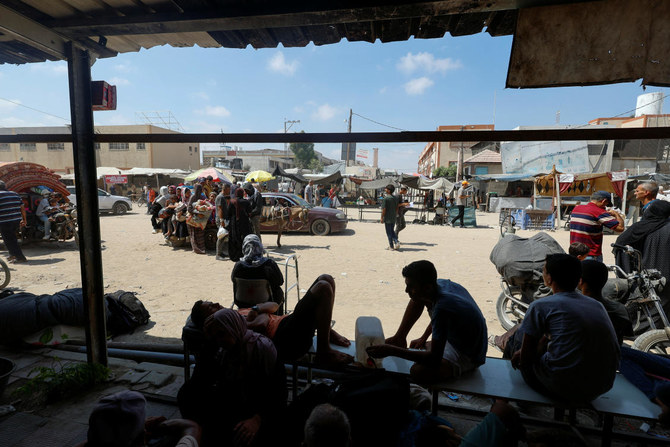
On Tuesday, the Israeli army said it estimates that some 1.8 million Palestinians are now in the humanitarian zone it declared, covering a stretch along Gaza’s coast running about 14 kilometers (8.6 miles). Much of that area is now blanketed with tent camps that lack sanitation and medical facilities with limited access to aid, UN and aid groups say. Families live amid mountains of trash and streams of water contaminated by sewage.
The amount of food and other supplies getting into Gaza has plunged since the Rafah offensive began. The UN says fighting, Israeli military restrictions and general chaos — including looting of trucks by criminal gangs in Gaza — make it near impossible for it to pick up truckloads of goods that Israel has let in. As a result, cargo is stacked up uncollected just inside Gaza at the main Kerem Shalom crossing with Israel, near Rafah.
The Norwegian Refugee Council said last week that it surveyed nearly 1,100 families who fled Rafah and 83 percent of them reported having no access to food and more than half had no access to safe water.
On Tuesday, more families fleeing Khan Younis were trying to find space in the zone. Um Abdel-Rahman said she and her family of four children — the youngest 3 years old — walked for hours during the night to reach the zone only to find no place to stay.
“There is no room for anyone,” she said. “We are waiting and have nothing to do but wait.”
Some crowded into empty lots around a largely destroyed housing complex in the western part of Khan Younis that lies within the “humanitarian zone.”
Among them was Noha Al-Bana, who has been displaced four times since fleeing Gaza City in the north early in the war.
“We have been humiliated,” she said. “No proper food, no proper water, no proper bathrooms, no proper place for sleep. … Fear, fear, fear. There is no safety. No safety at home, no safety in the tents.”


![]()
![]()

Family killed as Israel evacuation order triggers panicked flight from Gaza’s second largest city
Short Url
https://arab.news/2cqgm
Family killed as Israel evacuation order triggers panicked flight from Gaza’s second largest city
- In all, five children and three women were among the dead, according to hospital records and a relative who survived
- The order also prompted a panicked evacuation from European General Hospital


Latest updates


© 2026 SAUDI RESEARCH & PUBLISHING COMPANY, All Rights Reserved And subject to Terms of Use Agreement.