Egypt’s tourism revenues rise 4.7% in 2024

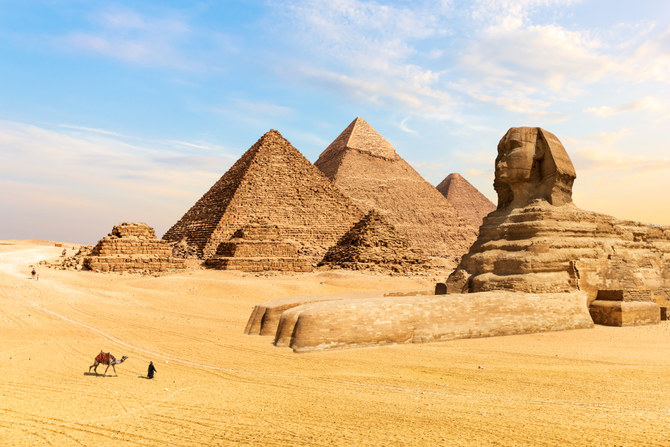
The total number of travellers arriving in Egypt during the first half of this year reached 7.07 million. Shutterstock
Short Url
Updated 02 July 2024
Follow

Egypt’s tourism revenues rise 4.7% in 2024

RIYADH: Egypt’s tourism revenues surged 4.7 percent year on year during the first half of 2024 to reach $6.6 billion, according to a new report.

Issued by the African country’s Ministry of Tourism, the data indicates a 17.8 percent rise compared to the corresponding period in the peak year of 2010, according to a statement. 

This rise is mainly attributed to an increase in Egypt’s inbound airline seats and hotel rooms, which contribute to accommodating travellers and improving the visitor experience. 

This increase in numbers also falls in line with the country’s National Strategy for Sustainable Tourism 2030, which aims to boost visitor traffic to 30 million by 2028, 

This is achieved by working to attain incoming tourist traffic rates to the Egyptian destination by about 25 percent and 30 percent annually, within the framework of Egypt’s Vision 2030.

It also aligns well with the country’s continuous and periodic follow-up of indicators and numbers of incoming tourist traffic to Egypt from the targeted visitor markets.

Moreover, the report revealed that the total number of travelers arriving in Egypt during the first half of this year reached 7.07 million, which is almost identical to the historical record achieved during the same period in 2023, which amounted to 7.06 million tourists.   

In the first six months of 2024, Egypt has seen a significant increase in tourist arrivals compared to 2010, surpassing the peak year’s figure of 6.9 million tourists. 

Meanwhile, tourist nights also saw growth in the first half of this year, reaching 70.2 million, surpassing previous records of 67.6 million in 2023 and 65.7 million in 2010. 

In January, Egypt’s Minister of Tourism revealed that a record-breaking 14.9 million tourists visited Egypt in 2023, marking a 33 percent increase in the country’s global tourism share compared to 2019.  

Ahmed Issa, speaking during a Senate plenary session, attributed this success to coordinated efforts between the ministry, private sector, and strategic partners.  

Issa highlighted several achievements for 2023, including a 10 percent rise in hotel room capacity to a total of 220,000 rooms.  

Also in January, the UN released its World Tourism Barometer report which showed that countries in the Gulf Cooperation Council witnessed a substantial increase in international tourist arrivals in 2023, collectively growing by 128.9 percent compared to 2019.   

The report also emphasized at the time that the GCC is expected to sustain its upward trajectory in international tourist arrivals


Saudi Arabia heading toward growth exceeding global average: McKinsey partner

Updated 5 sec ago
Follow

Saudi Arabia heading toward growth exceeding global average: McKinsey partner

RIYADH: Saudi Arabia is expected to achieve growth that exceeds the global average, thanks to Vision 2030 projects, particularly in the industrial sector, which is being fueled by the metals and mining sector, according to Jeffrey Lorsch, partner at McKinsey & Co., in comments to Al-Eqtisadiah. 

He cited the growth of the mining sector as a driver, as it is linked to strategic projects, including automotive, aerospace, space, and defense industries.

A large part of its expansion depends on these projects, according to Lorsch, who stated that the available opportunities will support Saudi Arabia in achieving an annual growth rate that exceeds the global average.

However, he also warned of the negative impact of geopolitical tensions around the world on the metals sector.

“The government of Saudi Arabia’s outlook for the mining sector is quite robust,” Lorsch said. “We’ve seen a significant uptick in the sector in the last 10 years. The output of the sector has doubled or tripled since 2015, which reflects the investor confidence that we see.”

Seeking multilateral solutions

Global geopolitical tensions form the general framework for this year’s Future Minerals Forum, according to Lorsch. They are also a key factor shaping the methodology of the Future Minerals Forum Barometer, which was launched to monitor global transformations in the mining sector.

Lorsch emphasized that the large attendance at the conference clearly reflects the growing importance of critical minerals in the context of geopolitical tensions.

One of the forum’s most prominent efforts is to find multilateral solutions to develop the mining sector, both within Saudi Arabia and globally.

The FMF Barometer will analyze the impact of these tensions on mineral value chains, including the development of local and regional supply chains, after a historical reliance on global supply chains, according to Lorsch.

The McKinsey partner also emphasized the importance of involving the “super region” to ensure that the development of mineral resources in Global South countries genuinely contributes to their growth and leads to industrial development.

The barometer does not cover Saudi Arabia alone but includes the global market, where there is a massive need to significantly increase mineral supplies.

Strong future prospects for the mining sector in Saudi Arabia

Regarding the Kingdom, Lorsch confirmed that the future prospects for the mining sector are very strong, noting that the past 10 years have seen a remarkable increase in the sector’s performance.

He expected similar growth in the gold sector. “Looking forward, we’re going to see similar growth in the gold sector,” Lorsch added, pointing to Maaden’s announcement of additional gold resources that will lead to increased production capacity, alongside significant growth opportunities in phosphate, aluminum, and steel.

The McKinsey partner described the overall outlook for the sector as “very optimistic.”

Globally, Lorsch explained that McKinsey adopts a balanced approach in its growth forecasts.

“From a global economic growth perspective, I think we’re taking a fairly balanced approach. We see growth much more centered in the 2 to 3 percent, we see the Kingdom having more of a robust outlook,” he said.