
LONDON: During excavations carried out at the ancient site of Abydos in Egypt in 2009, archaeologists made an unexpected discovery — the remains of a lost Coptic monastery, believed to have been founded in the fifth century by the leader of the Coptic church, Apa Moses.
That was fascinating enough, but even bigger surprises would emerge.
Deep within the excavated ruins of the monastery, archaeologists from the Egyptian Ministry of State for Antiquities made a discovery that shone a light on the tensions that existed between the early Coptic church and the remnants of Egypt’s “pagan” past.
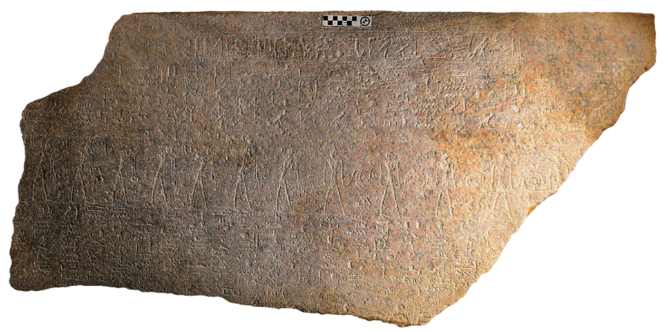
Pressed into service as a humble doorstep within the monastery was a piece of red granite, 1.7 meters long and half as wide.
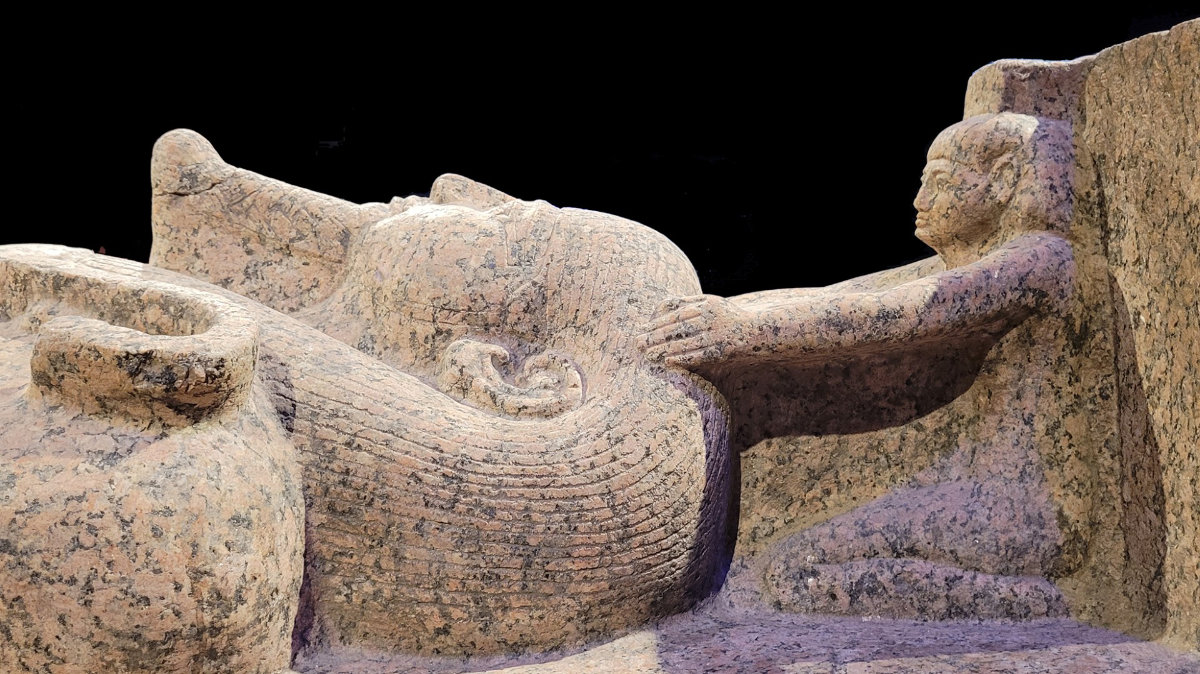
The sarcophagus of Merenptah. (Photo courtesy: Frédéric Payraudeau)
A partial inscription revealed it was part of the sarcophagus of Menkheperre, the high priest of Amun-Ra, the ancient Egyptian god of the sun and the air, who ruled the south of Egypt between 1045 and 992 B.C.
The find seemed to solve one mystery — where Menkheperre had been buried. Previously it was thought that he must have been entombed near his power base at Thebes, in a grave yet to be discovered. Now, it seemed, he had been laid to rest in Abydos.
The existence of a fragment of his sarcophagus, set within the floor of the monastery, as the authors of a paper published in 2016 surmised, owed something to Apa Moses’ “persecution of local pagan temples,” and was “perhaps the result of the fervor with which his followers dismantled pagan structures and tombs throughout Abydos.”
And that is where the story might have ended, but for Frederic Payraudeau, an Egyptologist at Sorbonne University in Paris.
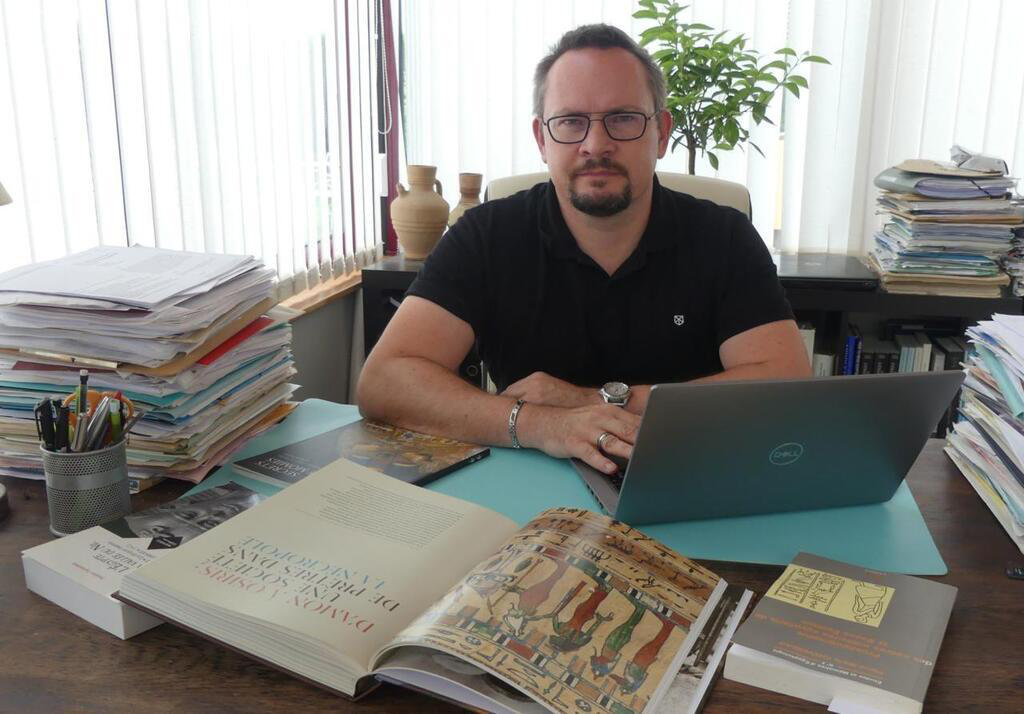
Frederic Payraudeau, an Egyptologist at Sorbonne University in Paris. (Supplied)
Ayman Damrani and Kevin Cahail, the Egyptian and American archaeologists who had discovered the fragment, recognized from the outset that the sarcophagus had another occupant before Menkheperre.
They saw that earlier inscriptions had been overwritten and suggested the original owner might have been an unknown royal prince.
The fragment, made of hard red granite, represented “a much greater allocation of time and resources involved in its construction,” they wrote, than would have been expended on the sarcophagus of even a high official.
This suggested the original owner “had access to royal-level workshops and materials,” and might, they concluded, have been a prince by the name of Meryamunre or Meryamun.
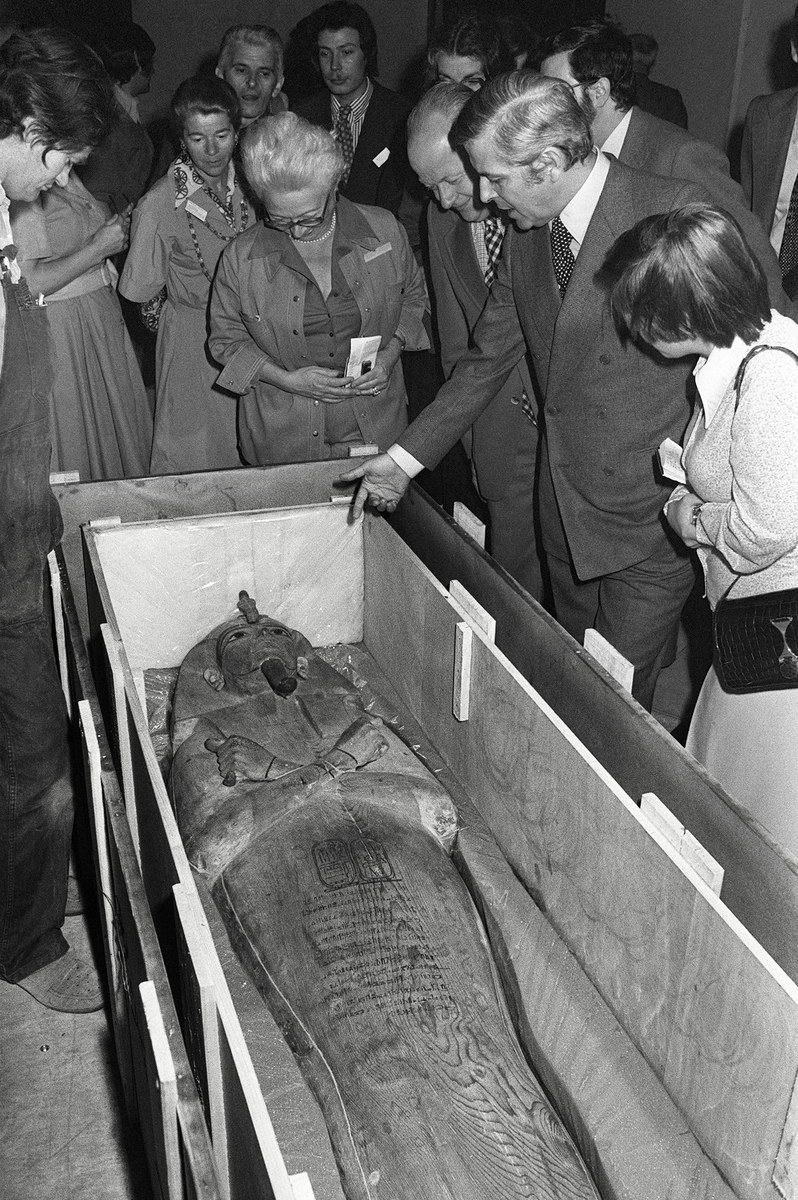
In this photo taken on May 11, 1976, Egyptian Ambassador Naguib Kadry and Egyptologist Christiane Desroches-Noblecourt attend the opening of the sarcophagus of Pharaoh Ramses II during an exhibition dedicated to him at the Grand Palais in Paris. (AFP/File)
“When I read this article, I was very interested because I am a specialist of this period,” said Payraudeau, “and I was not really convinced by the reading of the inscriptions.”
He added: “I already suspected that this fragment was from the sarcophagus of a king, partly because of the quality of the object, which is very well carved, but also because of the decoration.”
This consisted of scenes from the Book of Gates, an ancient Egyptian funerary text reserved almost exclusively for kings.
“It is known in the Valley of the Kings on the walls of the tombs, and on the sarcophagi of the kings, and it was used only by one person, who was not a king, in a later period.
“But this is an exception, and it would have been very strange for a prince to have used this text — and especially a prince that we hadn’t heard of.”
The photographs published with the paper were of too low quality to confirm his suspicions, so he asked the author to send him high-resolution copies. “And when I saw the enlarged photographs of the objects, I could clearly see the cartouche of a king.”
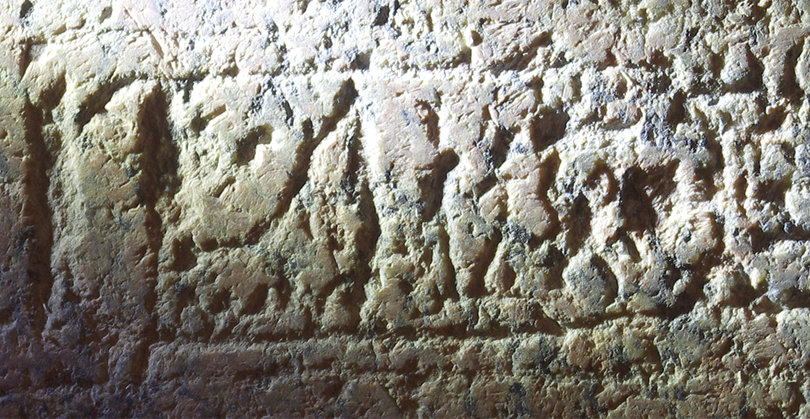
The royal cartouche, or inscription, including Ramses’ name. (Photo courtesy: Frédéric Payraudeau)
A cartouche is an oval frame, underscored at one end and containing a name written in hieroglyphics, that was used to indicate royalty. This one read “User-Maat-Ra Setep-en-Ra.”
Translated roughly as “The justice of Ra is powerful, Chosen of Ra,” it was the throne name of one of the most famous rulers of ancient Egypt — Ramses II.
Ramses II, who ruled from 1279 to 1213 B.C., is regarded as one of the most powerful warrior-pharaohs of ancient Egypt, famed for having fought many battles and created many temples, monuments and cities, and known to generations of subsequent rulers and their subjects as the “great ancestor.”
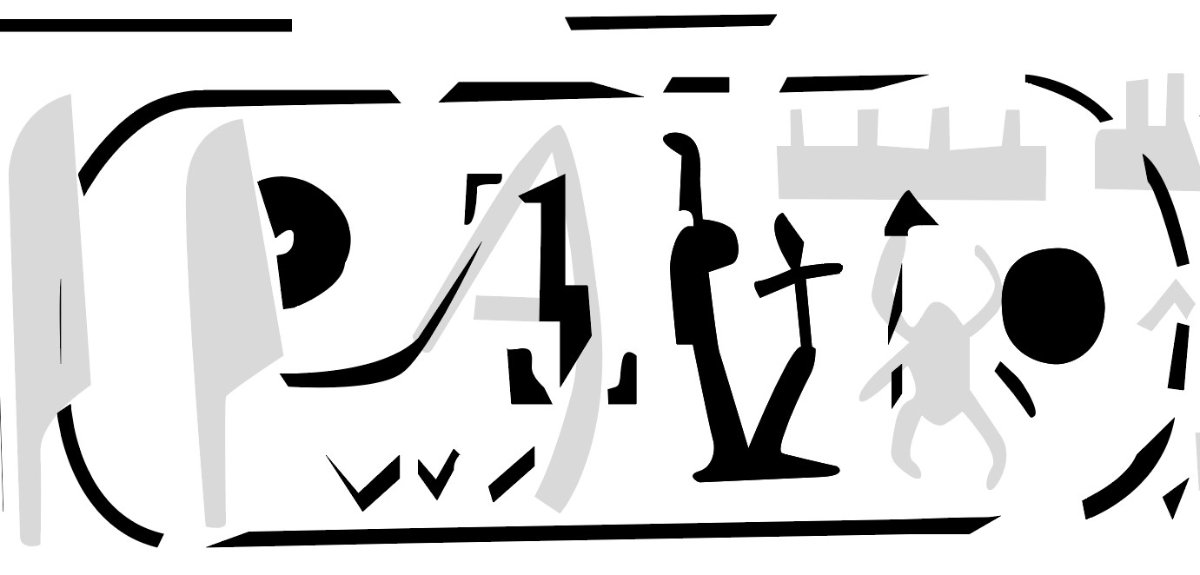
The royal cartouche, or inscription, including Ramses’ name (Photo courtesy: Frédéric Payraudeau)
His was the longest reign in Egyptian history, and he is depicted in more than 300 often colossal statues found across the ancient kingdom.
On his death, after a reign that lasted 67 years, he was buried in a tomb in the Valley of the Kings. Because many of the tombs were later looted, one of his successors, Ramses IX, who ruled from 1129 to 1111 B.C., had many of the remains moved for safekeeping to a secret tomb in Deir El-Bahari, a necropolis on the Nile opposite the city of Luxor.
There they lay undisturbed for almost 3,000 years until their chance discovery by a goat-herder in about 1860.
It was not until 1881 that Egyptologists got wind of the extraordinary find, and there among the more than 50 mummies of pharaohs, each labeled with the details of who they were and where they had been originally buried, was Ramses II.
He was in a beautifully carved cedar-wood coffin. Originally, this would ordinarily have been placed inside a golden coffin — lost to antiquity — which in turn would have been housed within an alabaster sarcophagus, which itself was then placed inside a stone sarcophagus.
Small fragments of the alabaster sarcophagus, which had presumably been shattered by looters, were found in his original tomb in the Valley of the Kings. Of the granite sarcophagus, however, there was no sign — until now.
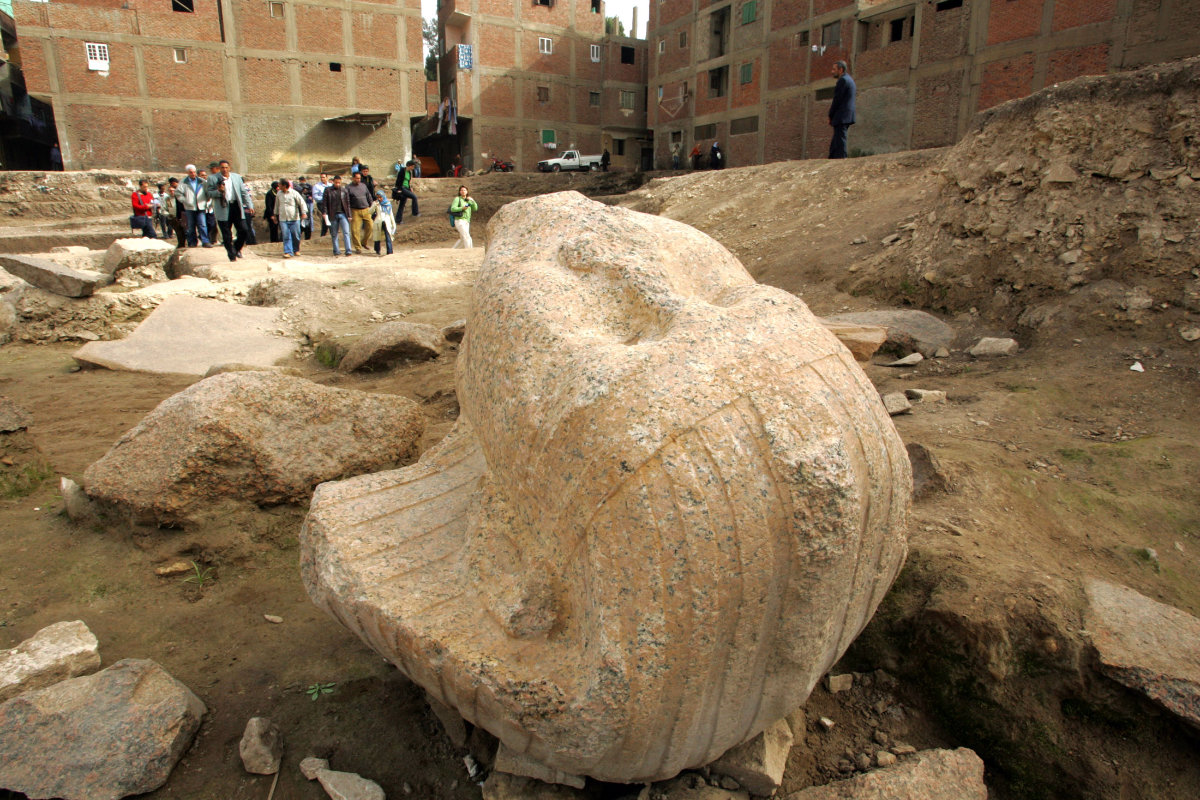
A head believed to be that of 19th Dynasty Pharaoh Ramses II which was discovered in Cairo is seen March 1, 2006. An ancient solar temple has been discovered beneath a flea market in a Cairo suburb. The temple was found embedded in green shist rock beneath the market. Royal statues in pink-colored granite, probably from the time of Ramses II (13th century BC) and weighing five tons, were found in the temple. (AFP/File)
The looting of graves and the reusing of sarcophagi was a result of social and economic upheaval in ancient Egypt. “The sarcophagus was intended to be used by the owner for eternity,” said Payraudeau.
But with the death of Ramses XI in 1077 B.C., at the end of a long period of prosperity, there was a civil war and then a long period of unrest, he said.
“This was the Third Intermediate Period, which saw much looting of the necropolizes because the Egyptians knew that there was gold, silver and other valuable materials, such as wood, in the tombs.”
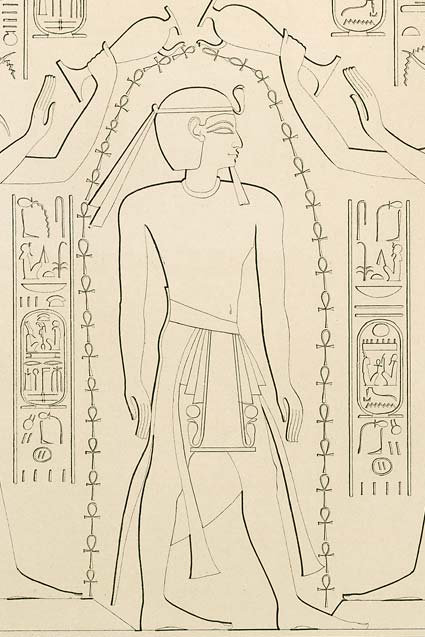
Drawing from the temple of Khonsu in Karnak. Closeup of pharaoh Ramesses XI while taking a sort of "shower of Life" performed by two gods. (Karl Richard Lepsius/Wikimedia Commons)
In addition to ordinary grave robbers, even the authorities took part in the looting, recycling sarcophagi for their own use. That is how Menkheperre came to be buried in a sarcophagus previously used by Ramses II.
Payraudeau is not convinced that the use of a fragment of the sarcophagus in the building of the fifth-century Coptic monastery was necessarily an act of disrespect.
“When they built this monastery, they didn’t know that they were reusing the sarcophagus of Ramses, because by this time no one had been able to read hieroglyphs for about 500 years.”
It would be 1799 before the discovery of the Rosetta Stone, which, with a royal decree written in three languages, including ancient Greek, provided the key to deciphering Egyptian hieroglyphic script.
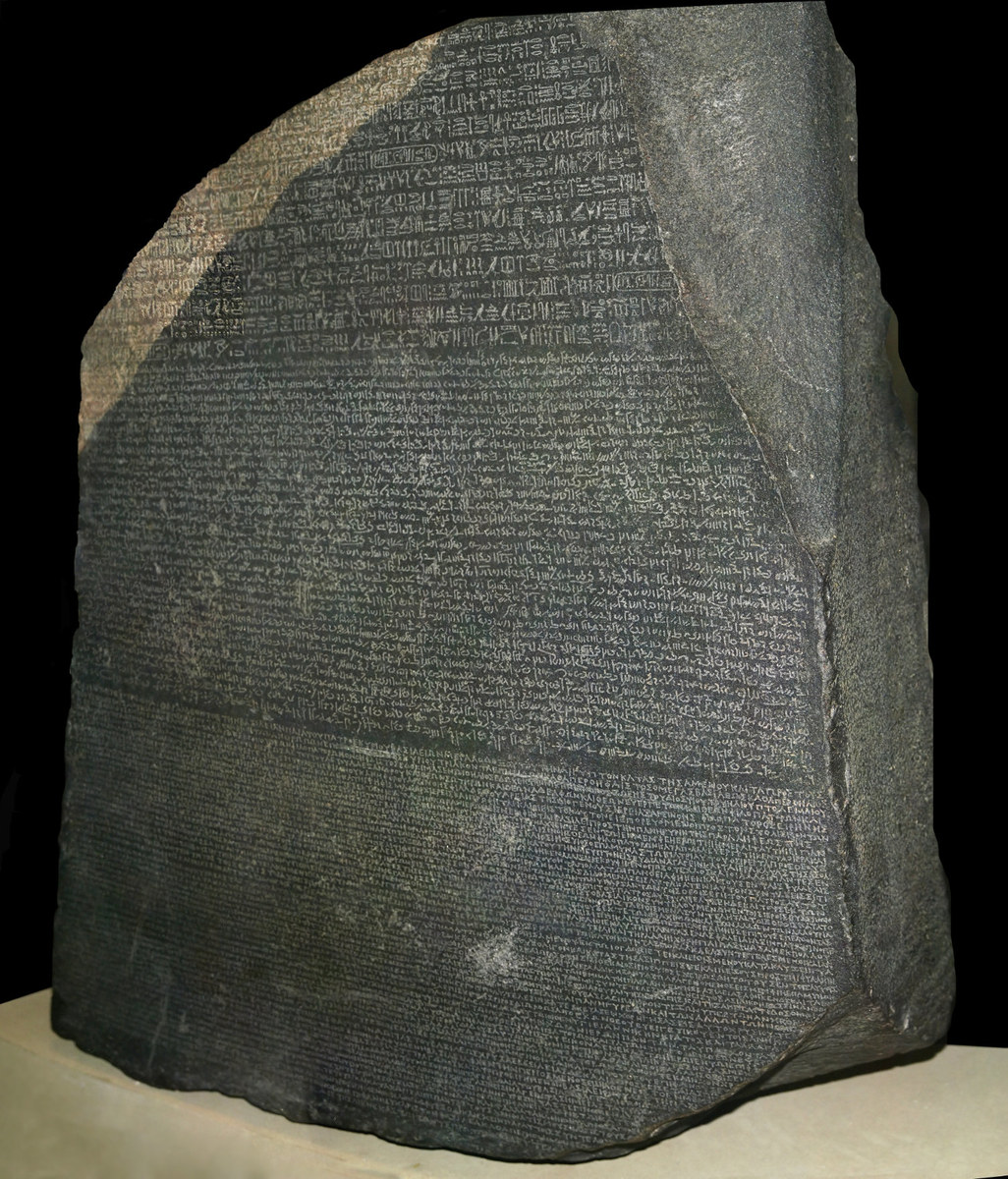
The Rosetta Stone, shown here on display in the British Museum in London, carried three versions of inscriptions of a decree issued in 196 BC during the Ptolemaic dynasty of Egypt, on behalf of King Ptolemy V Epiphanes. The top and middle texts are in Ancient Egyptian using hieroglyphic and Demotic scripts, and the bottom is in Ancient Greek. The inscriptions enabled archaeologists to decipher ancient Egyptian scripts. (Photo by Hans Hillewaert / Wikimedia Commons)
The one remaining mystery now, said Payraudeau, was where in Abydos Menkheperre was originally buried.
“Somewhere there must be the undiscovered remains of the tomb of the high priest,” he said.
“Maybe it was completely destroyed. But I can’t let go of the idea that perhaps they reused the parts of the sarcophagus which were suitable to use as pavements and so on, and that the lid, which would have been far harder to reuse, might still be lying intact somewhere in Abydos.”
In 1817, about 3,000 years after the death of Ramses II, archaeological discoveries in Egypt inspired the English poet Percy Bysshe Shelley to write a sonnet reflecting on how the once seemingly eternal power of the great king the ancient Greeks knew as Ozymandias had turned to dust.
Reflecting on an inscription on the pedestal of a shattered, fallen statue, part of the poem reads: “My name is Ozymandias, king of kings. Look on my works, ye mighty, and despair! Nothing beside remains, round the decay, of that colossal wreck. Boundless and bare, the lone and level sands stretch far away.”
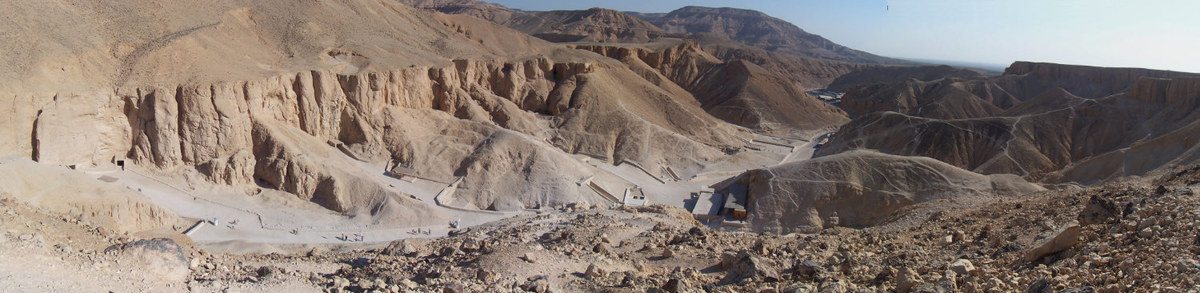
Panorama of the Valley of the Kings, the burial place of the royals of ancient Egypt. (Nikola Smolenski/Wikimedia Commons)
In fact, not only has Ramses II’s fame grown in the 3,236 years since he was entombed in the Valley of the Kings, he has also become the most traveled of the ancient pharaohs.
In 1976, after it was noticed that his mummified remains were starting to decay, Ramses was sent to the Musee de l’Homme in Paris for restoration, along with a whimsical “passport” that gave his occupation as “King (deceased).”
Since then, he has been seen by hundreds of thousands of visitors to numerous exhibitions around the world, including a return visit to Paris last year.
If the lid of his sarcophagus were discovered, it could be reunited with the mummy and its coffin, and the Ozymandias show would doubtless grow ever more popular, continuing to confound Shelley’s poetic prediction that the Great Ancestor would be forgotten, swallowed up by the sands of time.