- Government has said it will build consensus before launching new operation, does not plan large-scale armed campaign
- Several opposition parties have rejected the operation, accusing government of not taking the parliament on board
ISLAMABAD: Security experts in Pakistan have urged the government this week to build political consensus for a new anti-terrorism operation, urging “national unity and diplomatic efforts” to gain approval for proposed measures and ensure their success.
The South Asian state’s top national security forum on Saturday announced “Operation Azm-e-Istehkam,” or Resolve for Stability, operation after a meeting of senior military leaders and top government officials from all provinces. Several opposition parties have rejected the operation, accusing the government of not taking the opposition or parliament on board before announcing the measures.
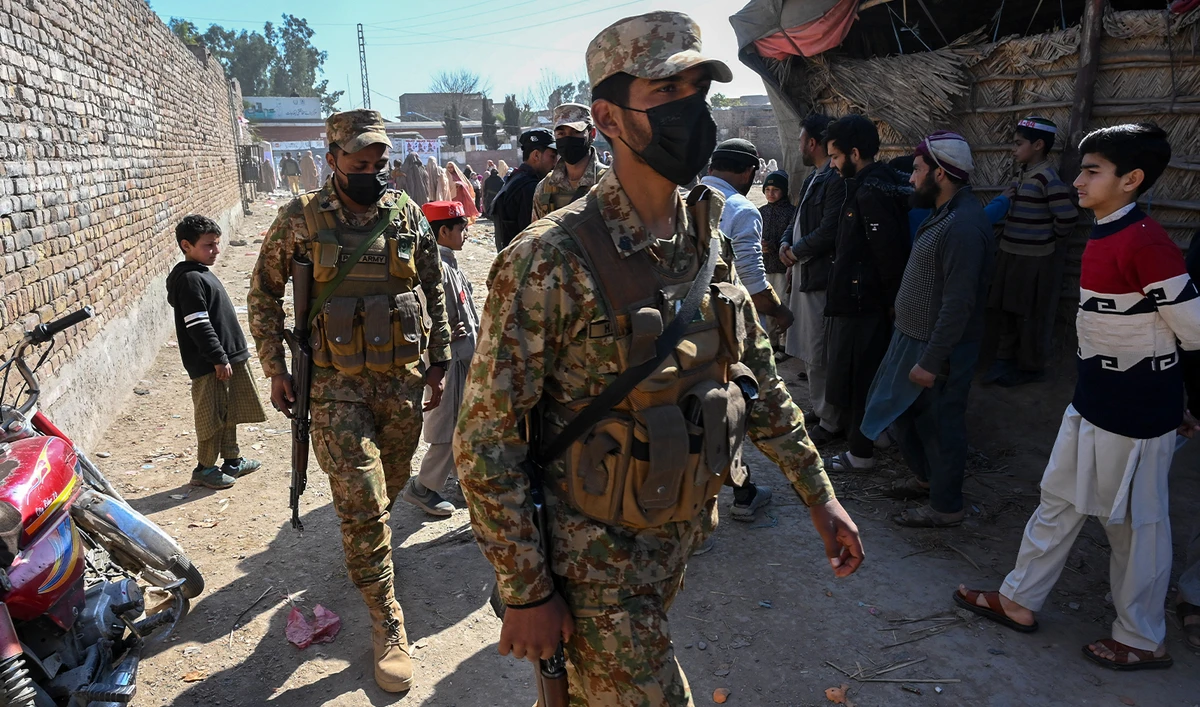
On Tuesday, Prime Minister Shehbaz Sharif and Defense Minister Khawaja Asif separately clarified that the government was not planning to launch a “large-scale armed operation” against militancy but instead intensify ongoing intelligence-based operations. They also said they would seek to build consensus before starting a new campaign, which comes as the country faces daily attacks on security personnel and pressure from China to protect its nationals working in Pakistan.
“The government needs to engage with political parties expressing reservations and fears that the operation might be used against them,” former defense secretary, retired Lt Gen Naeem Khalid Lodhi, told Arab News, advising the government to go for a “small scale” operation rather than a military campaign.
“To address extremism, complete political support, national unity, and diplomatic efforts are essential.”
Lodhi said an in-camera briefing needed to be arranged for political leaders as the whole nation needed to be united to ensure any new operation’s success.
Speaking to the media on Monday, KP Chief Minister Ali Amin Gandapur urged the government to take concerned stakeholders and parliament into confidence before launching a new operation.
“Before any operation, the concerned public should be taken into confidence because terrorism cannot be eliminated without public support and it was also necessary to take parliament into confidence,” he added.
“DIVERSE OPERATION”
According to the South Asia Terrorism Portal, which maintains data on terror attacks in the region, Pakistan has seen over 300 terrorism-related deaths this year, with dozens of security personnel, including officials, killed in militant attacks and counterterrorism operations in the first half of 2024.
Previously, between 2007 and 2017, Pakistan conducted major military operations such as Rah-e-Haq, Zarb-e-Azb, and Rad-ul-Fasad.
Syed Muhammad Ali, an Islamabad-based security analyst, said Azm-e-Istehkam would be a “more comprehensive” counter-terrorism plan than previous ones.
“It will involve intelligence and counter-terrorism operations as well as information, ideological, and legal aspects to reduce the psychological and social space for terrorism, and bring terrorists to justice, not just eliminate them physically,” he told Arab News.
In a statement released on Monday night, Sharif described the new operation as a “multi-domain, multi-agency, whole of the system national vision for enduring stability in Pakistan.”
“It is meant to reinvigorate and re-energize the ongoing implementation of the Revised National Action Plan, which was initiated after the national consensus across the political spectrum,” Sharif said, referring to a strategy formulated in 2014 to stamp out militant groups.
He said the new anti-terrorism operation would include political, diplomatic, legal, and information prongs and continue operations by law enforcement agencies.
Retired Brig Masud Ahmed Khan, a defense analyst, said the new operation was in the country’s interest as militants were not only targeting Pakistani citizens but also harming its diplomatic and financial interests by targeting Chinese nationals. In the latest attack, a suicide bomb attack killed five Chinese engineers in March.
“Attacks on Chinese nationals and projects is also an important factor as we need to protect them along with other threats to our security forces and installations,” he told Arab News, adding that the new operation would differ from previous ones as it would focus on both terrorism and extremism.
“It is a diverse operation, covering terrorism, extremism, and protecting minorities from religious violence which is much needed in the current circumstances,” he said. “Political parties should keep the peace and security of the country above their political differences.”
Journalist Sumera Khan, who has covered previous military operations, said the operation’s timing was right as the state had tried other measures, such as expelling illegal Afghans and cracking down on criminals to control terrorism.
Pakistan has blamed the recent surge in militant attacks on neighboring Afghanistan, which it says allows Pakistani Taliban militants to hold camps and train insurgents to launch attacks inside Pakistan. Kabul denies this. Since last November, the Pakistan government has also launched a deportation drive under which over 600,000 Afghan nationals have been expelled from Pakistan.
“State was gradually hardening its measures and finally launched this operation which will now not focus only on the Afghan side but will be implemented across Pakistan,” Khan told Arab News, adding that all organs of the state would be actively involved in the new campaign.
“This time there is the possibility that the military will remain focused on the kinetic side while diplomatic and media sides will be handled by the government,” she added.
“RENEWED CYCLE OF RESENTMENT”
But some analysts are skeptical the operation will achieve its objectives.
Former diplomat Rustam Shah Mohmand said the operation would likely meet the same fate as many previous military operations.
“Since the first operation, peace has not been restored in the tribal areas, and this may initiate a renewed cycle of resentment and frustration, potentially fueling recruitment opportunities for terrorists and further spread of terrorism,” he told Arab News.
Mohmand said the government should instead focus on strengthening institutions, improving coordination between different departments, and increasing intelligence sharing to address specific threats instead of pursuing blanket operations.
“Additionally, there is a serious lack of coordination between provinces and the central government,” he concluded, “that needs to be strengthened.”